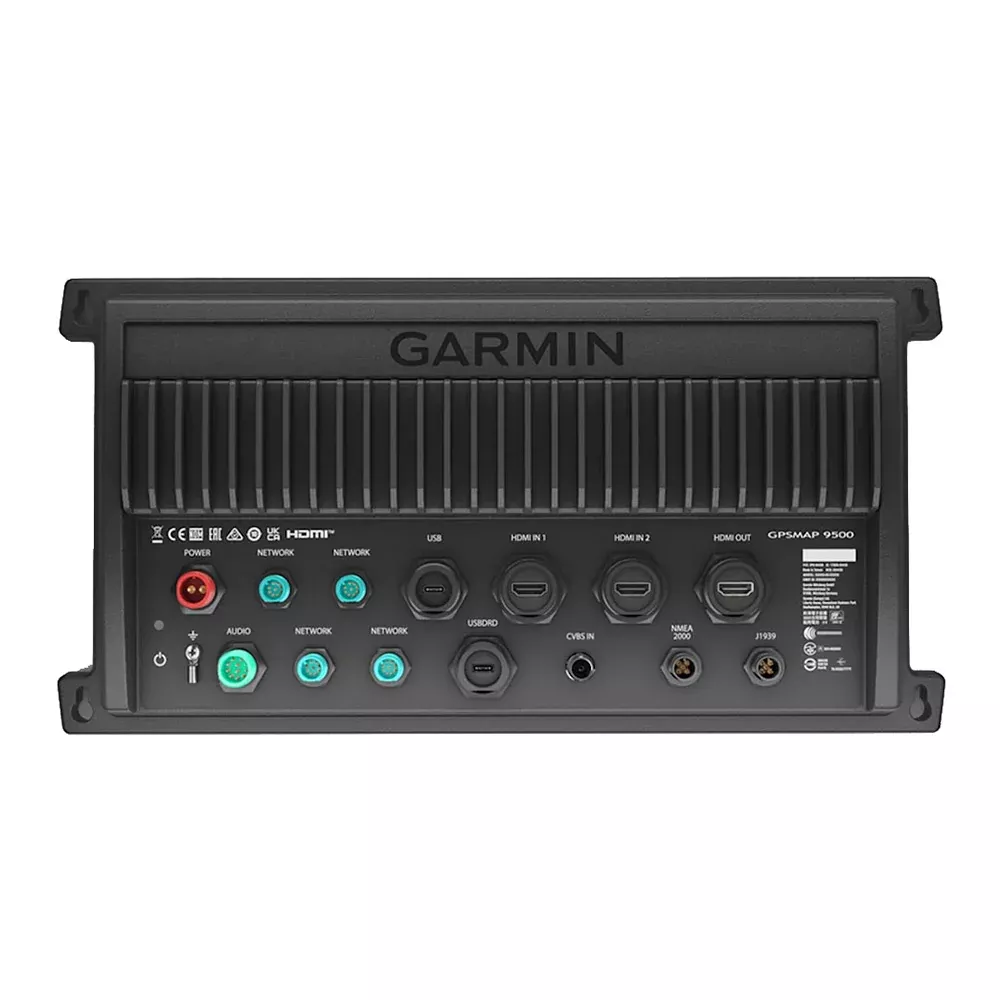
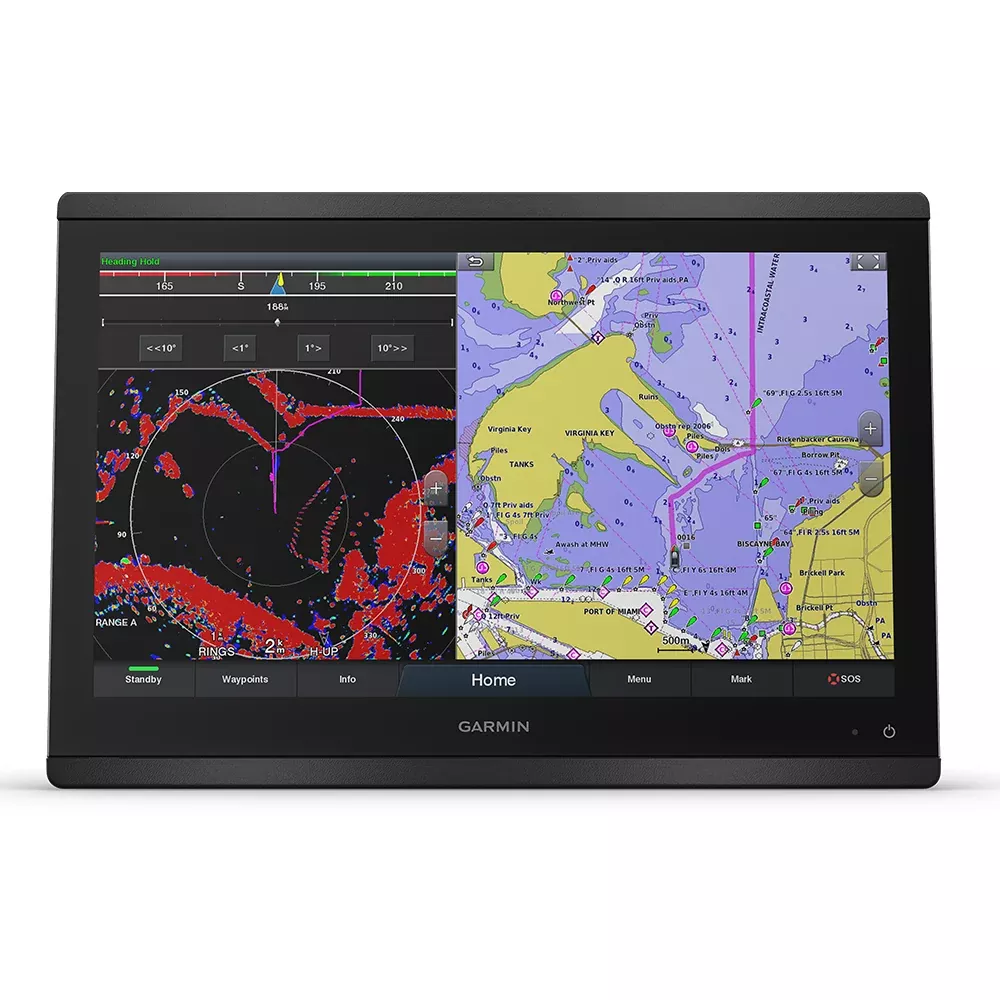
The Garmin GPSMAP 9500 is the next-generation premium black-box chartplotter – the headless processing engine that drives connected HDCP-compliant monitors via HDMI for boats with custom helm setups, glass cockpits with non-Garmin displays, or large vessels with multiple display zones. 7x faster processor versus previous-generation black-box chartplotters, the new Garmin BlueNet gigabit Ethernet network for radar / sonar / camera / additional MFD networking at up to 10x previous network speeds, full NMEA 2000 + NMEA 0183 + J1939 engine integration, OneHelm third-party device control, EmpirBus digital switching support, Fusion audio integration, integrated Wi-Fi / Bluetooth / ANT, voice command support with a compatible headset, IPX7 water-resistance rating. Worldwide basemap included. expandable with Garmin Navionics+ or Navionics Vision+ charts via separate SD card reader.
The Garmin GPSMAP 9500 is the headless black-box variant of the new-generation GPSMAP processing engine – the chartplotter brain in a chassis that connects via HDMI to any HDCP-compliant external monitor. For boats with custom helm panel layouts where the standard Garmin GPSMAP touchscreen displays don’t fit, for glass-cockpit installations where the boat builder specs non-Garmin display surfaces, or for very large vessels with multi-zone display architecture (helm, flybridge, salon, captain’s quarters all needing chart access), the black-box approach gives you Garmin’s processing capability without the constraints of Garmin’s all-in-one display form factors.
7x faster processor versus previous-generation black-box. The 9500’s processor is meaningfully faster than the previous-generation Garmin black-box chartplotters – chart redraw is faster (especially when zooming or panning quickly across high-detail chart areas), waypoint and route processing is faster (large route libraries with hundreds of waypoints don’t slow the system down), and multi-display rendering is faster (when one black-box drives multiple HDMI displays simultaneously, each display gets its own dedicated rendering thread). For boats with high screen-count installations, the processor speed difference is meaningful in daily use.
BlueNet gigabit Ethernet network – new Garmin high-speed network. The 9500 introduces Garmin BlueNet, the company’s new high-speed marine network that runs at gigabit Ethernet speeds (1 Gbps) versus the previous Garmin Marine Network’s 100 Mbps. For boats that connect multiple radars, multiple sonar units (especially LiveScope and Panoptix forward-looking sonars that produce significant data streams), multiple cameras, and multiple additional displays, the 10x bandwidth increase is meaningful – reduces network congestion, faster sonar refresh rates, smoother camera video distribution. The 9500 supports both BlueNet (for new-generation Garmin marine network components) and the legacy Marine Network (for backward compatibility with existing Garmin radar / sonar gear).
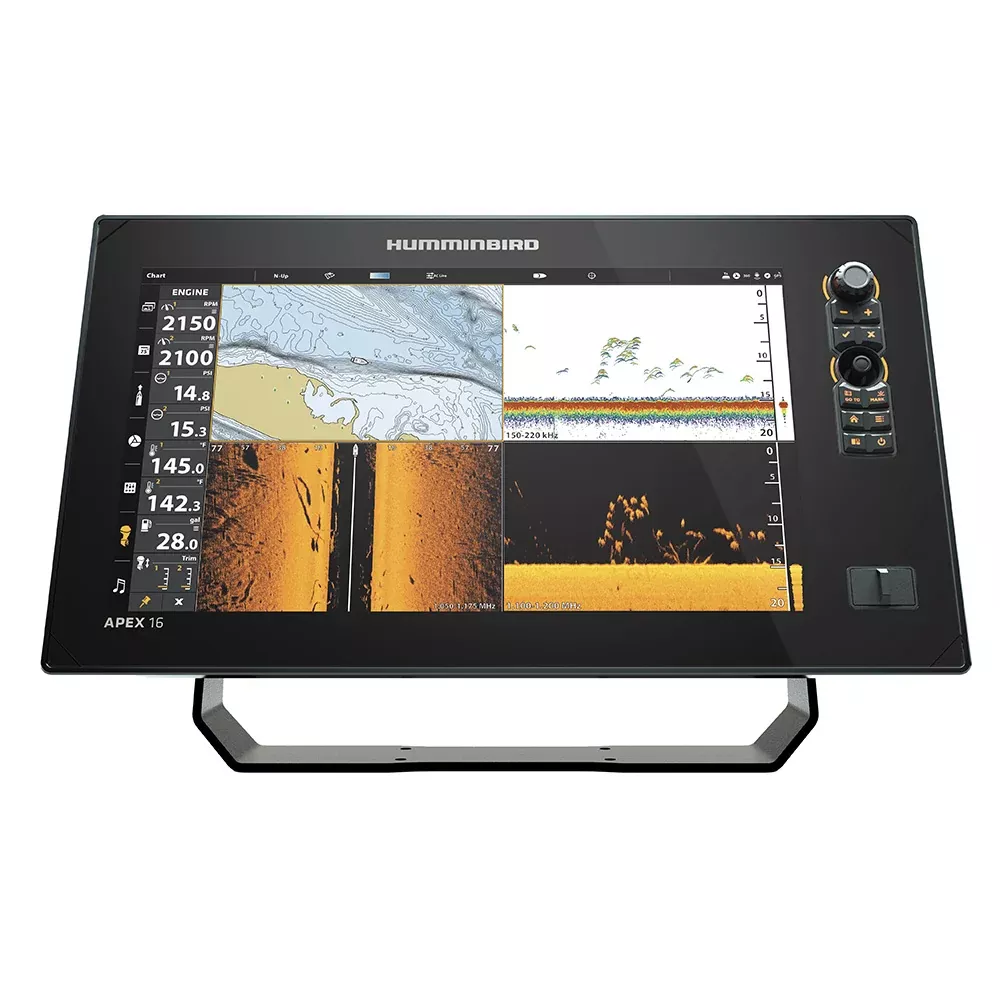
HDMI output with USB DRD touchscreen support. The 9500 outputs HDMI video at HDCP-compliant standards – connects to any modern marine monitor, computer monitor, or display panel with HDMI input. The USB DRD (USB Display Redirect Driver) capability lets the 9500 drive a USB touchscreen display – so the connected monitor can be a touchscreen, and the 9500’s chartplotter functions get full touch input. For glass-cockpit installs that use third-party touchscreen monitors, the USB DRD capability gives Garmin’s processing power with the boat builder’s preferred display surface.
NMEA 2000 + NMEA 0183 + J1939 connectivity. Three marine network standards covered: NMEA 2000 (the modern standards-based marine sensor bus for engines, fuel sensors, environmental sensors, AIS receivers, autopilots), NMEA 0183 (the older standards-based bus for legacy sensors), and J1939 (the heavy-duty CAN bus standard used by commercial-class engines and integrated boat systems). The J1939 support is meaningful for larger boats with commercial-grade engines (Cummins, Caterpillar, Volvo Penta D-series) that report engine data via J1939 rather than NMEA 2000. The 9500 displays J1939 engine data alongside NMEA 2000 sensor data on the same chartplotter screens.
OneHelm third-party integration. OneHelm is the Garmin feature that brings third-party marine system control onto the chartplotter screen. Compatible third-party systems (digital switching panels, electric stabilization, lighting control, climate control) appear as dedicated tabs on the 9500’s display. The advantage: one chartplotter screen replaces what would otherwise be 4-6 separate proprietary controllers scattered around the helm.
EmpirBus digital switching support. EmpirBus is one of the major marine digital switching platforms – the modern replacement for traditional marine switch panels with circuit-by-circuit digital control via the chartplotter screen. The 9500 supports EmpirBus integration natively – so for boats specced with EmpirBus digital switching (typical of premium new-build production boats), the 9500 is the right chartplotter to pair with the existing digital switching infrastructure.
Fusion audio integration. Connects to Fusion-Link compatible Fusion marine audio head units (Fusion is owned by Garmin) for audio control from the chartplotter screen – source selection, volume, zone routing, playlist control. Useful for boats running Fusion stereo systems where the chartplotter becomes a centralized control point for all the boat’s audio. The 9500 also routes audio alerts (depth alarms, AIS warnings, autopilot status) through the Fusion stereo so they’re audible throughout the boat.
HDCP video distribution. The HDCP-compliant video output supports protected video content (DVDs, streaming services, satellite TV) routed through the 9500’s video network to multiple cabin displays. For boats that distribute entertainment video around the vessel, the 9500 acts as the video source / matrix in addition to its chartplotter functions.
Built-in Wi-Fi, Bluetooth, ANT. Wi-Fi pairs the 9500 to the free ActiveCaptain mobile app for chart updates, smart notifications, OneChart purchases, and Garmin Quickdraw community contour data. Bluetooth pairs media-streaming audio. ANT (Garmin’s proprietary low-power wireless protocol) connects to compatible Garmin wearables (the quatix marine watch displays chartplotter data on the operator’s wrist) and wireless wind transducers like the gWind Wireless 2.
Voice command support. With a compatible Bluetooth headset (sold separately), the 9500 supports voice command operation – speak commands to control the chartplotter when your hands are full handling a fish, working a sail, or piloting through tight quarters. Voice command coverage includes screen page changes, common waypoint operations, and audio control.
IPX7 water-resistance. The black-box housing is rated IPX7 – protected against temporary immersion in water up to 1 meter depth for 30 minutes. The 9500 is engineered for installation in equipment compartments that may see water exposure (engine rooms, lazarettes, electrical lockers) without sealing the chassis itself against splash.
Worldwide basemap included. The 9500 ships with the Garmin worldwide basemap (low-detail global coverage suitable for high-level navigation only). For detailed coastal navigation, add Garmin Navionics+ or Navionics Vision+ charts via SD card. Garmin acquired Navionics in 2017, so the latest charts integrate Navionics chart data into the Garmin format – the deepest coastal chart detail available. An external SD card reader is required (sold separately) since the black-box doesn’t have an integrated card slot.
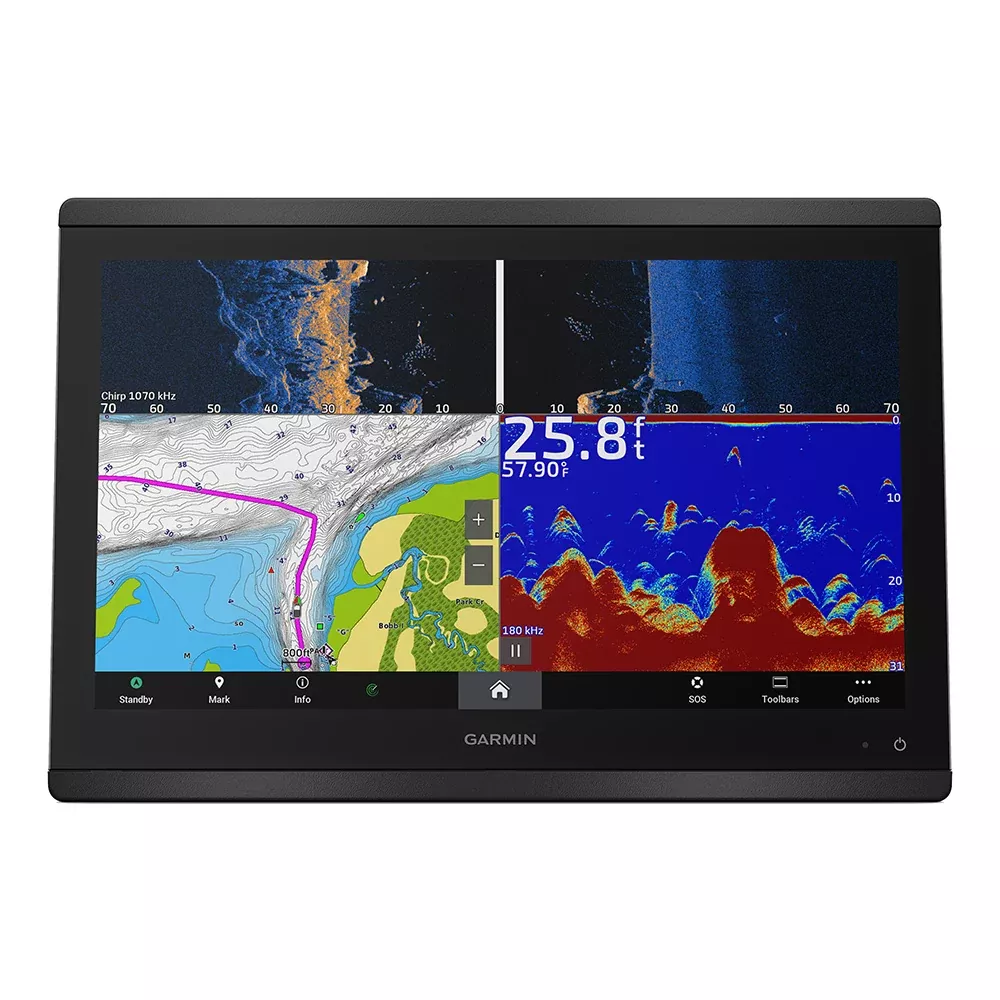
Compatible sonar integrations. The 9500 networks with Garmin’s full sonar product line: LiveScope (live-imaging real-time sonar), Panoptix (forward-looking and side-imaging Panoptix variants), GSD sonar modules (the box-mounted dedicated sonar processors), GCV LiveScope-class transceivers. For serious fishing applications, the 9500 paired with Panoptix LiveScope is a meaningful real-time imaging setup.
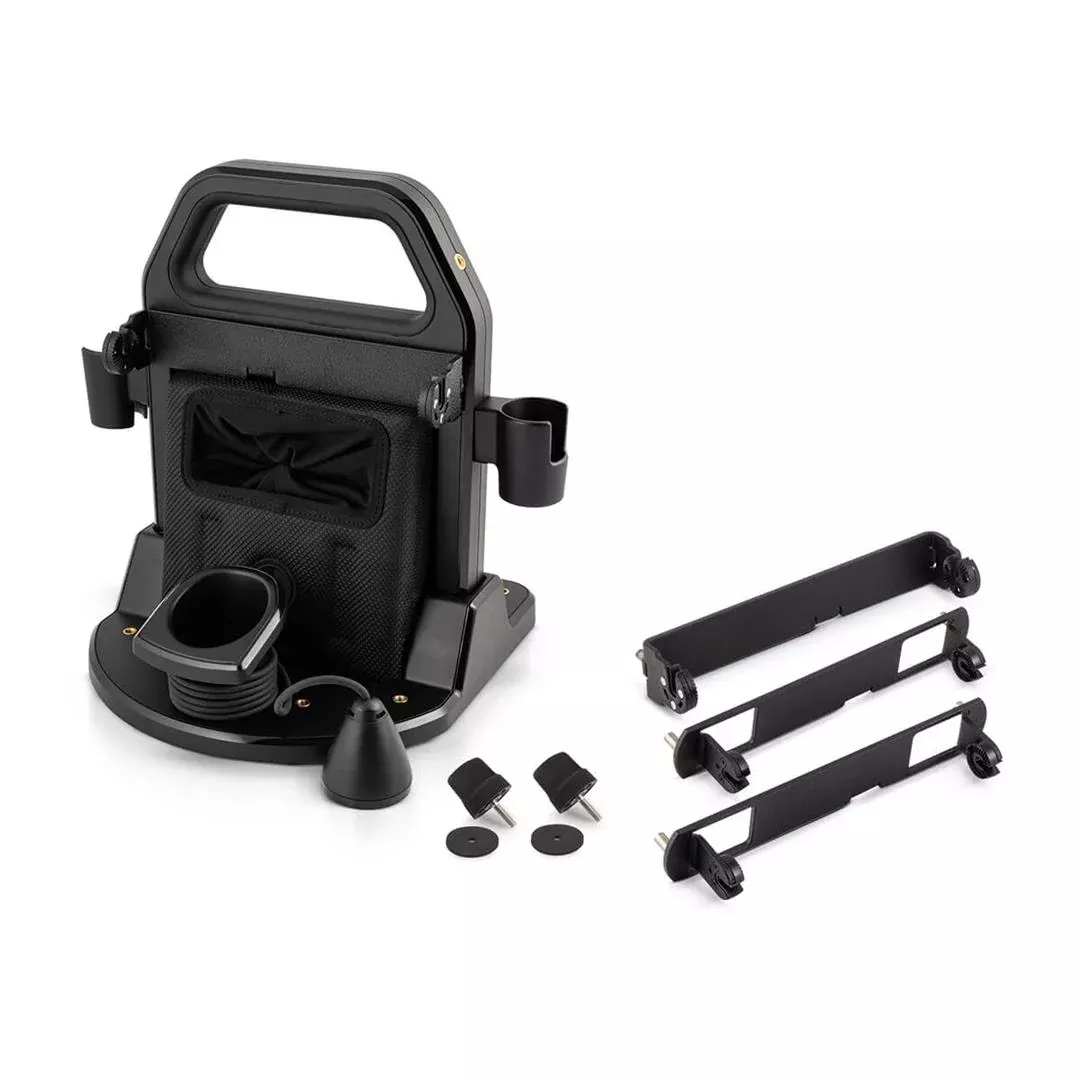
Install. Mount the 9500 chassis in a protected equipment compartment using the supplied mounting hardware. Connect the HDMI output cable to the boat’s display monitor (or to multiple monitors via HDMI matrix / splitter). Connect the BlueNet or Marine Network cable to the boat’s existing Garmin marine network. Wire the 12V or 24V DC power. Configure network settings via the connected monitor’s UI. Total install time is typically 4-6 hours for a competent marine technician.
Two-year limited warranty. Standard Garmin warranty terms apply. MAP-enforced pricing.