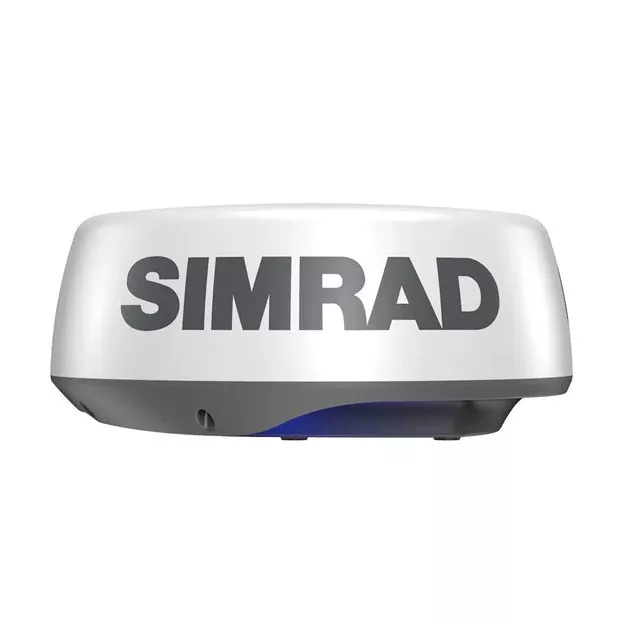
The Simrad HALO20+ is the 20-inch pulse compression radar dome with industry-leading 60 RPM rotation at close range and full Doppler target detection – the modern Simrad recreational radar standard for sportfish, cruising, and offshore boats that want premium radar capability in a compact dome form factor. 36 nautical mile maximum range from the 20-inch compact dome (meaningfully more reach than competing dome radars of the same size), 60 RPM ultra-fast rotation at ranges up to 1.5 NM (delivers almost real-time updates for collision avoidance of fast-moving targets), VelocityTrack Doppler technology (highlights moving targets in different colors based on whether they’re approaching or receding from the boat), dual-range simultaneous operation (monitor close-range collision hazards and distant weather cells at the same time), 20-watt pulse compression transmitter (no warm-up time, no magnetron replacement, instant-on operation). 10.5-31.2 VDC wide-input voltage. IPX6 waterproof. Includes 10-meter Ethernet network cable.
The Simrad HALO20+ is the modern Simrad pulse compression radar dome – the radar that replaced the legacy magnetron-based dome radars with the meaningfully better solid-state pulse compression technology. The HALO20+ specifically is the 20-inch compact dome variant with the “+” designation indicating the upgraded feature set: VelocityTrack Doppler, 60 RPM ultra-fast rotation, dual-range simultaneous operation, and the latest beam-sharpening signal processing. For boats wanting top-tier radar capability without the size or cost of an open-array radar, the HALO20+ is the right call.
What pulse compression radar actually is. Traditional marine radars use a magnetron transmitter – a high-voltage tube that generates a brief high-power pulse. Magnetrons require warm-up time (5-10 minutes after power-on before the radar reaches operating performance), wear out after a few thousand hours of use (magnetron replacement is a service-intensive event), and have limited target-detection sophistication. Pulse compression radars use solid-state transmitters that emit a meaningfully longer, lower-power pulse with a frequency-modulated chirp profile. The radar’s signal processing then “compresses” the long received echo to extract distance information with the resolution of a much shorter pulse – while transmitting at meaningfully lower peak power. The advantages are significant: no warm-up time (instant-on operation – hit the power button and the radar is operational), no magnetron to replace (the solid-state transmitter lasts the lifetime of the radar), and meaningfully better target detection (lower noise floor, better discrimination between small targets and background clutter).
36 nautical mile maximum range from the compact 20-inch dome. The 36 NM range is meaningfully better than competing 20-inch dome radars of the same size class – made possible by the pulse compression transmitter’s better signal-to-noise ratio at long ranges. For typical recreational use, you’ll never push the radar to maximum range – the 36 NM rating means the radar comfortably handles the typical 6-12 NM working ranges that recreational boats actually use, with significant headroom for long-range coastal and offshore navigation when needed.
60 RPM ultra-fast rotation at close range. The HALO20+ is the industry’s first 20-inch dome radar with 60 RPM rotation at ranges up to 1.5 NM – that’s one full 360-degree sweep per second, the same rate as an open-array radar. For collision avoidance of fast-moving targets (other boats, jet skis, kayaks crossing your path), the 1-second update rate is meaningfully better than the typical 4-second rate of older radar systems. You see the targets moving in real time, not as discrete updated positions every 4 seconds with extrapolation in between. At longer ranges (over 1.5 NM), the rotation speed steps down to the standard 24 RPM (1 sweep every 2.5 seconds) to give the radar more time to detect distant targets.
VelocityTrack Doppler technology. VelocityTrack is the Doppler-effect feature that highlights moving targets in different colors based on radial velocity (movement toward or away from the boat). Approaching targets show in one color (typically red or orange – the threat color), receding targets show in another (typically green or blue – the safer color), stationary targets show in a neutral color. For situational awareness in busy harbor approaches or offshore commercial shipping channels, VelocityTrack lets the operator immediately distinguish closing-rate threats from receding traffic without manually tracking individual targets. Meaningful safety improvement versus older radars that just show all targets in the same color.
Dual-range simultaneous operation. The HALO20+ can scan two distance ranges at once – typical use case is the close range (1-3 NM, for collision avoidance and harbor navigation) and the long range (12-36 NM, for monitoring distant weather cells, identifying distant landmasses, or detecting commercial shipping that might affect your course over the next hour). Both ranges display simultaneously on the connected MFD. Older radars required manually switching between ranges, missing the long-range picture while focused close-range or vice versa. The dual-range simultaneous operation eliminates this trade-off.
Beam sharpening. The HALO20+ uses signal processing to electronically narrow the radar’s azimuth beam, separating closely-spaced targets that older radars would merge into a single return. Useful for resolving multiple boats in a harbor entrance, distinguishing a moored vessel from a docked vessel adjacent to it, or identifying individual targets in a mass of fishing boats. The beam sharpening is purely a signal-processing feature with no hardware impact – the same physical antenna delivers sharper resolution through smarter math.
20-watt transmitter power. The HALO20+ transmits at 20 watts of pulse compression power – meaningfully lower than the 4 kW peak of older magnetron radars, but the long pulse duration plus pulse compression processing gives meaningfully better target detection at any range. The lower transmit power also means lower DC current draw (the radar uses less battery than a magnetron radar of equivalent capability) and zero risk of pulse-power damage to nearby electronics or to crew exposed to the radar’s beam.
10.5-31.2 VDC wide-input voltage. The radar accepts 10.5 to 31.2 VDC – covers both 12V and 24V boat electrical systems. One radar variant works on either system, no need to specify voltage when ordering. Internal voltage regulation handles the wide input range without affecting radar performance.
4.9-degree horizontal beamwidth. The horizontal beamwidth determines the radar’s azimuth resolution (how well it can distinguish two targets at the same range). 4.9 degrees is meaningfully sharper than the typical 6-7 degree beamwidth of competing 20-inch dome radars – lets you separate closely-spaced targets that wider-beam radars would merge. Combined with the beam sharpening signal processing, the effective angular resolution is meaningfully better still.
Includes 10-meter Ethernet network cable. The HALO20+ connects to the boat’s chartplotter via Ethernet (the modern Simrad-family marine network standard). The included 10-meter cable is sufficient for the typical install where the radar dome is mounted on the radar arch / mast and the chartplotter is at the helm. For longer cable runs, longer Ethernet cables are available as separate accessories.
IPX6 waterproof rating. The dome housing is rated IPX6 – protected against powerful water jets from any direction. Handles wave splash, washdown, heavy rain without water intrusion. Mounted high on the radar arch where direct seawater immersion is unlikely, the IPX6 rating handles all reasonable marine exposure.
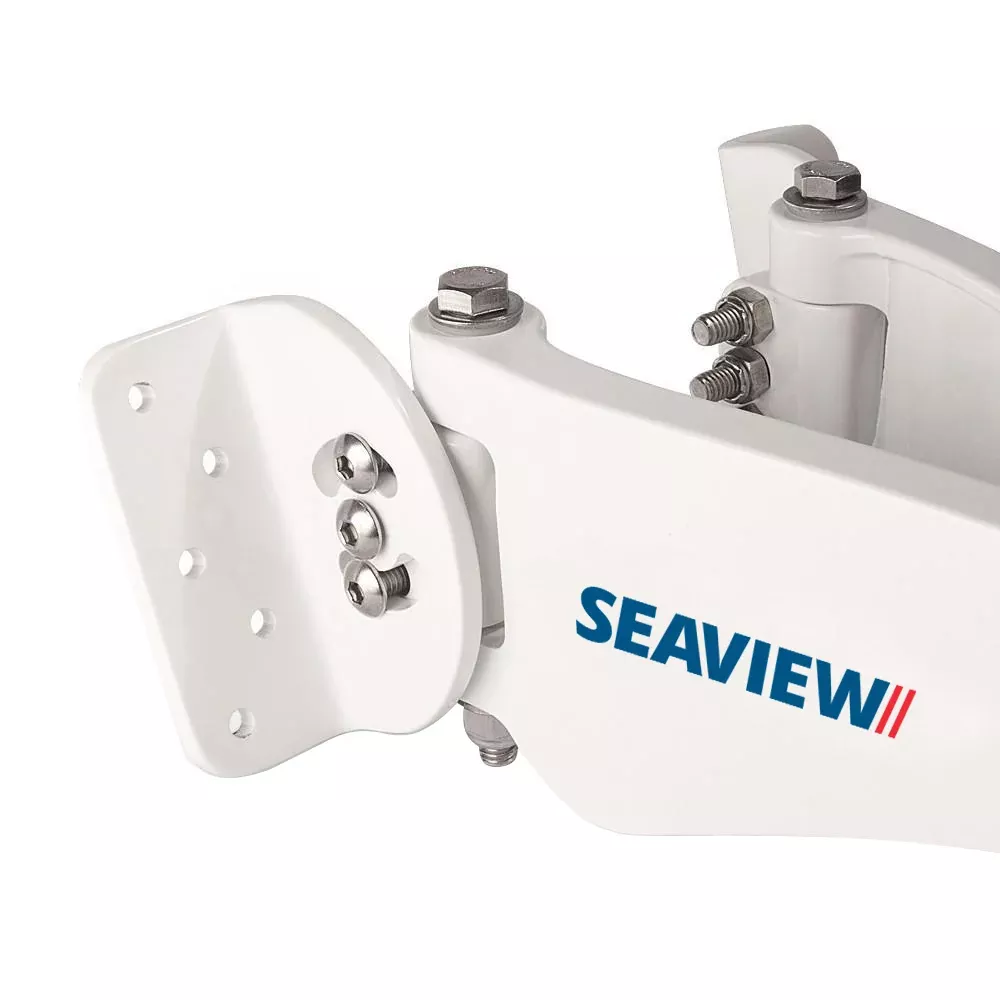
Mounting and dimensions. The HALO20+ has a 20-inch diameter dome with 8.8-inch height – compact enough to fit on most recreational radar arches without overhanging the boat’s beam. Standard radar mounting bolt pattern matches the typical Seaview or other branded radar arch / mast mounting plates. Total weight is roughly 15 lbs, suitable for any standard radar mounting hardware. Power is supplied through the same Ethernet cable that carries the data (Power-over-Ethernet style architecture), so no separate power cable to the dome is required – just the one cable from the chartplotter / network switch to the dome.
Compatible chartplotters. The HALO20+ networks via Ethernet to compatible Simrad-family chartplotters across the marine network ecosystem. Check your chartplotter’s compatibility documentation – most modern Simrad NSS, NSO, and NSX displays support HALO radar natively. The radar’s processing happens in the dome itself. the chartplotter just displays the radar imagery and provides the user controls.
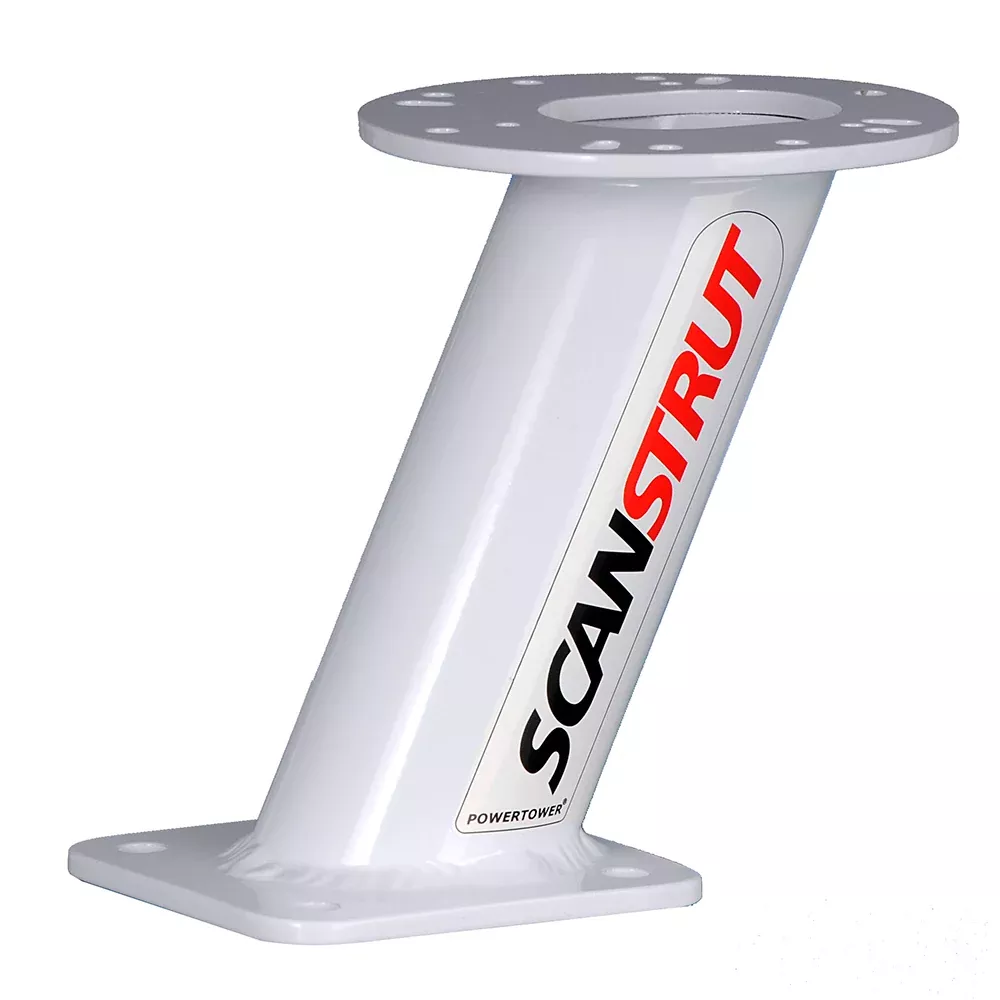
Install. Mount the dome on the radar arch / mast using the standard radar mount hardware (typical 4-bolt pattern, hardware sold separately). Run the included 10-meter Ethernet cable from the dome to the chartplotter / network switch. Power up the boat – the radar discovers the chartplotter automatically over the network. Total install time is typically 4-8 hours for a competent boat owner, dominated by the cable routing through the radar mast and the boat’s wiring chase.
Two-year limited warranty. Standard Simrad warranty terms apply.