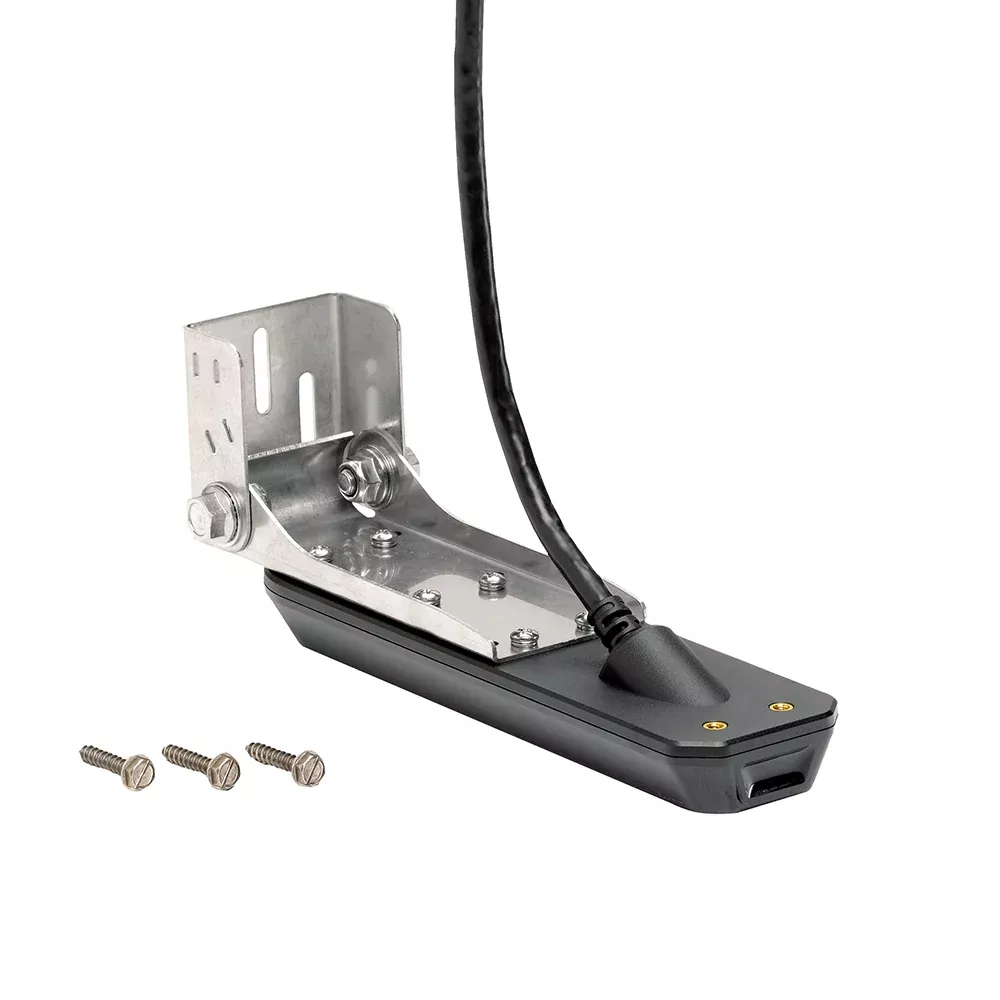
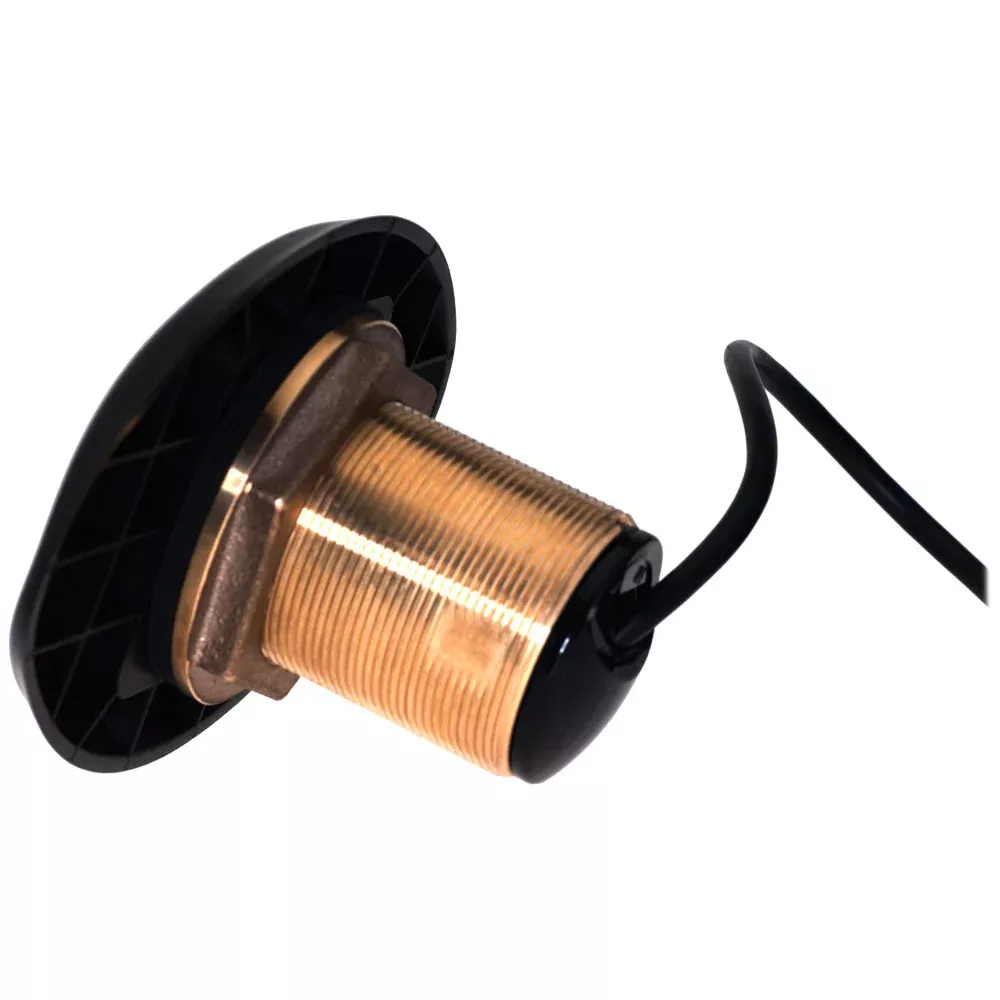
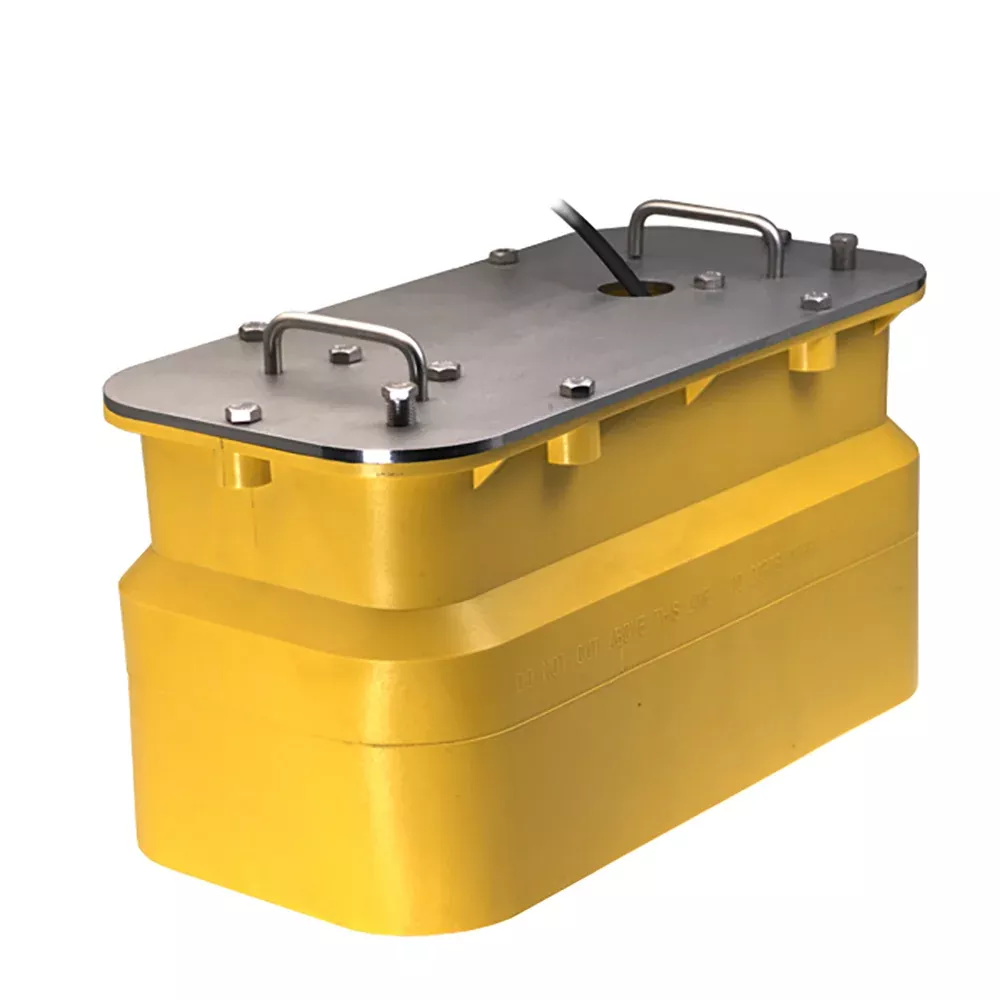
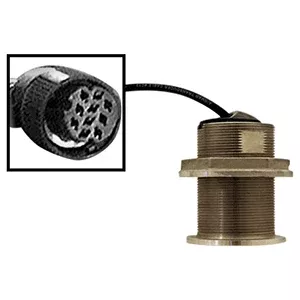
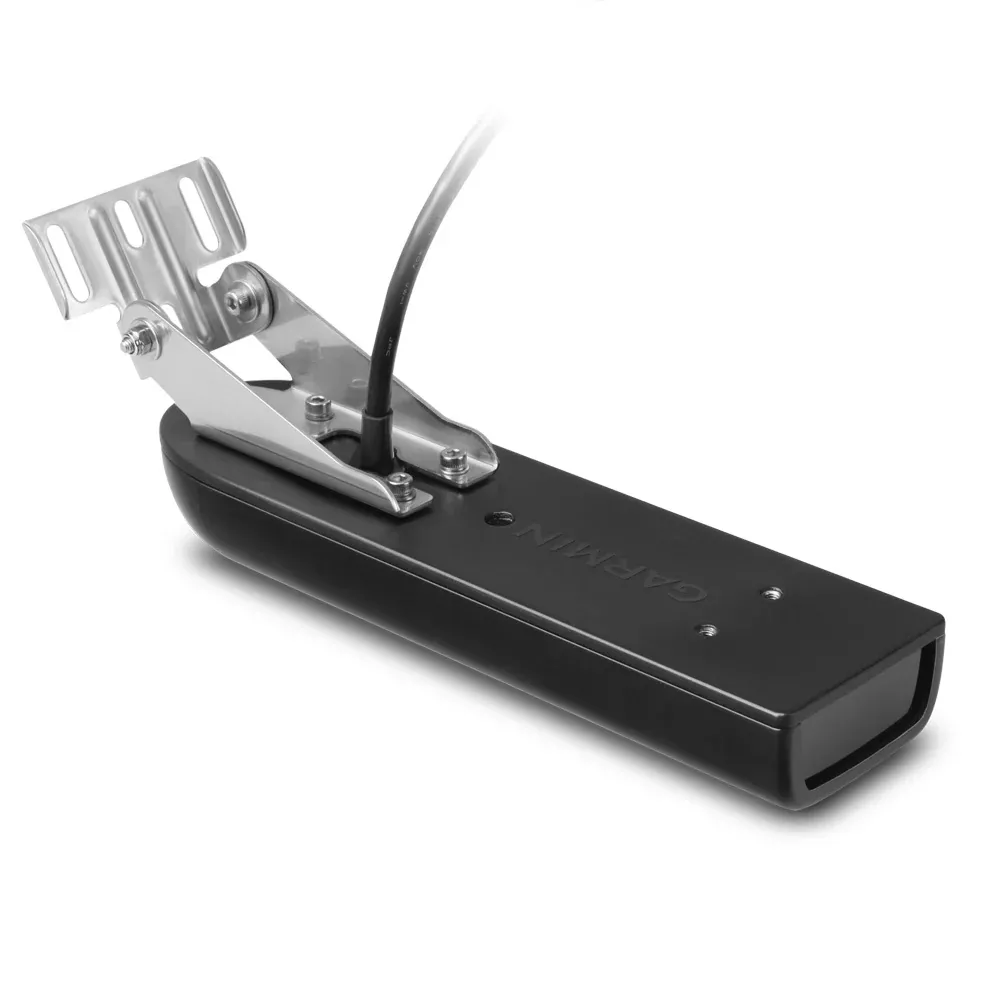
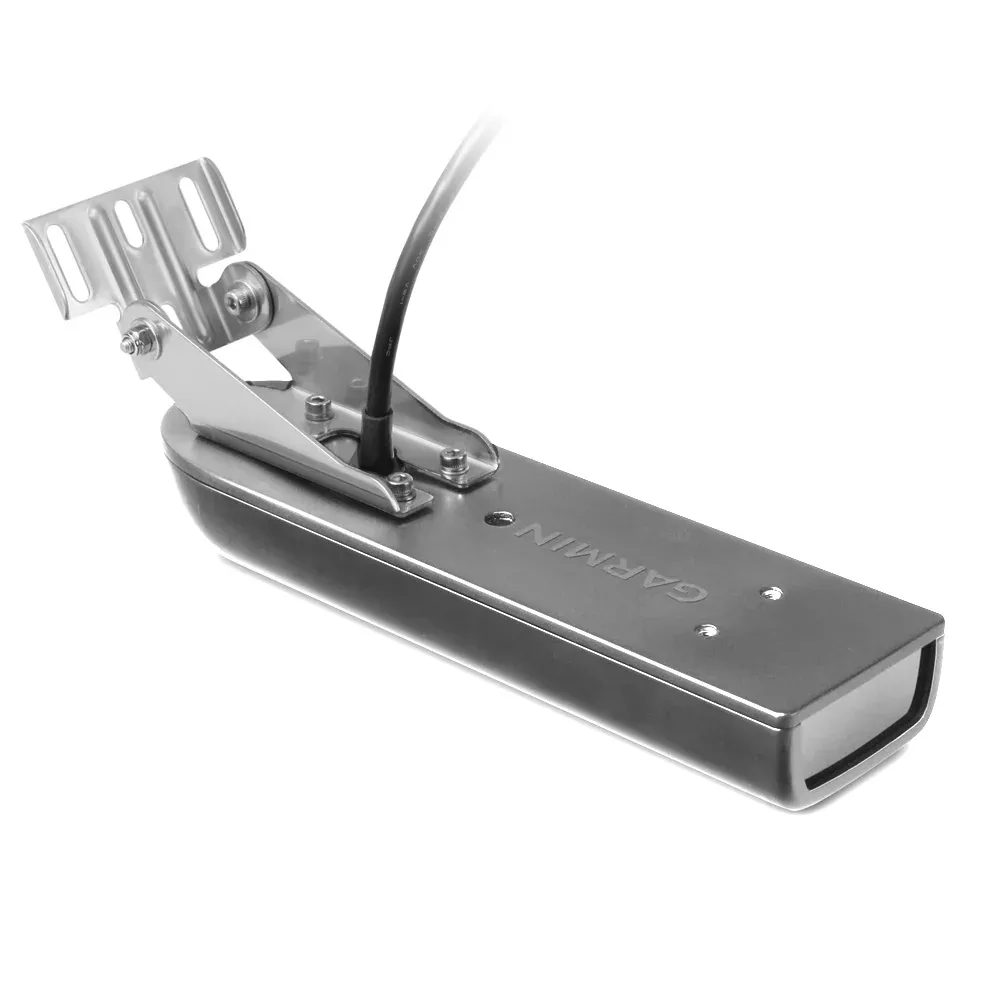
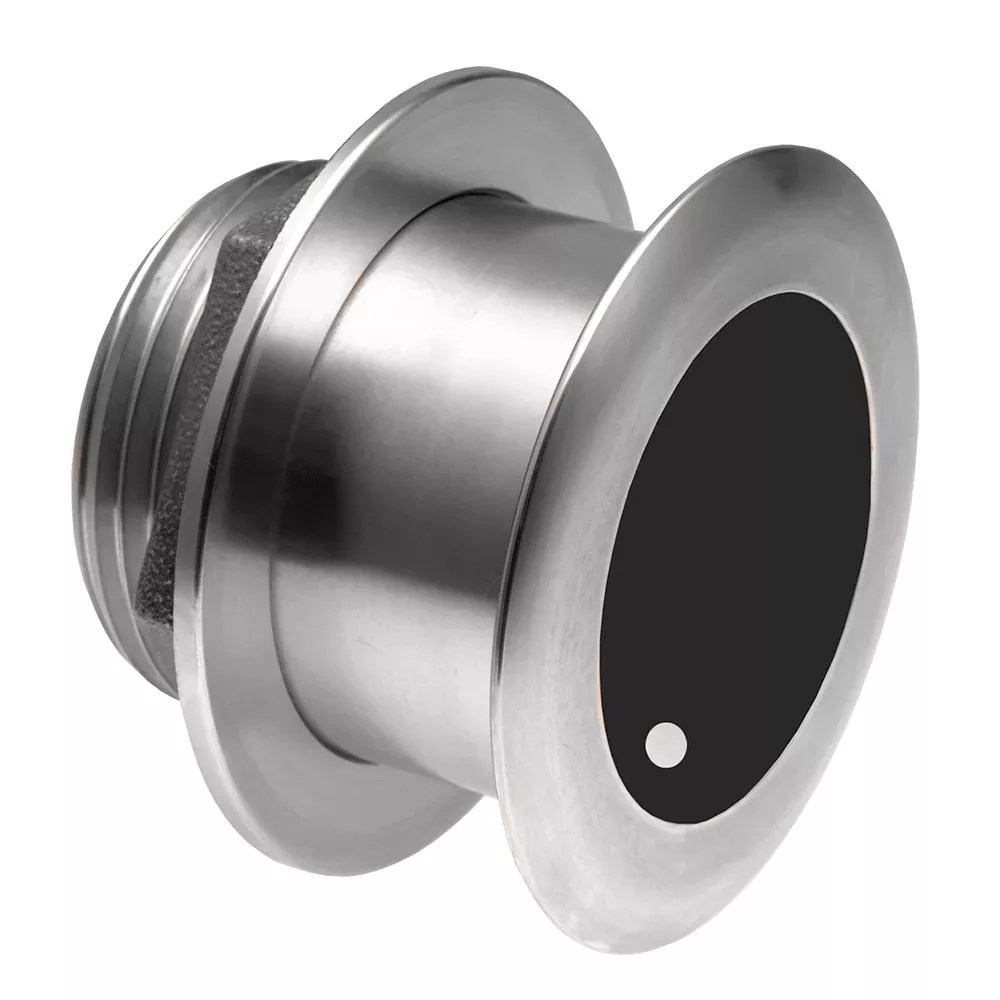
A trolling-motor mounted transducer is the single best sonar position for active fishing. This Lowrance 9-pin transducer adds 83/200kHz CHIRP sonar and water temperature to your Lowrance chartplotter via the trolling motor’s standard 9-pin connector.
The Lowrance trolling motor transducer (MPN 000-14888-001) is a 9-pin trolling-motor-mounted CHIRP transducer that adds 83/200kHz dual-frequency sonar and water temperature to a Lowrance HDS, Elite FS, or HOOK Reveal chartplotter. The transducer mounts on a compatible trolling motor lower unit using a standard clamp, and the 9-pin connector plugs straight into the chartplotter’s transducer port without adapters.
What it does. The transducer broadcasts both 83kHz (wider cone, deeper penetration in tougher water) and 200kHz (narrower cone, higher resolution for fish marks and bottom detail) simultaneously. The chartplotter receives both streams and renders traditional 2D sonar views that you can split-screen or overlay to suit how you fish. The integrated water temperature sensor gives the chartplotter live temperature readings, which most anglers use for tracking seasonal patterns (smallmouth in 65-72F, largemouth pre-spawn at 58-62F, walleye on temp breaks, et cetera).
Why mount sonar on the trolling motor. The trolling motor lower unit is the best sonar position on the boat for two reasons. First, the trolling motor points where the boat’s being pulled, so the sonar sees the water you’re about to fish, not the water you’ve already passed over. Second, the lower unit is below the hull’s interference field (engine wake, hull vibrations, prop wash from the outboard), so the sonar signal is cleaner than a transom-mount equivalent. Side-by-side comparisons consistently show trolling-motor-mounted sonar resolving fish, structure, and bottom detail more clearly than transom-mount at the same trolling speed.
The 9-pin connector. Modern Lowrance chartplotters use a 9-pin transducer connection. This transducer’s 9-pin connector matches that connection directly. If you’re upgrading from an older Lowrance unit with a 7-pin transducer port, you’ll need a 9-pin-to-7-pin adapter (sold separately by Lowrance) or you can pair this transducer with a current-generation chartplotter.
Installation. Standard clamp-on install on a compatible trolling motor lower unit. The included clamp grips the lower unit housing without drilling, and the transducer face is angled to point straight down through the water below the motor. Cable routing runs up the trolling motor shaft to a 9-pin connector that mates with the chartplotter cable. For Lowrance trolling motor models with a Ghost or Ghost X integrated transducer cable, you’d use the corresponding nosecone transducer instead of this clamp-on, but for non-integrated trolling motors (any major bow-mount brand without a built-in cable), the clamp-on install is the standard approach. Plan 30 minutes for the first install if you’re routing cable carefully.
Saltwater rated. The transducer face, the cable, and the connector are sealed for marine use. Both freshwater and saltwater rated, rinse with fresh water after saltwater days as standard maintenance and the transducer will last as long as the trolling motor it’s mounted on. Many anglers run the same transducer through two or three trolling motor lifecycles by transferring it to the new motor at upgrade time.
Why pay for the OEM transducer. Aftermarket transducers exist but consistent reports from tournament anglers and guides put OEM Lowrance transducers ahead on signal quality, durability, and chartplotter compatibility. The OEM transducer is the same module Lowrance uses in their integrated nosecone products, packaged as a standalone clamp-on with the standard 9-pin connector. You get factory-tested performance and Lowrance warranty support. For the relatively small price premium over no-name aftermarket parts, the OEM transducer is the smart buy.
One practical note for users replacing an older transducer. When swapping in this new transducer, take a moment to recalibrate the chartplotter sonar settings (frequency selection, sensitivity, color palette). Older transducers may have had user-tweaked settings optimized for their specific response, and those tweaks won t carry over cleanly to a new transducer with different signal characteristics. Reset to factory defaults and tune for your local water from there. Most anglers report cleaner returns within an hour or two of installing the new transducer plus recalibrating, even on the same chartplotter that ran an older transducer for years.