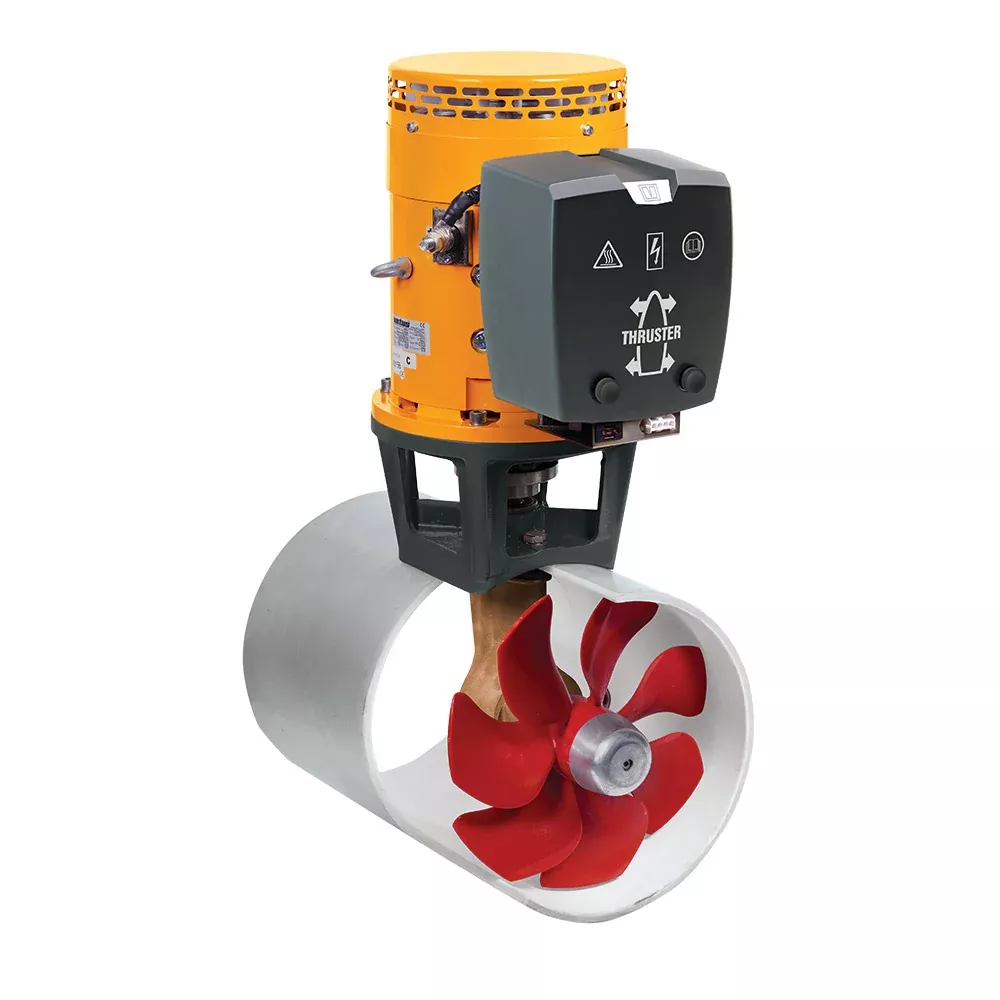
VETUS’s BOW PRO Boosted bow thruster for boats in the 10 to 14 meter (33 to 46 foot) range. 130 KGF of thrust through a 185mm tunnel, with built-in DC-to-DC smart charger that lets 24V thruster batteries charge from a 12V source, brushless induction motor, and lock-and-hold proportional controls.
The VETUS Bow Thruster 130 KGF, 12/24V (MPN BOWB130) is the 220-kilogram-force model in VETUS’s bow thruster line, sized for yachts in the 19.5 to 26 meter (64 to 85 foot) length range. For yachts in this size class, bow thrusters move from optional accessory to genuinely operational equipment, single-handed docking, crosswind departures, marina maneuvering in tight slips, and any situation where pushing the bow sideways without relying on prop walk and rudder authority is the difference between a clean dock and a stressful one.
What 130 KGF actually delivers. Bow thruster thrust is measured in kilograms-force (KGF) of lateral push at the bow. At 130 KGF this VETUS unit puts roughly 485 pounds of sideways thrust into the bow, which is the class needed to move a 64-85 foot yacht against crosswind and current. Undersized bow thrusters (chosen by length but not by actual yacht displacement and windage) are the classic mistake that leaves owners frustrated, the thruster is too weak to move the boat against real conditions, so it gets used in calm weather where you don’t actually need it. The 130 KGF spec at this size range matches the yachts that need it, not a marketing number.
11 kilowatts of motor power on 12/24V. The 12/12/24-volt DC motor draws 350 amps at full continuous load to deliver the 130 KGF thrust output. This is serious electrical load that requires proper battery bank sizing, heavy-gauge cabling, and high-current contactor or solenoid control. The 2.5-minute continuous operating time rating reflects the thermal limit, intermittent docking maneuvers stay well within this window, but extended manuevring requires brief cool-down breaks.
What makes the BOW PRO Boosted different. Three key features distinguish this thruster from conventional VETUS BOW units. First, the built-in DC-to-DC smart charger lets a 24V thruster battery bank be charged from a 12V power supply (typically the engine starting bank), using a smart three-stage charging process that only activates when the source voltage is appropriate. This eliminates the need for separate 24V charging infrastructure on 12V house systems. Second, the patented MCV motor controller with proprietary CANBUS protocol V-CAN delivers seamless connectivity between the thruster and control panels, with electronic monitoring and protection against overheating and low battery. Third, lock and hold controls let the operator set and maintain thrust at any chosen speed with a single button press, which is operationally meaningful for navigating narrow passages and docking without holding the thrust lever continuously.
Brushless induction motor. The brushless motor architecture is maintenance-free (no brushes to wear), delivers extended runtime versus brushed alternatives, and runs quieter under load. For boats where the bow thruster runs frequently (charter operations, marina-based cruisers, single-handed operators), the brushless motor pays back in lower long-term ownership cost and reliability versus the brushed-motor competition.
Tunnel compatibility. The 185mm tunnel diameter is compatible with existing VETUS bow thruster installations and a wide range of other manufacturer tunnel sizes in this diameter class. For boats refitting from an older VETUS bow thruster or a competitor’s product, the BOW PRO Boosted typically fits the existing tunnel without requiring tunnel modification, which is a significant install advantage.
Quiet spiral-gear operation. VETUS uses spiral gears (rather than straight-cut) in the transmission between the motor and the propeller shaft, which significantly reduces transmission noise compared to straight-cut alternatives. For yachts where the bow thruster motor lives in or near accommodation spaces (bow cabin, owner suite), the spiral-gear noise reduction matters operationally, the boat doesn’t sound like a chainsaw every time someone bumps the thruster lever.
Flexible motor coupling. A flexible coupling between the tailpiece and motor eliminates vibration transmission from the motor to the propeller shaft and tunnel. The result is reduced vibration carried into the hull, which means less perceptible noise and less mechanical wear on the propeller shaft and seal assemblies. For boats where the bow thruster runs frequently (charter operations, marina-based cruisers), the reduced vibration extends maintenance intervals on the entire thruster assembly.
Streamlined tailpiece. The tailpiece is the underwater housing that contains the propeller and connects to the through-hull tunnel. VETUS streamlines the tailpiece for optimum water flow through the tunnel, which improves thrust efficiency and reduces drag when the thruster isn’t running. For yachts cruising under main power, the reduced tunnel drag matters slightly for fuel efficiency and significantly for noise (turbulent water flow through an unstreamlined tunnel creates audible noise at cruising speeds).
Synthetic propeller. The propeller is reinforced synthetic rather than bronze or aluminum. Three benefits. First, no galvanic corrosion (synthetic is electrically inert in saltwater). Second, lower weight reduces the inertial load on the motor during start and stop. Third, the synthetic blade design VETUS uses minimizes cavitation noise, which is the high-frequency buzzing that propellers produce when blade tips spin too fast or in low-pressure water. The combination delivers a quieter, longer-service-life propeller than metal alternatives.
Single propeller architecture. The VETUS design uses a single propeller in the tunnel rather than counter-rotating dual propellers. The single-propeller approach creates less flow disturbance in the tunnel, which translates to better thrust efficiency for the motor power applied. Some other manufacturers use dual counter-rotating propellers for additional thrust at the same tunnel size, but the single-propeller architecture’s efficiency means VETUS delivers competitive thrust without the dual-propeller mechanical complexity.
EMC compliance. All VETUS maneuvering systems meet European Electromagnetic Compatibility requirements, which means the electrical operation doesn’t generate interference that disrupts other onboard electronics (radio, navigation, autopilot, instruments). For modern yachts with substantial electronics integration, EMC compliance is operationally important and not just a regulatory checkbox.
Standard accessories and control. The VETUS aluminum control panel line is interchangeable with older VETUS thruster control panels, which means retrofits and panel replacements work across the product line without requiring complete control system rebuilds. For boats with existing VETUS thruster installs upgrading to current-generation control panels, the backward compatibility eliminates a full control rewire.
Install considerations. The 185mm internal tunnel diameter requires a through-hull tunnel of matching size, properly sized and positioned for the yacht’s hull design. Tunnel installation is a yard-grade job typically done during build or major refit, not casual installation. The 35-kilogram (77-pound) thruster assembly mounts in the tunnel with appropriate structural support. Electrical install requires heavy-gauge cabling sized for the 760-amp current draw, plus the motor relay or solenoid, plus the helm control panel. Total install is a marine yard or experienced installer multi-day job for a clean integration.
What the spec sheet doesn’t include. This unit is NOT ignition-protected (so it can’t be installed in spaces where flammable atmospheres may be present), NOT proportional (it’s full-on or off, with thrust controlled by duration of operator input), NOT retractable (it lives in the tunnel permanently), and NOT extended-runtime (the 2.5-minute continuous limit applies). For boats requiring any of those features, VETUS offers different models in the line.
Why pay this much. Three reasons. First, 130 KGF thrust is correctly sized for the 19.5-26 meter yacht range, so the bow thruster actually does the job rather than being undersized. Second, the spiral-gear quiet operation plus flexible motor coupling plus synthetic propeller deliver operational refinement (low noise, low vibration) that matters on yachts where occupants and crew are nearby. Third, VETUS’s marine maneuvering systems are mature engineering with EMC compliance, backward-compatible controls, and a well-established service network. For owners building or refitting yachts in this size class, the BOWB130 is the thrust class that matches the boat.