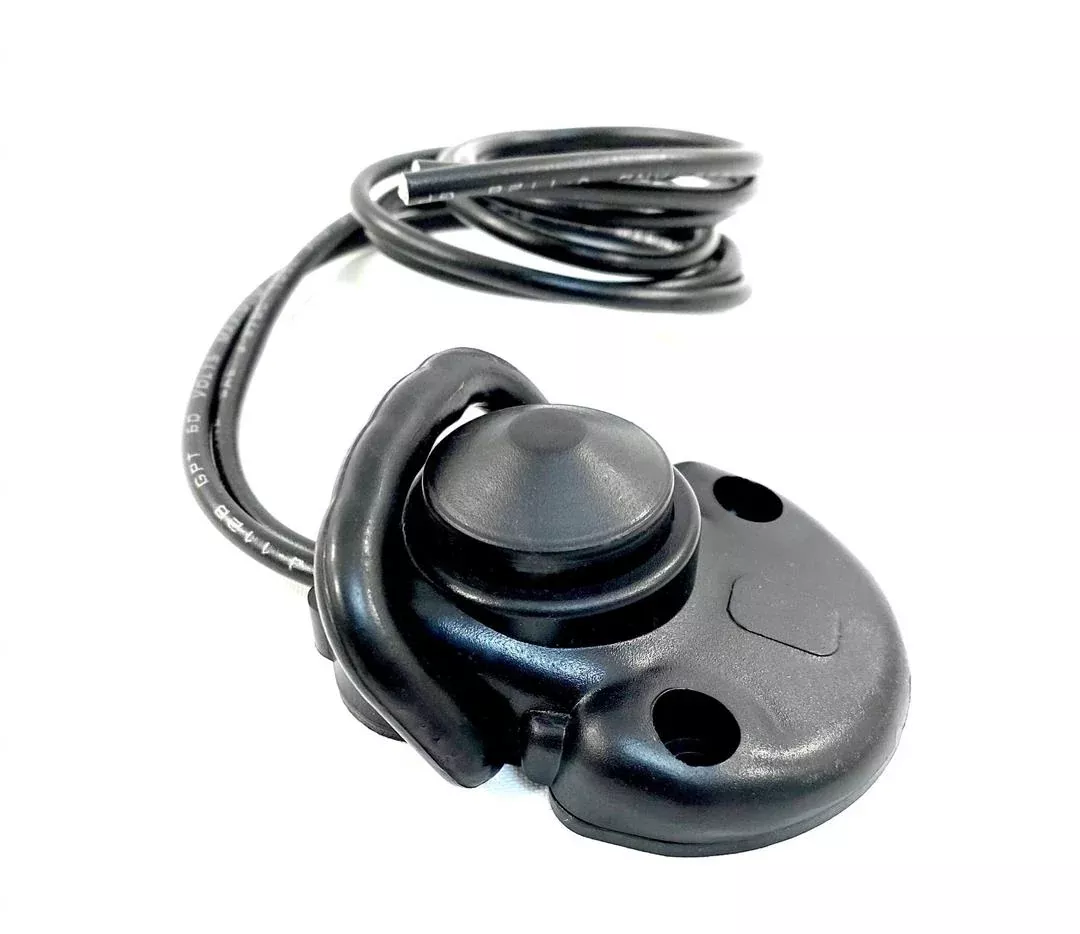
Free your hands for casting. The T-H Marine foot switch lets you operate a manually-controlled trolling motor with your foot, leaving both hands free for fishing instead of holding down a hand button.
The T-H Marine FCS-1-DP foot control switch (MPN FCS-1-DP) is a marine-grade momentary foot switch for use with manually-operated trolling motors. You install it on the bow deck or trolling motor mount, route the switch wire to the trolling motor’s manual control input, and step on the switch to activate the motor. Releasing your foot deactivates the motor. The result is hands-free trolling motor operation – both hands stay free for casting, hook-setting, and fish-fighting.
Why this matters. Manually-operated trolling motors require constant operator input to maintain thrust. With a hand-button switch, you have to hold the button while the motor runs, which means one hand is committed to the switch and only one hand is free for actual fishing. The foot switch frees both hands by transferring the activation duty to your foot. You step on the switch when you need thrust, release when you don’t, and your hands stay on the rod the whole time.
Construction and durability. The switch body is molded marine-grade plastic with a non-skid foot surface. The internal contacts are corrosion-resistant for saltwater compatibility. The wire is marine-grade insulated copper with sealed terminations to prevent water intrusion. Field reports indicate the switch lasts multiple seasons of regular use without contact wear, and the non-skid foot surface keeps a wet boot from sliding off mid-cast.
Installation is straightforward. Position the switch on the bow deck or trolling motor mount where your foot naturally rests during operation. Run the wire from the switch to the trolling motor’s manual control input. Secure both with the included hardware. Plan 15 to 30 minutes for the install. No drilling is required if you use the included surface-mount adhesive backing, or you can drill mount holes for a more permanent installation.
Compatibility. The switch works with any manually-operated trolling motor that accepts a remote momentary switch input. Most basic entry-level manually-operated trolling motors support this kind of upgrade. For variable-speed digital motors with proprietary controls (digital variable-speed trolling motors), the foot switch typically doesn’t integrate cleanly because those motors use digital signals rather than simple momentary contacts.
Why pay for a marine-grade switch. Two reasons. First, the marine environment is hard on electrical switches – non-marine switches develop contact corrosion within a season of saltwater exposure and start failing under load. The T-H Marine switch is built for the marine environment. Second, the non-skid foot surface and marine-grade construction won’t fail at the wrong moment, which matters when you’ve got a fish on and need both hands free. The small premium over generic foot switches buys reliability that you’ll be glad to have on the water.
One practical install note. Position the switch where your foot naturally rests when you’re standing at the bow casting. Most anglers find that slightly behind their casting foot is the sweet spot – it’s close enough to reach quickly but out of the way of normal foot positioning. If you fish from a seated position, position the switch on the deck where your foot rests in the seated stance. The exact placement is personal preference, but get it close enough that you can engage it without looking down.
A practical note on wire run length. The T-H Marine switch ships with a standard-length lead that suits most install positions on a small to mid-sized bow. If you need a longer run (some larger boats want the switch position farther from the trolling motor than the lead reaches), you can extend the wire with marine-grade splice connections and butyl sealant at the splice points. Don’t use indoor electrical wire nuts – they corrode in the marine environment and develop high-resistance connections that cause switch failures. Use proper marine splice technique with heat-shrink butt connectors and the install will last as long as the switch itself.