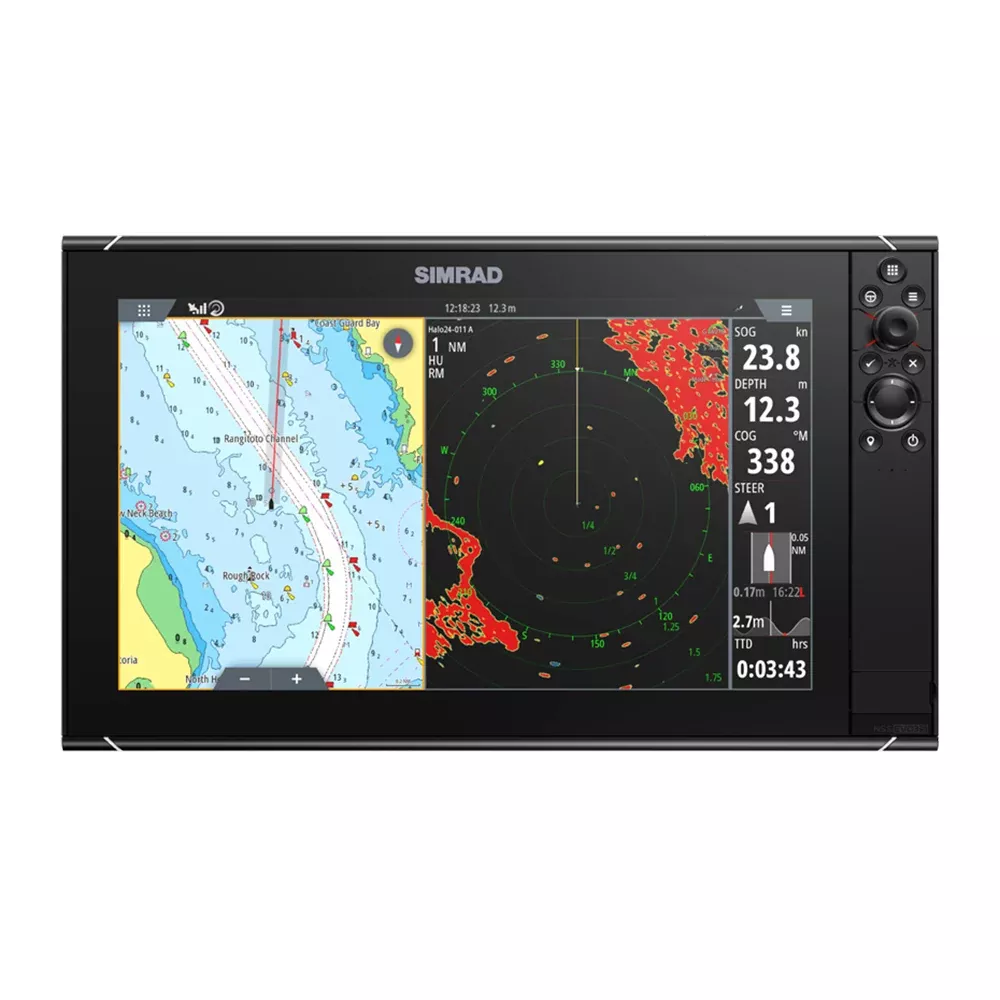
The Simrad NSS16 evo3S is the 16-inch all-weather glass-bridge multifunction display for serious helms. SolarMAX IPS touchscreen with optical bonding, the iMX8 quad-core processor, dual transducer ports, 1kW CHIRP plus ForwardScan sonar, HALO radar ready, and preloaded C-MAP US Reveal cartography. Built for offshore center consoles, sportfishers, and cruising sailboats running real navigation systems.
The Simrad NSS16 evo3S is the big-screen MFD for the helm where 12 inches isn’t enough. 16.0-inch SolarMAX IPS display, optically bonded against fogging and condensation, with the iMX8 quad-core processor running underneath. Page loading is twice as fast as the older evo3 generation and split-screen views with sonar, chart, radar, and instruments running simultaneously feel fluid instead of laggy. For boats with the dash space and the budget for it, this is the unit that turns the helm into a real navigation station.
SolarMAX is the Simrad display technology that earns its name. Wide viewing angles let your crew read the screen from the second seat or the flybridge ladder. Optical bonding eliminates the air gap between the LCD and the cover glass, which kills the condensation problem that older non-bonded units develop in cold-then-hot operating cycles. The screen is sunlight-readable in the worst Florida noon glare you can throw at it, and it stays usable through polarized sunglasses where cheaper non-IPS panels go dark at the wrong angle.
The iMX8 quad-core processor is the upgrade over the older evo3 generation that you actually feel. Multiple split-screen views, chart panning, sonar scrolling, radar scanning, and AIS targets all running at once with no lag. Switch from a chart-and-sonar split to a four-window view with chart, radar, sonar, and engine data, and the unit just does it. Older glass-bridge MFDs lagged on transitions, sometimes catastrophically when you needed a new view in a hurry.
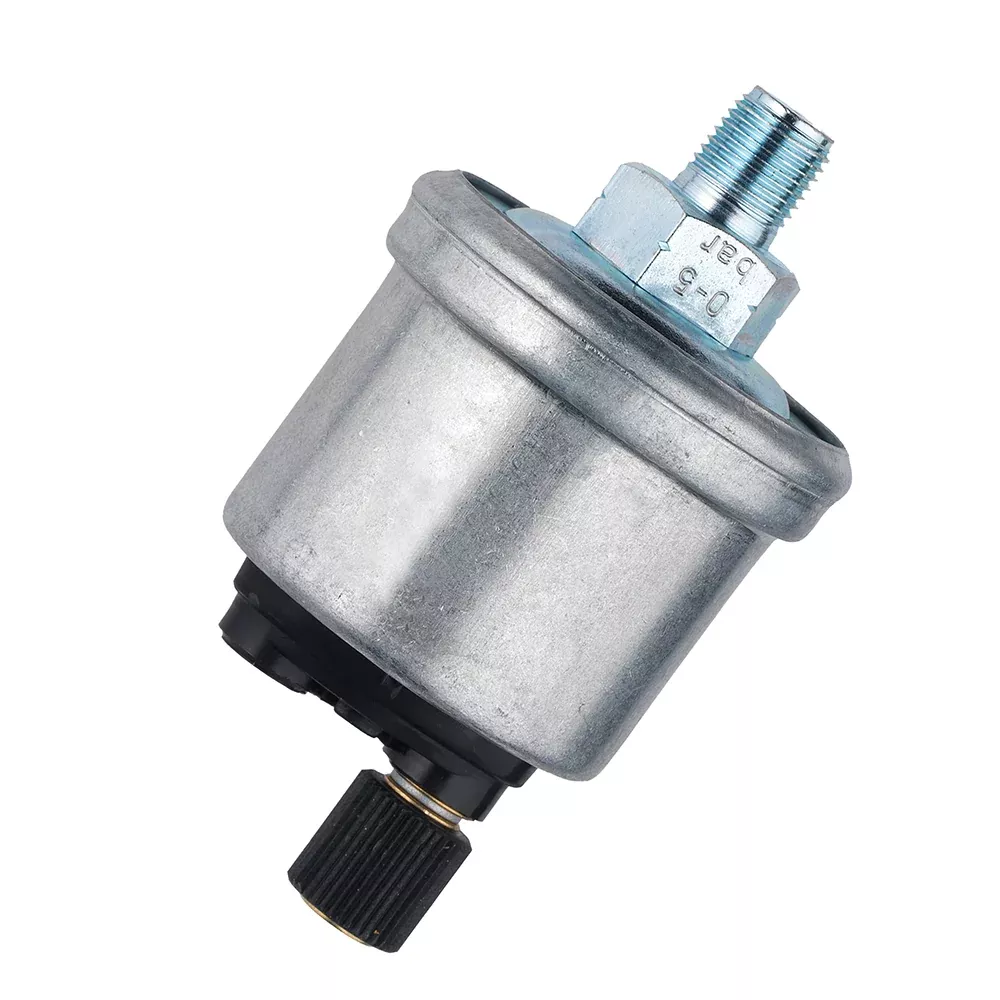
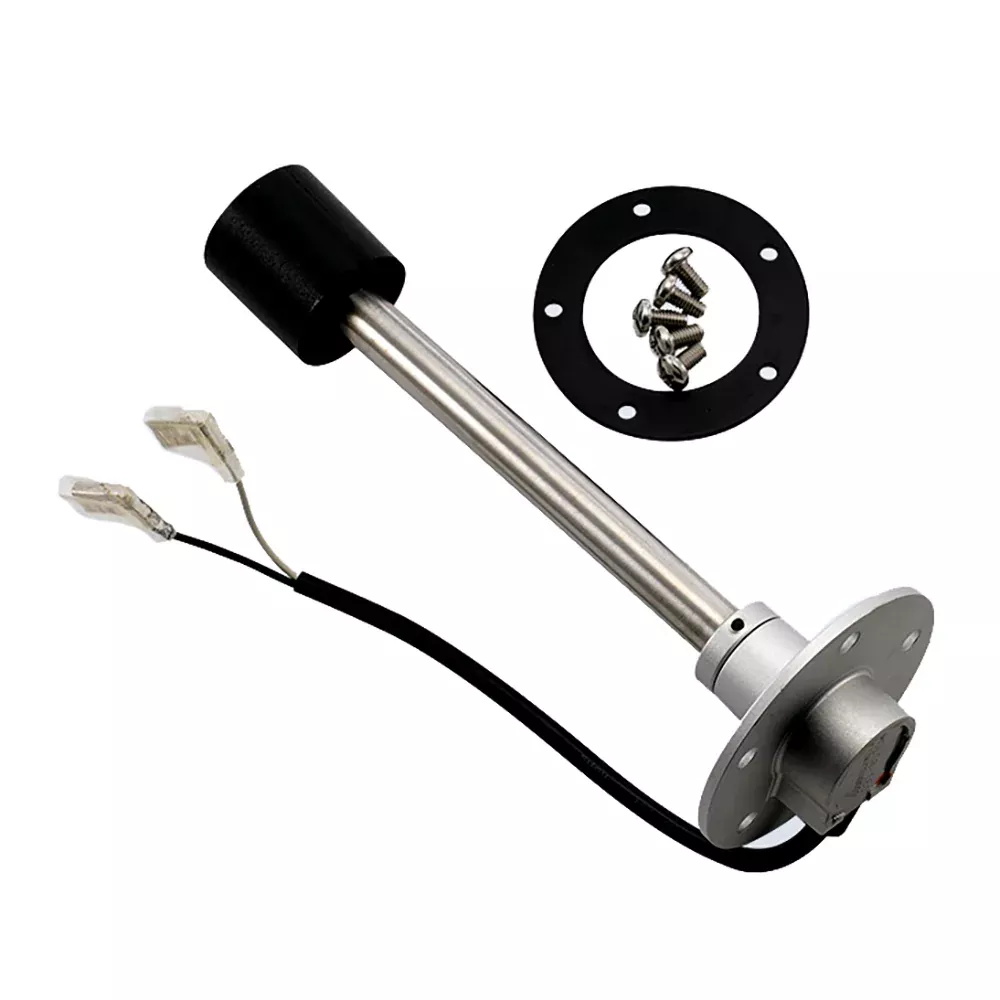
Sonar. Built-in 1kW CHIRP sonar engine for high-power deep-water and offshore work. Dual transducer ports on the back of the unit, so you can run two transducers at once (typical install: a transom transducer for everyday work plus a thru-hull or in-hull thrusters for deeper water). Active Imaging 3-in-1 transducer support gives you SideScan, DownScan, and CHIRP in one unit. ForwardScan sonar gives you a forward-looking view ahead of the boat, which is the feature that prevents grounding when you’re navigating unfamiliar shallow water at low speed.
Charting. Preloaded with high-resolution US inland and coastal C-MAP charts, plus a C-MAP Reveal layer of the Florida ocean floor that’s notably good for reef fishing and offshore navigation. The unit accepts additional cartography from C-MAP, Navionics, CMOR, and Florida Marine Tracks on the dual SD card slots. Chart orientation has a one-button toggle between North Up, Heading Up, and Course Up so you don’t have to dig into menus during a tight pass. The Tide Graph lives in the instrument bar so you can monitor tide changes without leaving your active page.
The Simrad UI on the evo3S got real attention from the engineering team. The dark-themed wallpaper option reduces light pollution at the helm during night running, important when you’re running a multi-screen glass bridge that would otherwise wash out your night vision. The audio sidebar can expand to a full-page view when you actually want to dig into your audio source.
Wireless connectivity. Built-in WiFi mirrors the display to compatible iOS and Android devices via the Simrad app, so you can read charts, sonar, engine data, and radar from your phone or tablet anywhere on the boat. The same WiFi handles online software updates over any internet hotspot, plus access to the Simrad app for device registration, manual downloads, waypoint sync, and personal-spot management.
Networking. The NSS16 evo3S sits at the top of the Simrad network. Two Ethernet ports for high-speed display, sonar, and radar networking. NMEA 2000 for engine data, fluid levels, autopilot, and the broader vessel network. NMEA 0183 input on the multi-function cable for older devices. HDMI out for an external monitor or video distribution. Two USB ports for keyboard, mouse, or mass storage. Video input on the composite line for analog cameras, plus support for IP cameras over Ethernet.
Radar. HALO Pulse Compression radomes and HALO open-array radars all integrate over the Ethernet network. HALO is the Simrad solid-state radar line that gives you simultaneous short-range and long-range coverage on a single dome, plus Doppler bird and target tracking. For offshore boaters running in fog, busy harbors, or after dark, the HALO + NSS16 combination is one of the best collision-avoidance setups in the recreational market.
Thermal imaging. The unit integrates with FLIR M-Series thermal cameras over Ethernet for night running and situational awareness. Pan, tilt, and full image control from the touchscreen.
Weather. Add the Simrad WM-4 SiriusXM Marine Weather receiver and a SiriusXM Marine subscription for offshore weather data, weather radar, lightning, storm warnings, sea surface temperature, and Fish Mapping data overlaid on the chart. The combo turns the NSS16 into a real offshore decision-support tool.
Autopilot. Native integration with Simrad autopilots over the network, including the AC42, AC70, and AP44 autopilot computers. Waypoint navigation and route following are managed from the MFD with the autopilot doing the actual steering, which is the right division of labor for serious cruising.
What’s in the box. The display unit, bezel trim, documentation pack, power cable kit, and the panel mounting kit. Surface and flush mounting kits sold separately depending on your install plan. Sun cover sold separately.
2-year limited Simrad warranty. Same-day shipping before 3 PM ET on in-stock units.