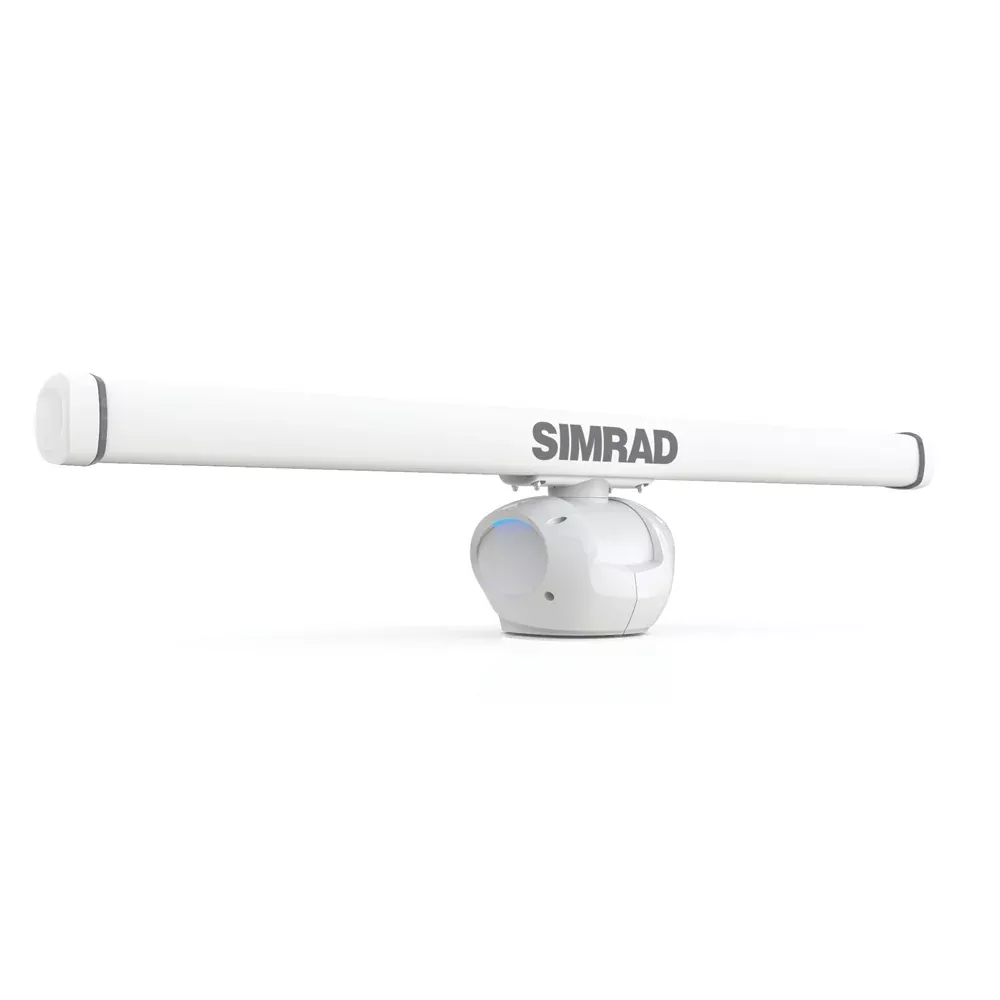
Simrad’s original-generation HALO pulse-compression radar in the 6-foot configuration. The HALO-6 delivers solid-state radar through a 6-foot open array, with the RI-12 radar interface module for connection to compatible MFD platforms, and a 20-meter cable for mast-to-helm runs.
The Simrad HALO-6 Radar with 6-foot Open Array and 20M Cable (MPN 000-11471-001) is the 6-foot model in Simrad’s HALO original-generation series, the top tier of the HALO solid-state pulse-compression radar line. The package includes the HALO original-generation pedestal with built-in radar electronics, the 6-foot open-array antenna, and a 20-meter cable run for installs where the radar mount is well separated from the helm electronics. For boats that want commercial-grade detection performance with solid-state convenience features (instant-on, low standby power, longer service life), the HALO-6 is the radar that delivers on both fronts.
50 watts equivalent to 25 kilowatts of magnetron. This is the headline performance claim that defines what HALO original-generation actually is. Through advanced pulse-compression technology with beam sharpening, 50 watts of solid-state transmit delivers detection range and target resolution that historically required a 25-kilowatt magnetron radar. The result is 6-meter (20-foot) close-range detection up to 96-nautical-mile maximum range, all from a solid-state radar that’s instantly ready from standby and reaches full operation in 16-25 seconds from power-on. No magnetron warm-up. No high standby draw. No rotor service life concerns.
VelocityTrack Doppler technology. The HALO-6 directly measures whether each radar return is moving toward you or away, and color-codes targets so moving boats stand out from stationary returns at a glance. For collision avoidance in busy waters, this is the feature that turns radar from an instrument you reference between maneuvers into your primary real-time situational awareness tool. Approaching vessels jump off the screen against buoys, shorelines, and reflections, and you can interpret the threat picture in one look instead of watching successive sweeps.
ZoneTrack target tracking. ZoneTrack brings professional-boating target tracking to recreational helms, letting you define up to two zones in which the radar automatically tracks up to 50 vessels per zone, detecting course, speed, and movement patterns without manual ARPA acquisition. For boats operating in busy commercial-traffic waters, harbor approaches, or fishing grounds with multiple boats in proximity, ZoneTrack gives you automatic situational awareness on every target in the defined zones, not just the ones you manually tag.
Dangerous Target Alerts. The HALO-6 highlights range, graphical bearing, and heading of vessels relative to your position when their track suggests a collision threat. Combined with VelocityTrack Doppler highlighting and ZoneTrack automatic tracking, the Dangerous Target Alerts give you proactive collision warning rather than passive radar display. For operators who can’t watch the radar continuously through long passages, the alerts surface the targets that need attention.
Four operating modes. Harbour mode tunes the radar for close-range, high-clutter environments with lots of small targets and shoreline reflections. Offshore mode optimizes for long-range detection with reduced near-field detail. Weather mode tunes the radar for storm and precipitation cell detection, useful for weather routing on offshore passages. Bird mode tunes the radar for sea-bird detection, the lead indicator for finding bait balls and fish for offshore sport-fishing operations. Mode switching is one-touch on the chartplotter interface, no manual gain/clutter retuning required.
Dual Range with overlay. The HALO-6 provides simultaneous short and long-range display from a single antenna, with independent range and gain settings for each range and overlay on the chart. Watch distant weather cells while monitoring channel markers and high-speed watercraft up close, both at the same time, without manually switching ranges. For boats that need both situational pictures simultaneously, dual range eliminates the constant range-switching workflow that older radars required.
Pulse-compression technology with beam sharpening. The HALO-6 uses CHIRP-style pulse compression for the radar transmit, which delivers detection capability disproportionate to the raw transmit power. Beam sharpening processing tightens the effective antenna beamwidth electronically, improving target separation beyond what the physical 6-foot antenna alone would deliver. The result is target resolution and range capability that competes with the largest magnetron radars in the recreational and light-commercial class.
Solid-state advantages. Three operational benefits over magnetron alternatives at this performance level. First, instant-on operation from standby and 16-25 seconds from power-on, versus 90 seconds to two minutes of magnetron warm-up. Second, low standby power draw, versus high magnetron standby load. Third, longer service life and lower long-term ownership cost, magnetrons need periodic professional service while solid-state radars don’t. For boats that prioritize convenience and long-term reliability alongside detection performance, solid-state is the right technology.
Integration. The HALO-6 connects to Simrad multifunction displays (NSS, NSO, NSX series and compatible models) via the Simrad network, with full integration for chart overlay, ARPA/MARPA target tracking, ZoneTrack zone configuration, VelocityTrack Doppler display, Dangerous Target Alerts, and standard radar controls operating through the MFD interface. For boats running a full Simrad electronics ecosystem, the HALO-6 is the radar that ties cleanly into the rest of the helm stack.
What’s in the boxes. The HALO original-generation pedestal with built-in radar electronics, the 6-foot open-array antenna, and the 20-meter cable for the mast-to-helm run. The 20-meter cable length is important, longer than the typical 15-meter spec, so the radar accommodates installs where the radar mount and helm electronics are well separated (large vessels, dedicated radar arches set back from the helm).
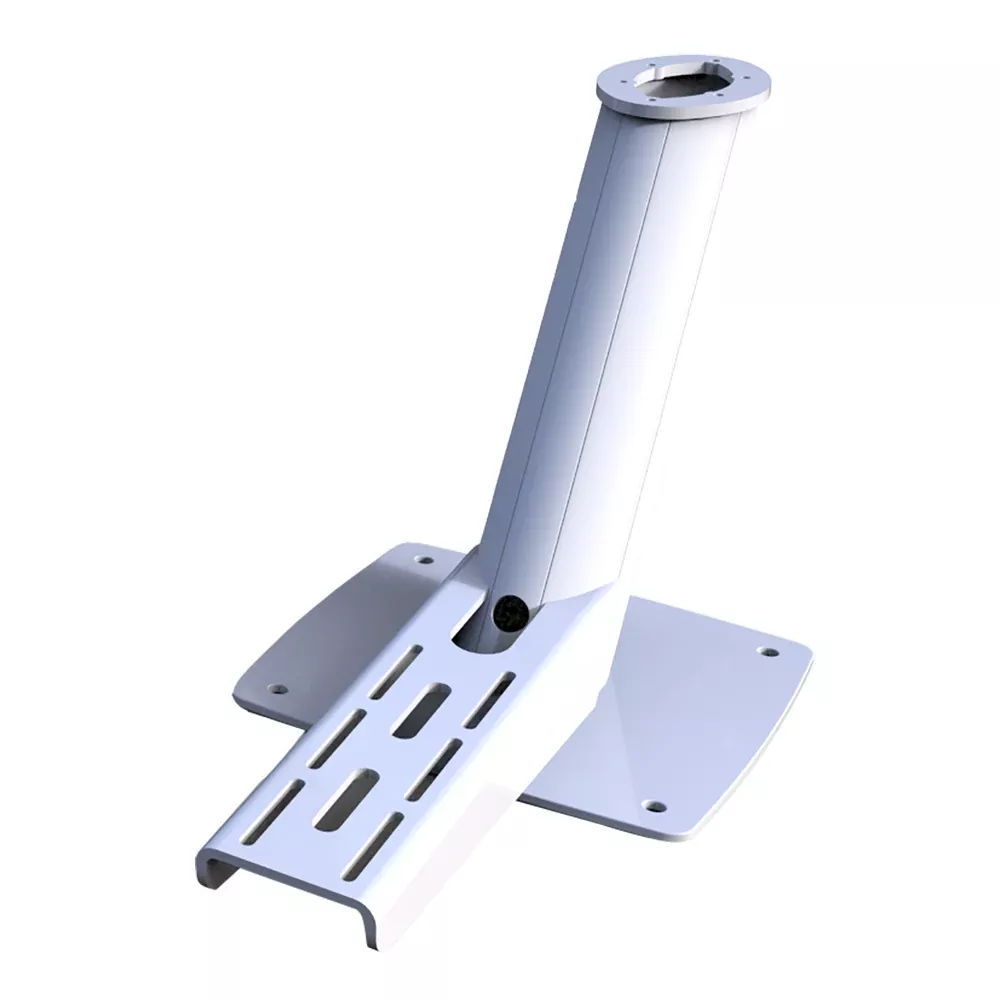
Install considerations. The pedestal mounts on a radar arch, hardtop, mast, or dedicated radar pedestal with structural support for the 6-foot antenna and rotating assembly. The 20-meter cable routes between the mast and the helm electronics, with adequate cable management for the long run. Power is 12V or 24V DC. Total install is a marine electronics installer day for a clean job. Not casual DIY because the mast mount, cable routing over the 20-meter distance, and chartplotter commissioning all benefit from professional setup.
What the RI-12 interface adds. The included RI-12 radar interface module bridges the HALO-6 pedestal to compatible multifunction display platforms, handling protocol conversion and signal management between the radar and the helm electronics. The module sits in the electronics bay between the radar cable run and the MFD network connection, with its own power supply requirements. For original-generation HALO installs that need the RI-12 bridge, this configuration delivers the complete kit rather than requiring the interface to be sourced separately.
Why pay this much. Three reasons. First, solid-state pulse-compression performance that matches 12kW magnetron detection range and target clarity, without magnetron warm-up, standby load, or service-life issues. Second, modern detection features (VelocityTrack Doppler, ZoneTrack, Dangerous Target Alerts) that turn radar from passive display into active collision-avoidance tool. Third, the 6-foot open array delivers target separation that smaller HALO models (the 4-foot and dome configurations) can’t match, at ranges that matter for offshore navigation and commercial-traffic awareness. For owners building or refitting a serious helm on the Simrad ecosystem, the HALO-6 with 20M cable is the radar that earns its position.