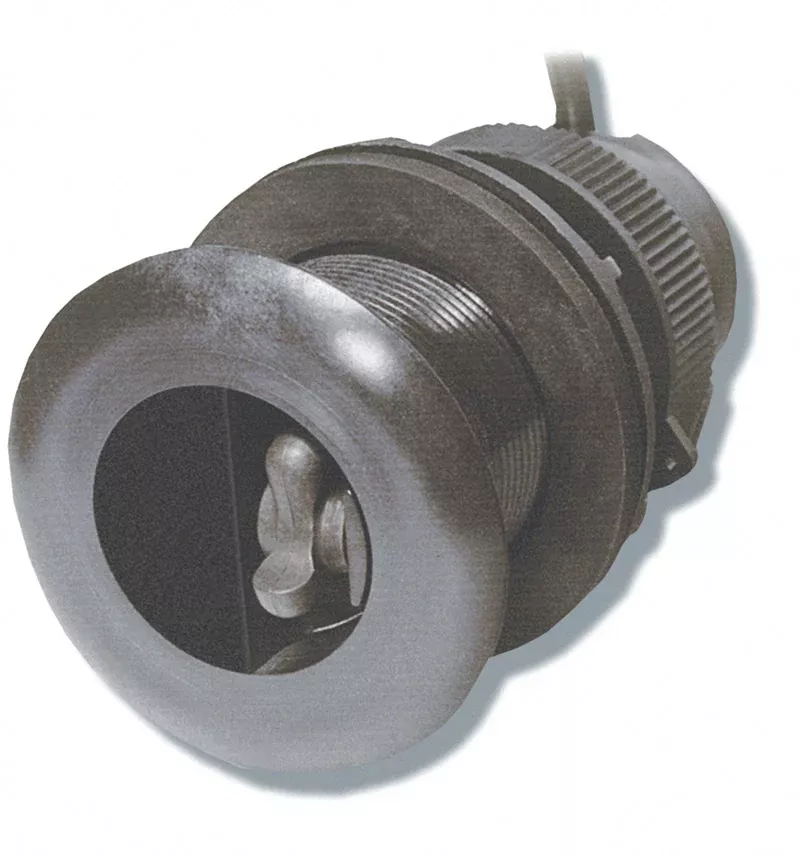
Navigating choppy waters or charting precise courses demands reliable data from your marine electronics. The Simrad DST800 Plastic Triducer stands out as a robust thru-hull sensor that delivers accurate depth, speed, and temperature readings at 235 kHz, all connected seamlessly via DeviceNet. Crafted from durable plastic, this triducer mounts flush through your hull, minimizing drag while providing crystal-clear sonar performance for recreational boaters and serious anglers alike.
Precision Engineered for Real-World Boating
Unlike bulkier metal alternatives, the plastic housing resists corrosion in saltwater environments, ensuring long-term reliability without the weight penalty. Operating at 235 kHz, it excels in shallow waters—think bays, rivers, or coastal inlets—where higher frequencies cut through clutter for sharper bottom contours and fish arches. Speed-through-water calculations help you optimize fuel efficiency, and the integrated temperature sensor keeps you informed on water conditions for better fishing or navigation decisions.
Seamless DeviceNet Integration
DeviceNet connectivity unlocks plug-and-play compatibility with Simrad’s ecosystem, transmitting data directly to multifunction displays, autopilots, and chartplotters. No more wrestling with analog cables or signal dropouts; this digital backbone supports networked setups, letting multiple instruments share vital info in real time. It’s ideal for upgrading older systems or building a modern helm station that responds intuitively to changing conditions.
Key Performance Highlights
Triple Functionality: Depth at 235 kHz for high-resolution imaging, paddlewheel speed log, and fast-response temperature probe.
Compact Design: Low-profile thru-hull installation suits hulls from 20 to 60 feet, with minimal turbulence.
Rugged Build: Impact-resistant plastic withstands trailering, launching, and rough seas.
Digital Reliability: DeviceNet protocol reduces noise interference, delivering consistent data even at high speeds.
Why Boaters Trust This Triducer
Imagine threading the needle through a foggy inlet: the DST800’s pinpoint depth accuracy prevents groundings, while speed data fine-tunes your throttle for smoother rides. Anglers appreciate how it reveals structure and bait schools in under 20 feet of water, turning ordinary outings into trophy hauls. Its non-generic calibration shines in varied conditions—from murky estuaries to clear offshore drops—outperforming entry-level sensors that falter in sediment-heavy zones.
Effortless Installation Insights
Fairing blocks and precise hull alignment are key to maximizing beam spread. Boat owners often pair it with anti-fouling paint on the exterior face to combat marine growth, extending service intervals. During setup, route the DeviceNet cable away from high-voltage lines to avoid electromagnetic interference, ensuring data flows uninterrupted. Regular fairing checks post-launch keep readings true, saving headaches down the line.
Versatile Applications Across Vessels
From center consoles chasing reefs to sportfishers on tournaments, this triducer adapts effortlessly. Sailors use its speed log for true wind calculations, while kayakers and small skiff operators value the lightweight install. In competitive scenarios, the 235 kHz sensitivity edges out competitors by locking onto targets faster, giving you the informational advantage.
Maintenance for Peak Performance
Keep it thriving with seasonal cleanings—vinegar soaks dissolve barnacles without scratching the transducer face. Monitor paddlewheel spin during winter storage to preempt failures. Over years of service, DeviceNet diagnostics flag issues early, minimizing downtime and keeping your adventures on course.
Frequently Asked Questions
What frequencies does the Simrad DST800 Triducer operate at?
It specializes in 235 kHz for depth soundings, optimized for shallow to mid-range water clarity, alongside speed and temperature sensing.