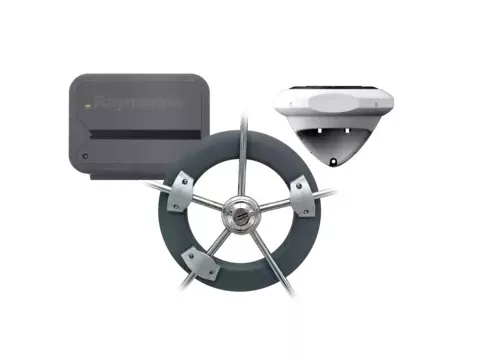
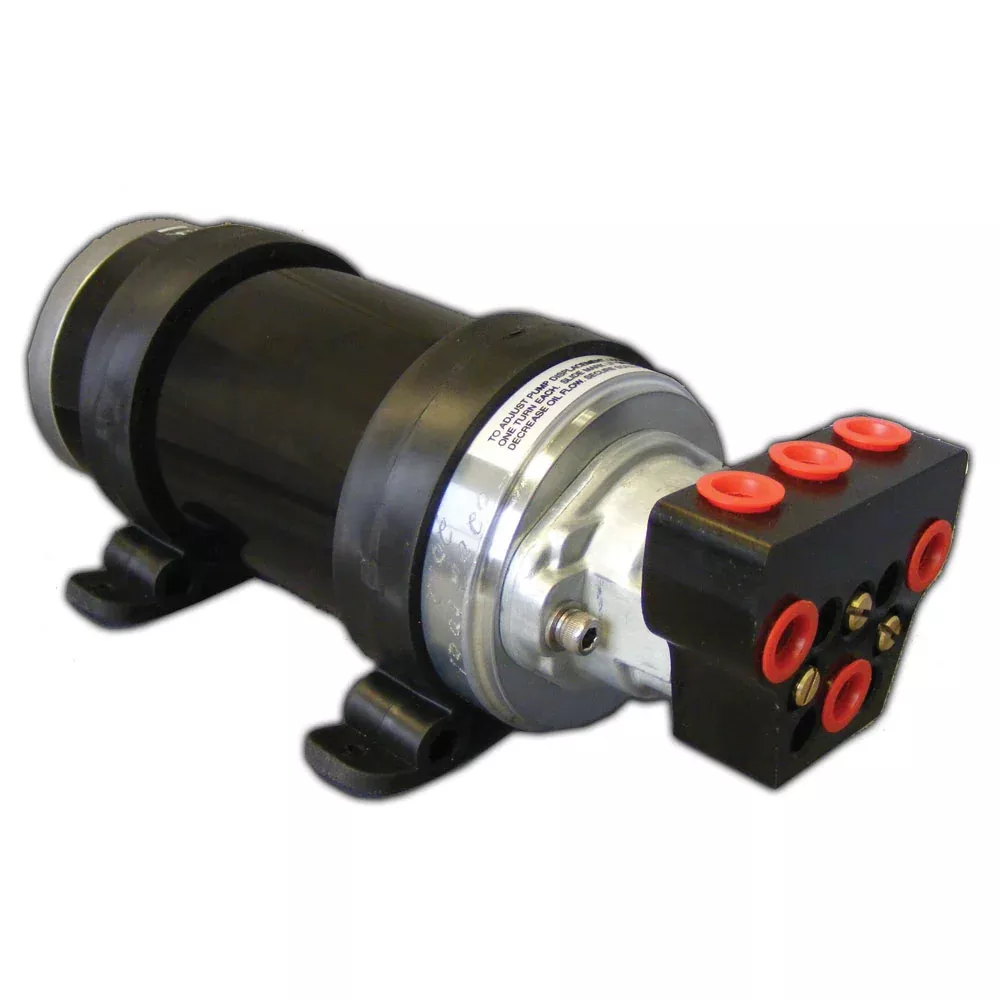
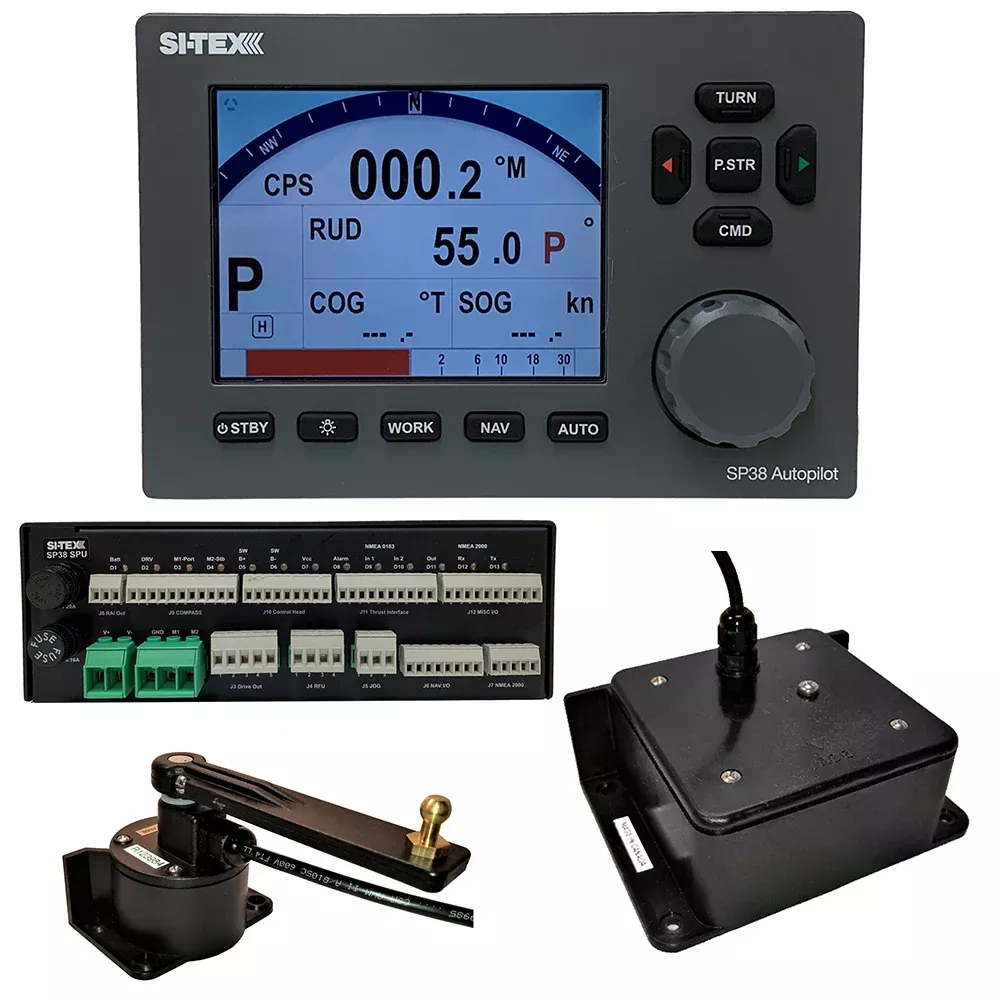
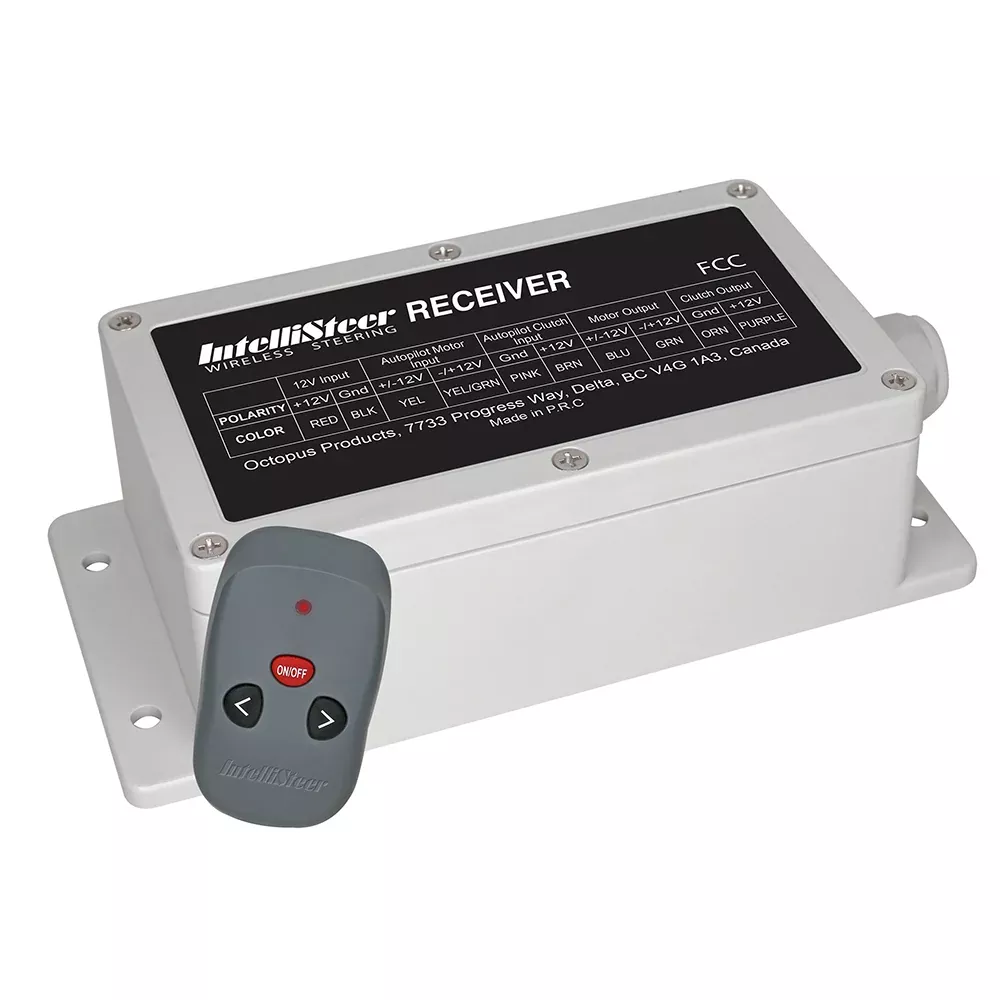
The Raymarine EV-100 Sailboat Wheel Pilot – No Control Head variant (MPN T70248) is the complete external-drive autopilot kit for wheel-steered sailboats up to 16,500 lbs (7,500 kg) displacement – everything needed except the control head. Designed specifically for DIY installations on cockpit-mounted wheels – the wheel drive mounts externally on the spokes of the existing steering wheel (no integration with the steering pedestal required). Includes four components: the E12093 Wheel Drive (the external drive unit that mounts on the wheel spokes), the E70098 ACU-100 Autopilot Control Unit (the brain that commands the drive), the E70096 EV-1 Sensor Core (intelligent 9-axis heading sensor using aerospace guidance technology that adapts and evolves to changing sea conditions and vessel dynamics), and the R70160 Cabling Kit (all interconnect cables for the system). The ‘No Control Head’ designation means this kit does NOT include a p70 / p70R / p70s autopilot control head – the right choice for boats that already have a compatible Raymarine control head OR boats where the chartplotter serves as the autopilot control interface. SeaTalk-NG and NMEA 2000 networking for integration with sailing instruments, chartplotters, and the broader Raymarine electronics ecosystem. No complicated setup or calibration – install, connect, sail.
The Raymarine EV-100 Sailboat Wheel Pilot is the company’s complete external-drive autopilot solution for wheel-steered sailboats – the right call for cruising sailors with cockpit-mounted wheels who want full autopilot capability without the complexity (and cost) of integrating a drive into the steering pedestal. The ‘wheel pilot’ designation means the autopilot drives the boat’s existing steering wheel directly – the drive mounts externally on the wheel spokes and turns the wheel via belt or gear coupling to maintain the autopilot’s commanded heading.
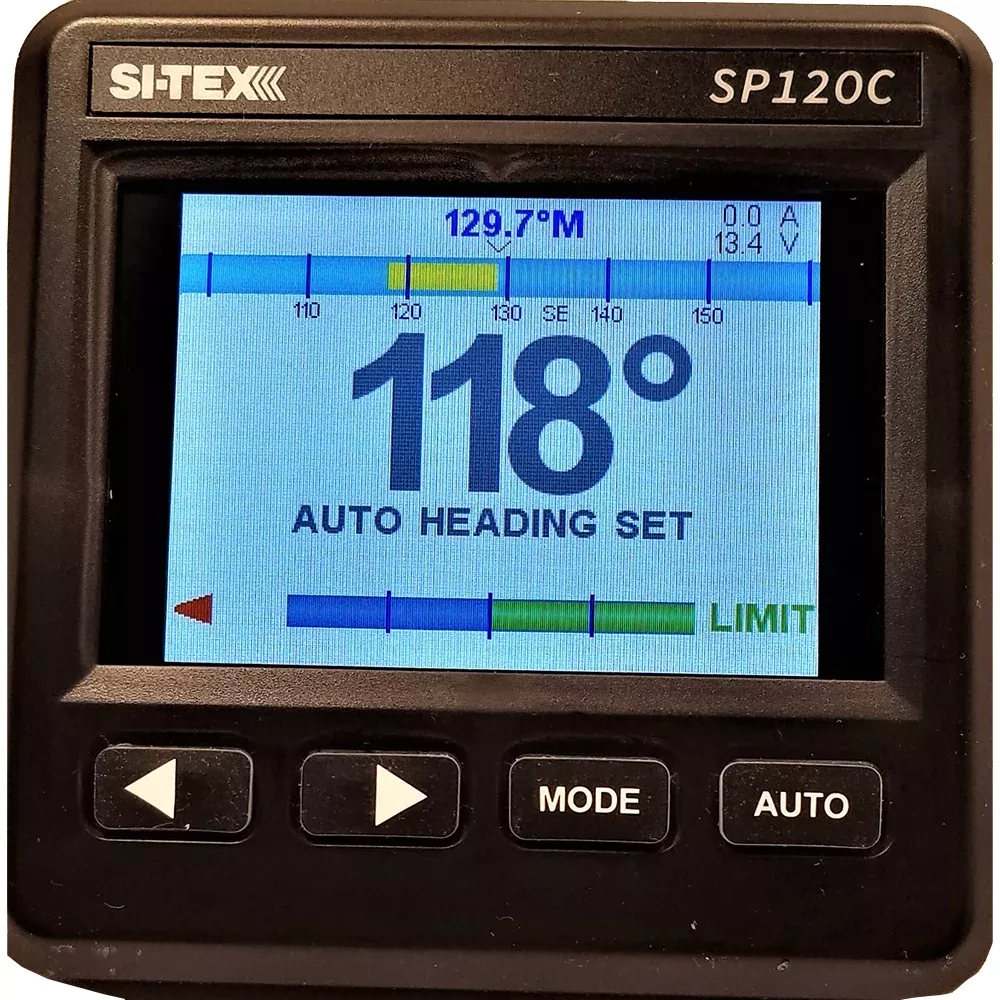
This variant: no control head. The T70248 variant ships WITHOUT the autopilot control head (the p70s or p70R unit that provides the user interface to the autopilot). For owners who already have a compatible Raymarine control head from a previous autopilot or other Raymarine electronics, OR for owners who plan to use the Raymarine chartplotter as the primary autopilot interface (most current Raymarine chartplotters can control compatible autopilots directly), the no-control-head variant is the cost-effective choice. The matching T70152 variant includes the p70s control head for owners who need to add a control head as part of the install. Verify your existing equipment before ordering this T70248 variant – if you don’t have a compatible control head AND your chartplotter doesn’t support autopilot control, you’ll need to source the control head separately.
For wheel-steered sailboats up to 16,500 lbs. The EV-100 is rated for sailboats up to 16,500 lbs (7,500 kg) maximum displacement. Sized for typical mid-size cruising sailboats (32-42 ft LOA range, give or take). For larger sailboats over 16,500 lbs displacement (which means 42+ ft cruising sailboats), step up to the EV-200 (or similar higher-rated Raymarine autopilot system). For smaller sailboats, the EV-100 has plenty of capacity. Match the autopilot drive capacity to the boat’s actual displacement plus margin for steering loads in heavy conditions.
External drive mounts on wheel spokes. The defining feature of the wheel pilot configuration – the drive unit (E12093 Wheel Drive) mounts externally on the spokes of the existing steering wheel rather than integrating with the steering pedestal mechanism. The wheel drive uses a belt or gear coupling to turn the wheel under autopilot command. Why this matters for DIY installation: no need to break into the existing steering chain or hydraulic system, no need to disassemble the pedestal, no need to bleed hydraulics. The wheel drive mounts in a few hours with hand tools. For DIY-oriented sailors who don’t want to pay for professional install OR risk damaging the existing steering system during install, the external drive approach is meaningfully simpler than integrated drives.
EV-1 Sensor Core – the aerospace-grade heading sensor. The EV-1 (E70096) is the intelligent 9-axis heading sensor at the heart of the EV-100’s accuracy. The sensor uses aerospace-grade guidance technology to continuously adapt and evolve its understanding of the boat’s dynamics and the current sea conditions. The 9-axis design uses three accelerometers, three gyroscopes, and three magnetometers in solid-state silicon – no moving parts, no calibration drift, no warmup time. The sensor learns the boat’s behavior over time and adjusts its course-keeping algorithms to deliver tighter heading control than older autopilots achieved. For sailing applications where the boat’s response varies meaningfully with wind, wave, and sail trim conditions, the adaptive intelligence matters.
ACU-100 Autopilot Control Unit. The ACU-100 (E70098) is the brain of the autopilot system – reads the heading data from the EV-1 sensor, computes the required steering correction, and commands the wheel drive to execute that correction. The ACU is also the SeaTalk-NG network interface for the autopilot – integrates the autopilot into the boat’s broader electronics network for chartplotter control, wind sensor integration, GPS waypoint following, and similar advanced functions. Install the ACU-100 in a protected location (typically electrical compartment) within reach of the wheel drive cable run and the SeaTalk-NG network.
R70160 Cabling Kit. The kit includes the R70160 cabling kit with all the interconnect cables needed between the EV-1 sensor, the ACU-100, the wheel drive, and the SeaTalk-NG backbone. The cables are pre-terminated with the appropriate Raymarine connectors – no on-site cable termination required. For DIY installs, the included cabling simplifies the install meaningfully vs sourcing individual cables separately.
SeaTalk-NG and NMEA 2000 networking. The EV-100 system integrates with the broader Raymarine electronics ecosystem via SeaTalk-NG (the current Raymarine network) and through NMEA 2000 interoperability. Integration capabilities: chartplotter integration (follow GPS waypoints / routes automatically), wind sensor integration (sail with wind hold or apparent wind angle control), sailing instrument integration (combined instrument and autopilot data), and dual-helm control (autopilot controllable from any station on the network). For boats with existing Raymarine electronics suites, the EV-100 drops into the network without complex integration work.
DIY installation. The EV-100 is specifically designed for DIY installation – ‘no complicated setup or autopilot calibration’ per Raymarine. The wheel drive mounts externally on the wheel spokes (no pedestal disassembly needed). The EV-1 sensor mounts in any orientation thanks to the 9-axis solid-state design (no critical orientation requirements). The ACU-100 mounts in any protected location. The cabling kit provides pre-terminated cables. The system self-calibrates on first use – just install, connect, and sail. Total DIY install runs 4-8 hours for a competent owner with reasonable mechanical and electrical skills.
What’s in the box. Four components plus cabling: E12093 Wheel Drive (the external drive that mounts on the wheel spokes), E70098 ACU-100 Autopilot Control Unit (the system brain), E70096 EV-1 Sensor Core (the 9-axis heading sensor), and R70160 Cabling Kit (interconnects). NOT included: p70s or p70R control head (sold separately as the T70152 variant includes the p70s. T70222 variant includes the p70R). For owners with existing Raymarine control heads or chartplotter-based control, no additional purchase needed.
Wheel drive externally mounted. The wheel drive attaches to the spokes of the existing steering wheel via clamps that grip the spokes without modifying the wheel. The motor turns the wheel through a friction or gear coupling. When the autopilot is engaged, the drive turns the wheel. when disengaged, the drive disconnects and the helmsman has full manual control without resistance. The external mount approach is the right call for owners who want reversibility – if you sell the boat later, the wheel drive removes cleanly without leaving any modifications to the steering system.
How autopilot helps sailing. Modern sailing autopilots like the EV-100 are dramatically more capable than older systems. Beyond basic heading hold, the EV-100 can: track GPS waypoints / routes from the chartplotter (autopilot steers the boat through the waypoint sequence), hold a wind angle (sailing with wind sensor integration – useful for shorthanded sailing where you can’t trim and steer simultaneously), execute tack and jibe maneuvers via the control head, and adapt to changing conditions automatically via the EV-1’s intelligent algorithms. For singlehanded and shorthanded sailing, modern autopilots aren’t just convenience – they’re enabling technology that makes serious sailing possible with reduced crew.
Drive belt service. The wheel drive uses a drive belt as part of the coupling mechanism. The belt is a wear item – replace every few hundred operating hours per Raymarine’s service recommendations. For typical cruising use (a few hundred hours per season), the belt typically lasts 3-5 seasons before requiring replacement. Replacement belts are available from Raymarine and the swap is straightforward.
Standard Raymarine warranty applies. Save the receipt and original packaging if practical for warranty service. Raymarine’s autopilot products have a long history of reliable performance in the cruising sailboat market – warranty issues are rare under normal use, and Raymarine’s service network handles real warranty claims well.