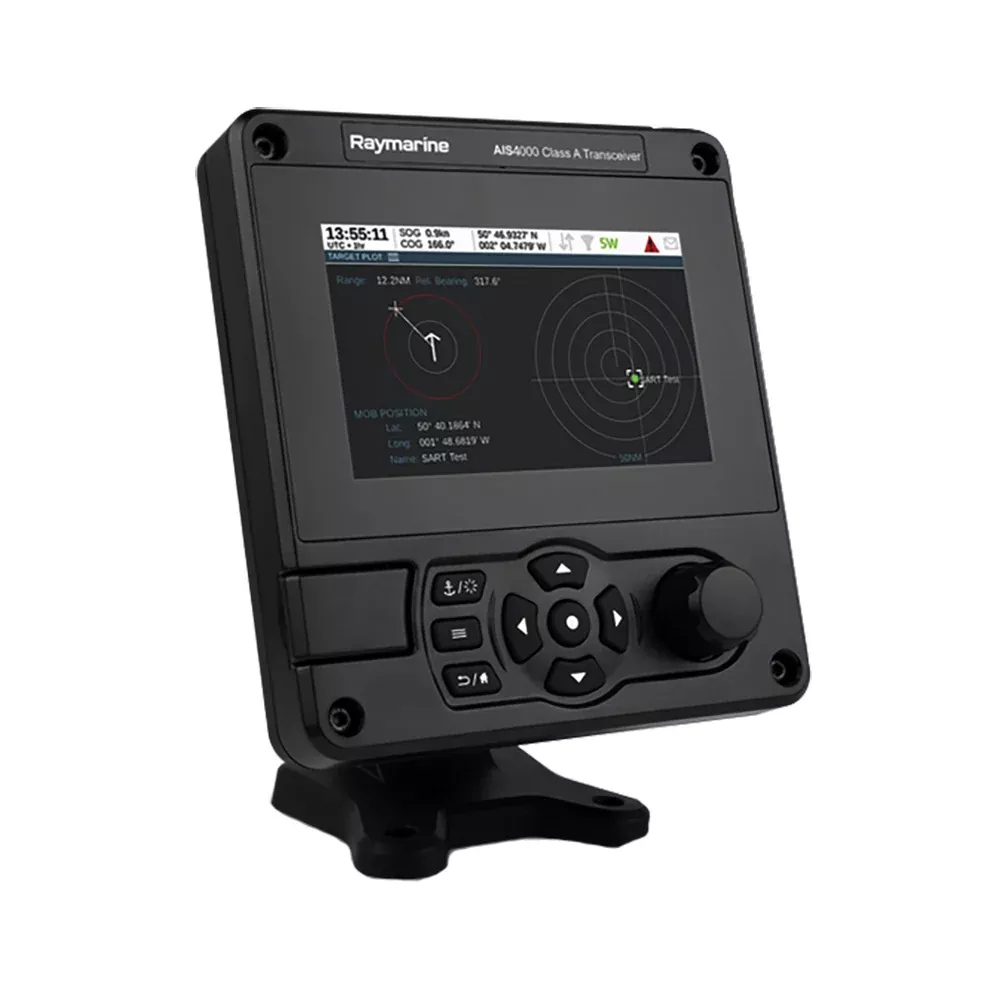
Navigating busy waterways or open oceans demands equipment you can trust without hesitation. The Raymarine AIS4000 steps in as a game-changer for captains of commercial ships, luxury yachts, and vessels under SOLAS regulations. This Class A transceiver doesn’t just broadcast your position—it paints a vivid, real-time picture of surrounding traffic, slashing collision risks and boosting situational awareness in fog, night, or crowded shipping lanes.
Unlock Superior Safety and Efficiency Onboard
Imagine glancing at a crisp 5-inch high-definition color display that overlays vessel tracks, charts, and critical alerts right at your fingertips. The AIS4000’s intuitive interface means less time fumbling with controls and more time making smart decisions. Its fourth-generation technology ramps up processing speed and range, ensuring you spot distant threats early. For yacht owners chasing adventure or commercial operators hitting tight deadlines, this unit integrates MOB (man overboard) and PLB (personal locator beacon) tracking, turning potential emergencies into swift rescues.
Key Advantages Over Standard AIS Systems
Enhanced Visibility: Full-color target plots with optional electronic navigation charts let you visualize threats via CPA (closest point of approach) and TCPA (time to closest point of approach) alarms—vital for evasive maneuvers.
Wireless Freedom: Built-in Wi-Fi pairs effortlessly with tablets or smartphones, extending your command center anywhere onboard.
Network Powerhouse: Hooks into NMEA 2000, NMEA 0183, and shipboard systems for seamless data sharing with radars, plotters, and ECDIS setups.
Rugged Reliability: IPX6/IPX7 waterproofing shrugs off pounding waves, while shock and vibration resistance handles the roughest seas—certified ‘protected’ under IEC 60945 standards.
Flexible Setup: Mount it overhead, on bulkheads, desktops, or flush surfaces to fit any bridge layout.
Engineered for the Toughest Marine Environments
Whether you’re battling North Atlantic swells or Mediterranean squalls, the AIS4000’s compact enclosure (just 152 x 165 x 70 mm and 1 kg) packs a punch. Operating from -15°C to +55°C, it thrives where lesser units falter. Dual VHF receivers and a powerful transmitter (up to 12.5W) ensure crystal-clear signals across 156-162 MHz channels, even in high-traffic zones. The integrated 72-channel GNSS receiver juggles GPS, GLONASS, and BeiDou for pinpoint accuracy, compliant with IEC 61108 standards.
Effortless Connectivity for Modern Vessels
Integration headaches? Not here. Multiple serial ports, alarm relays, and a dedicated pilot port (optional) make it a hub for sensors and displays. The included junction box expands connections, while DeviceNet to STng cabling bridges legacy and cutting-edge networks. Wireless networking keeps your crew connected without a tangle of wires, perfect for dynamic operations.
Detailed Technical Specifications
Category
Specification
Physical
Dimensions
152 mm x 165 mm x 70 mm
Weight
1 kg
Electrical
Power Supply
12 to 24 VDC
Power Consumption
0.5A at 12V (6W)
Display & User Interface
User Interface
5″ 800 x 480 full color LCD
VHF Transceiver
Transmitter/Receiver
1 Tx / 3 Rx
Output Power
1W or 12.5W (automatic)
Receiver Sensitivity
-107 dBm @ 20% PER
Environmental
Waterproof Rating
IPX6/IPX7
Operating Temperature
-15°C to +55°C
Complete Package for Quick Deployment
Everything you need arrives ready to install: the core AIS4000 bundle, GNSS antenna for rock-solid positioning, power and data cables, fixings pack, DeviceNet to STng adapter, plus essential guides and templates. Junction box included for pro-level wiring.
Frequently Asked Questions
What makes Class A AIS different from Class B?
Class A AIS, like the Raymarine AIS4000, transmits at higher power (up to 12.5W) with faster updates, making it mandatory for larger commercial and SOLAS vessels. It’s ideal for high-traffic areas where visibility is critical.