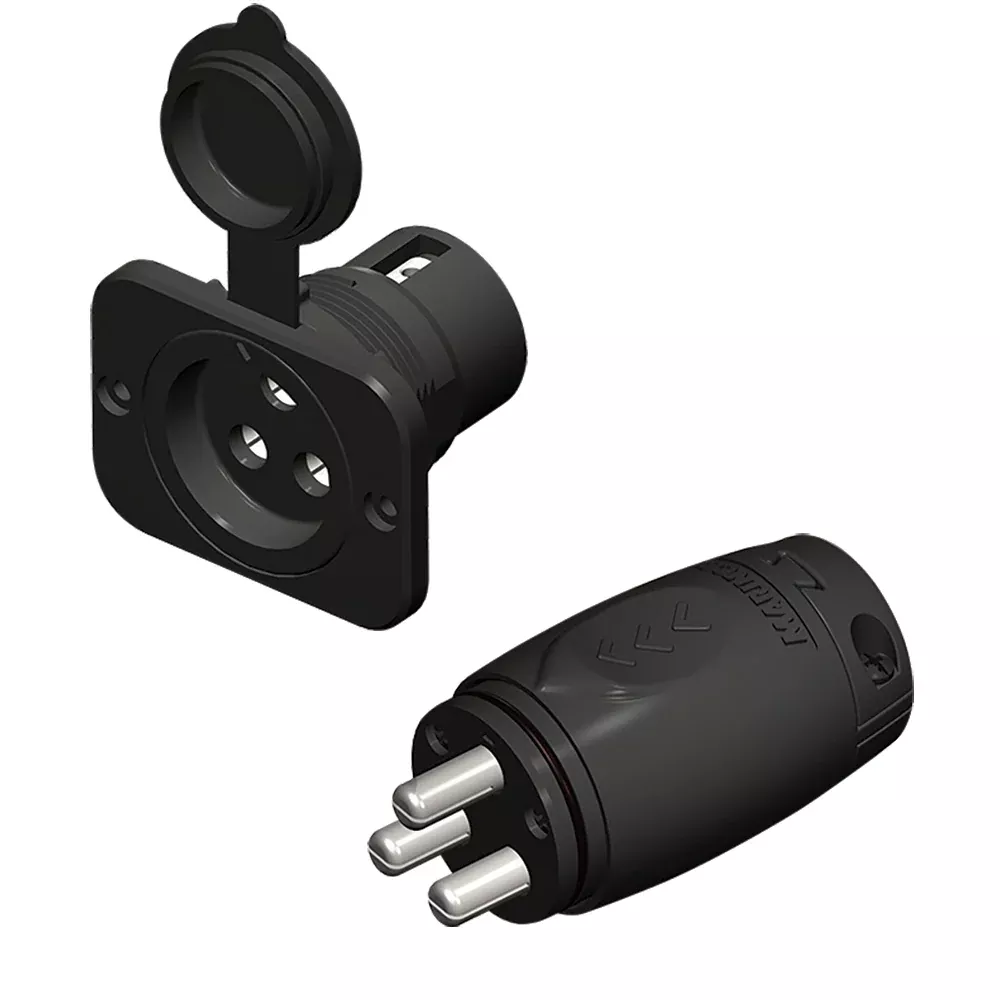
The Marinco 12VCPS3 70A Trolling Motor Plug and Receptacle (MPN 12VCPS3, UPC 093344062278) is the standard reference plug-and-receptacle set for connecting modern trolling motors to the boat’s power circuit – a 70-amp continuous rating compact weatherproof connector that lets you disconnect the trolling motor from the power feed for stowing, transport, or service without permanent disconnection of the boat wiring. Marinco is the standard reference brand in marine electrical plug / receptacle systems with decades of field-proven product reliability across recreational and commercial marine applications. Practical purpose: trolling motors require substantial power feed (60+ amps continuous at full thrust on 12V systems, similar magnitude on 24V/36V systems), and the wire run from the battery bank to the bow trolling motor position is heavy gauge (6-4 AWG marine cable). Without a plug-and-receptacle, the trolling motor power cable is permanently wired to the boat’s battery system – removing the motor for storage, service, or trailer transport means disconnecting at the battery terminals (inconvenient and risky for accidental short circuits during disconnect). The 12VCPS3 connector lets you disconnect at the bow position: the receptacle mounts permanently on the bow deck with wiring to the battery, the plug attaches to the trolling motor cable, and the plug pulls out of the receptacle for motor removal. 70-amp continuous rating handles the full thrust of typical 12V and 24V trolling motors (typical electric-steer motors). For very high-thrust 36V motors (112 lb+ thrust drawing 50+ amps continuous), the 70A rating provides safety margin. Despite the 12V designation in the model number, the receptacle works with 12V, 24V, AND 36V trolling motor systems (the connector handles current. voltage is determined by the battery bank wiring). Compact waterproof footprint suitable for permanent bow deck mounting – exposed to weather, occasional wave wash, and the typical wet marine environment. Corrosion-resistant plated brass electrical components. Receptacle includes watertight sealing cap to protect contacts when plug isn’t inserted. Plug features integrated strain relief (prevents cable damage at the plug entry from repeated unplugging and motor movement) and keyed design with thumbprint locator (ensures plug inserts in correct orientation without forcing the wrong way). Accepts up to 6 AWG wire – matches typical trolling motor cable gauge. No supplier warranty per Marinco product line (the connector itself meets marine specifications but doesn’t include separate written warranty documentation). Black color. 0.83 lb shipping weight. The 12VCPS3 is the standard plug-and-receptacle for any boat installing or replacing a trolling motor power connection.
The Marinco 12VCPS3 70A Trolling Motor Plug and Receptacle is the standard reference plug-and-receptacle set for connecting modern trolling motors to the boat’s power circuit. A 70-amp continuous rating compact weatherproof connector that lets you disconnect the trolling motor from the power feed for stowing, transport, or service.
Why a plug-and-receptacle for the trolling motor. Trolling motors require substantial power feed – 60+ amps continuous at full thrust on 12V systems, similar magnitude on 24V/36V systems. The wire run from the battery bank to the bow trolling motor position is heavy gauge (6-4 AWG marine cable). Two basic install options: (1) Permanent wiring – run the heavy power cable from battery to the trolling motor with no disconnect point. The cable terminates at the trolling motor’s input terminals. Practical problem: removing the motor for storage, service, or trailer transport requires disconnecting at the battery terminals each time. Battery disconnects involve heavy heat-prone connections, risk of accidental short circuits during disconnect, and inconvenience. (2) Plug-and-receptacle – install a connector at the bow position. The receptacle mounts permanently on the bow deck with wiring to the battery. The plug attaches to the trolling motor cable. The plug pulls out of the receptacle for motor removal. Practical benefit: disconnect happens at the convenient bow position, not the battery compartment. Most boat owners with removable trolling motors choose the plug-and-receptacle approach.
70-amp continuous rating. The 70-amp continuous current rating handles the full thrust of typical 12V and 24V trolling motors: (1) 12V motors – typical 30-55 lb thrust motors typically draw 30-55 amps at full thrust. The 70A rating provides comfortable margin. (2) 24V motors – typical 70-80 lb thrust electric-steer motors draw 40-56 amps at full thrust on 24V. The 70A rating handles these with margin. (3) 36V motors – typical 112 lb thrust premium 36V motors draw 50-65 amps at full thrust on 36V. The 70A rating handles these at the upper limit of the connector’s design envelope. For very high-thrust commercial motors or specialized racing applications drawing 65+ amps continuous, oversized connectors (higher-amp variants from Marinco or other brands) may be more appropriate.
Voltage compatibility – 12V, 24V, AND 36V. Despite the ’12V’ designation in the model number, the receptacle works with 12V, 24V, AND 36V trolling motor systems. Connectors handle current (amps). voltage is determined by the battery bank wiring upstream. The connector doesn’t care about voltage – 70 amps at 12V, 24V, or 36V passes through the same connector without modification. For boats running 24V or 36V trolling motors, the 12VCPS3 is the appropriate plug-and-receptacle (don’t be confused by the model number – it’s the connector for all common trolling motor voltages).
Compact waterproof footprint. The connector design is compact – fits typical bow deck mounting locations without dominating the available space. Waterproof construction suitable for permanent bow deck mounting where the connector is exposed to weather, occasional wave wash, and the typical wet marine environment. The receptacle’s watertight sealing cap protects the contacts when the plug isn’t inserted (during motor removal periods, off-season storage, etc.) – critical for preventing corrosion buildup on the contacts that would degrade electrical conductivity over time.
Corrosion-resistant plated brass electrical components. The electrical contact components inside the connector are brass (the standard material for marine electrical connectors due to good conductivity and corrosion resistance) with plating for additional corrosion protection. Practical impact: connectors stay functional for years of marine service without the contact corrosion that degrades cheaper connectors. For boats in continuous saltwater service, the corrosion resistance matters – inferior connectors develop greenish corrosion deposits within seasons that increase electrical resistance, generate heat under load, and eventually fail.
Integrated strain relief on the plug. The plug features an integrated strain relief at the cable entry point. Practical purpose: every time you unplug the trolling motor, you pull on the plug body – which puts strain on the electrical connection inside the plug where the cable terminates. Without strain relief, repeated unplugging eventually loosens the internal connection, leading to intermittent contact or complete failure. The integrated strain relief transfers the unplug force to the cable jacket (through the strain relief grip) rather than the electrical connections – the internal connection stays solid through many unplug cycles. Also protects the cable from chafing damage at the plug entry from boat / motor movement during operation.
Keyed design with thumbprint locator. The plug and receptacle are keyed – the plug only inserts in one specific orientation. Practical purpose: ensures the polarity (positive vs negative wire connection) is always correct. Inserting the plug backwards would reverse polarity, potentially damaging the trolling motor. The thumbprint locator is a tactile feature on the plug body that helps the operator find the correct orientation without looking – useful for low-light situations or when leaning over the bow to plug in the motor.
Accepts up to 6 AWG wire. The connector’s wire terminals accept up to 6 AWG marine cable. 6 AWG is the typical trolling motor cable gauge for most 12V and 24V installations (some 36V installations use 4 AWG for the higher current). The connector’s wire size limit constrains the maximum cable size you can use – for installations requiring 4 AWG or larger cable, look at higher-capacity connectors. For typical 6-8 AWG trolling motor installations, the 12VCPS3 fits standard cable sizing.
Install. Plan for 2-4 hours for an experienced installer. Tasks: (1) Mount the receptacle at the bow position – typically at the trolling motor mounting location or nearby on the bow deck. The receptacle requires a hole through the deck for the connector body plus mounting screw holes for the mounting flange. Seal mounting holes with marine adhesive sealant. (2) Wire the receptacle to the boat’s battery system. Run 6 AWG marine-grade tinned cable from the battery bank to the bow receptacle through an appropriately-sized fuse / circuit breaker (typically 50A or 60A depending on motor draw). For 24V systems, two batteries in series. for 36V systems, three batteries in series. (3) Wire the plug to the trolling motor’s power cable. Strip the cable, install in the plug terminals, tighten per the included instructions. (4) Test the connection before relying on it for trolling motor operation.
What’s NOT included. The connector ships as the plug and receptacle pair with basic documentation. NOT included: mounting hardware for the receptacle (stainless screws), marine adhesive sealant, the trolling motor cable, the battery feed cable, fuse or circuit breaker, batteries. For complete trolling motor installation, plan all the supporting components in addition to the connector.
Warranty. Marinco lists this product as ‘no supplier warranty’ – meaning Marinco doesn’t provide a separate written warranty document with the connector. The connector itself fully meets marine specifications and Marinco’s general product quality stands behind the material, but there’s no specific warranty card or return-for-warranty process. This is typical for marine electrical connectors. The spec compliance and brand reputation are what stand behind the product. For boats wanting full written warranty, look at packaged Marinco accessories that include warranty documentation.