Garmin’s flagship steer-by-wire autopilot corepack configured for Volvo Penta Inboard Performance Systems (IPS) and stern-drive joystick boats. Includes the Reactor 40 CCU, the Volvo IPS gateway, all NMEA 2000 cabling and terminators, and the alarm buzzer. Does not include the GHC 20 keypad, owners drive the autopilot from a Garmin chartplotter or order the keypad separately.
The Reactor 40 is Garmin’s flagship autopilot platform, and this corepack is the Volvo Penta steer-by-wire variant of that platform configured without the GHC 20 dedicated keypad. It’s the install owners of IPS-equipped sportfishers and cruisers spec when they want commercial-grade autopilot response on a steer-by-wire boat, paired with a Garmin chartplotter as the primary control surface.
The heart of the corepack is the Reactor 40 Course Computer Unit (CCU). It’s built around a solid-state 9-axis Attitude Heading Reference System that combines three-axis accelerometers, three-axis gyroscopes, and a three-axis magnetometer in one sealed module. The 9-axis fusion is the technology that lets the autopilot anticipate boat motion (pitch, roll, and yaw) before it shows up as heading error, then make small rudder corrections that hold a course with less rudder movement, less course deviation, less power draw, and a more comfortable ride for everyone on board than a traditional rate-gyro autopilot can deliver.
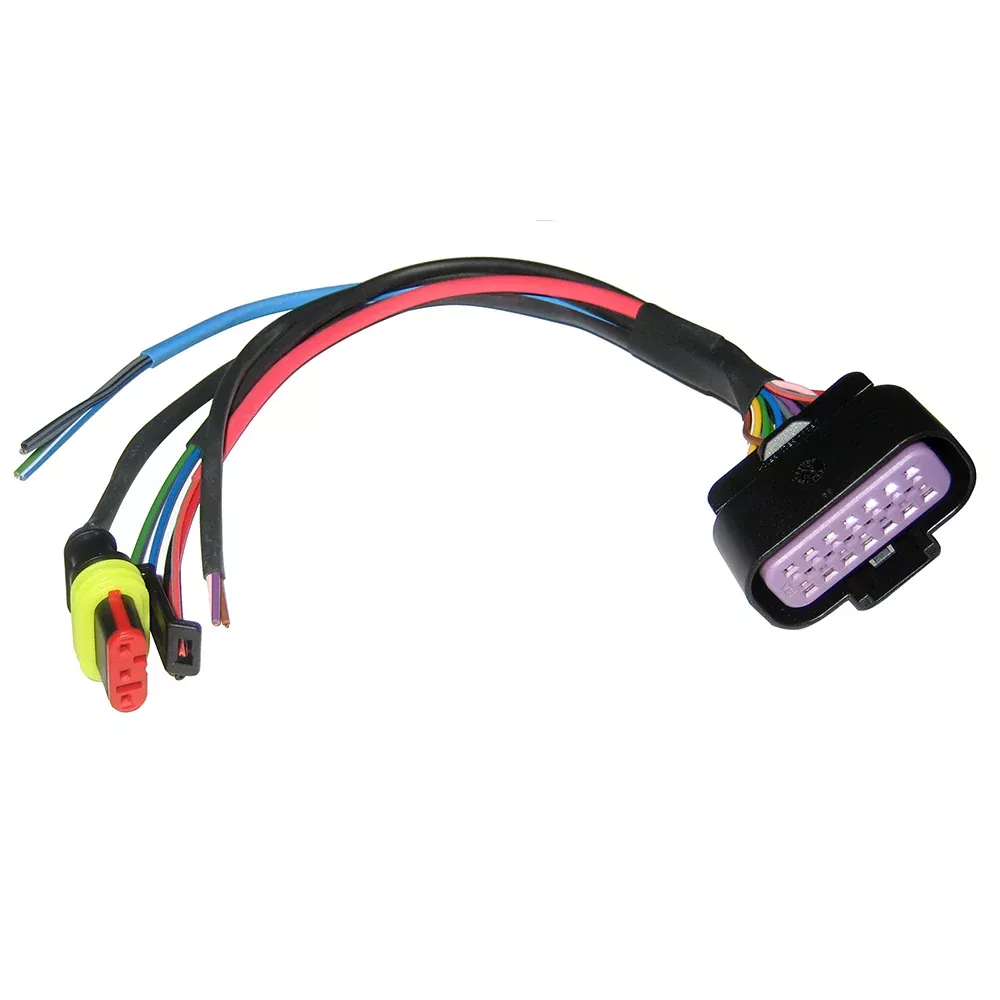
For Volvo Penta IPS and stern-drive joystick installations specifically, the corepack includes a dedicated Volvo IPS Gateway that interfaces the Reactor 40 to the Volvo Penta steer-by-wire bus. There’s no mechanical drive ram, no hydraulic pump, no clutch, the autopilot commands rudder angle directly through the IPS computer over the gateway, which is the cleanest possible integration between autopilot and propulsion. Response is faster than a mechanical autopilot can manage because there’s no linkage backlash or hydraulic compliance to wait through.
Mounting flexibility is one of the Reactor 40’s quiet advantages. The CCU can be mounted in nearly any orientation thanks to the 9-axis AHRS, on its side, upside down, tilted, the autopilot doesn’t care, you simply tell it the orientation during commissioning and it calibrates the axes to match. That matters in real installations where a flat, level, dry mounting location on the centerline isn’t always available.
Functionality is comprehensive across both powerboat and sailing applications. Powerboat features include heading hold (the everyday function), step turns (precise heading adjustments by predetermined increment), preprogrammed search patterns (useful for SAR or man-overboard exercises), and trolling patterns including Cloverleaf and Zig Zag. Sailing-side features include Wind Hold (auto-steer to a constant wind angle), Tack and Jibe (preprogrammed turns through the wind), and the same heading-hold mode for motoring or motoring under autopilot.
Integration with a Garmin chartplotter is where the configuration really shines. When the Reactor 40 is networked to a Garmin networked chartplotter, every function can be commanded from the chartplotter touchscreen, no dedicated keypad required, which is exactly the configuration this without-GHC-20 corepack supports. Auto Guidance (Garmin’s chart-following auto-pilot mode) is available when the chartplotter has BlueChart g3 Vision cards loaded, which lets the autopilot steer a chart-suggested route without you having to plot waypoints manually.
Commissioning is deliberately fast. Garmin engineered the Reactor 40 setup so the initial calibration runs in minutes rather than hours, which matters because traditional autopilots often took multiple sea trials to dial in. The CCU learns the boat’s response characteristics during the first few miles underway and self-tunes the rudder gain, sea state response, and counter-rudder values without operator intervention.
What’s in the box: the Reactor 40 CCU, the Volvo IPS Gateway, the interconnect cable between CCU and gateway, the alarm buzzer, two NMEA 2000 drop cables (2 meters each), an NMEA 2000 power cable, NMEA 2000 T-connectors, male and female terminators, and the documentation pack. What’s not included: the GHC 20 dedicated keypad (order separately if you want a dedicated autopilot control surface beyond the chartplotter), the Volvo Penta IPS computer (which the boat already has), and the chartplotter itself.
This corepack is the right pick for owners of IPS-equipped Volvo Penta boats who already have a current-generation Garmin chartplotter at the helm (GPSMAP 8400-series, 8600-series, or comparable) and want to drive the autopilot through that screen rather than adding a dedicated keypad. For installations where a dedicated keypad is required (a flybridge station without a chartplotter, or a sportfisher tower where touchscreen operation isn’t practical), order the GHC 20 separately and add it to the same NMEA 2000 backbone.