Imagine setting sail or cruising at speed while your autopilot handles the helm with pinpoint accuracy, letting you focus on the horizon, your crew, or that perfect fishing spot. The Reactor 40 Mechanical/Retrofit/Solenoid Corepack delivers exactly that—unmatched responsiveness that feels almost intuitive. Built around a solid-state 9-axis AHRS, it senses every pitch, roll, and yaw in real time, slashing heading errors and keeping your ride smooth even in choppy waters.
For skippers upgrading older systems or retrofitting boats with cable, mechanical, or solenoid steering, this corepack shines. It pairs seamlessly with your existing GRF 10 drive, supporting everything from heading holds for straight-line powerboating to wind holds and automated tacks for sailing adventures. Less rudder movement means less wear on your gear and quieter operation, saving power for those extended outings.
Effortless Setup and Superior Sea-State Handling
Getting underway shouldn’t involve hours of tweaking. This system streamlines commissioning to minutes, mounting flexibly almost anywhere onboard thanks to its orientation-independent AHRS. Once calibrated, it adapts dynamically to waves and wind shifts, maintaining course with minimal deviation. Boaters report it outperforms older hydraulic setups in rough conditions, providing that stable platform for scanning sonar or trimming sails.
Enhance it further with optional Shadow Drive on hydraulic tie-ins—it senses wheel turns and instantly hands control back to you, then resumes autopilot when you’re steady. Pair with compatible chartplotters for trolling patterns, man-overboard searches, or even Auto Guidance paths that steer you effortlessly toward waypoints.
Versatile Compatibility for Diverse Boats
Whether you’re helming a midsize sailboat dodging reefs or a power cruiser chasing marlin, this corepack fits a broad range of vessels. Select from three drive classes to match your displacement:
Class A: Ideal for lighter craft up to 28,500 lbs—compact and efficient.
Class B Compact: Handles up to 48,400 lbs, perfect for sportfishers or cruisers.
Class B: Powers through up to 79,000 lbs for larger yachts.
All drives feature integrated rudder feedback, and adding a GRF 10 sensor refines precision even more. It’s NMEA 2000 ready, integrating smoothly into your Garmin ecosystem for helm displays, alarms, and networked control.
Core Specifications at a Glance
Component
Dimensions
CCU (Course Computer Unit)
4.3″ x 4.4″ x 1.9″ (10.9 x 11.2 x 4.8 cm)
ECU (Electronic Control Unit)
6.6″ x 4.6″ x 2.1″ (16.8 x 11.7 x 5.3 cm)
Specification
Details
Supply Voltage
10V to 30V
Operating Temperature
-15°C to 60°C (5°F to 140°F)
Max Sustained Motor Current
15A
Max Instantaneous Motor Current
40A
Max Clutch Current
2.5A (relay needed for higher draws)
Everything You Need to Get Started
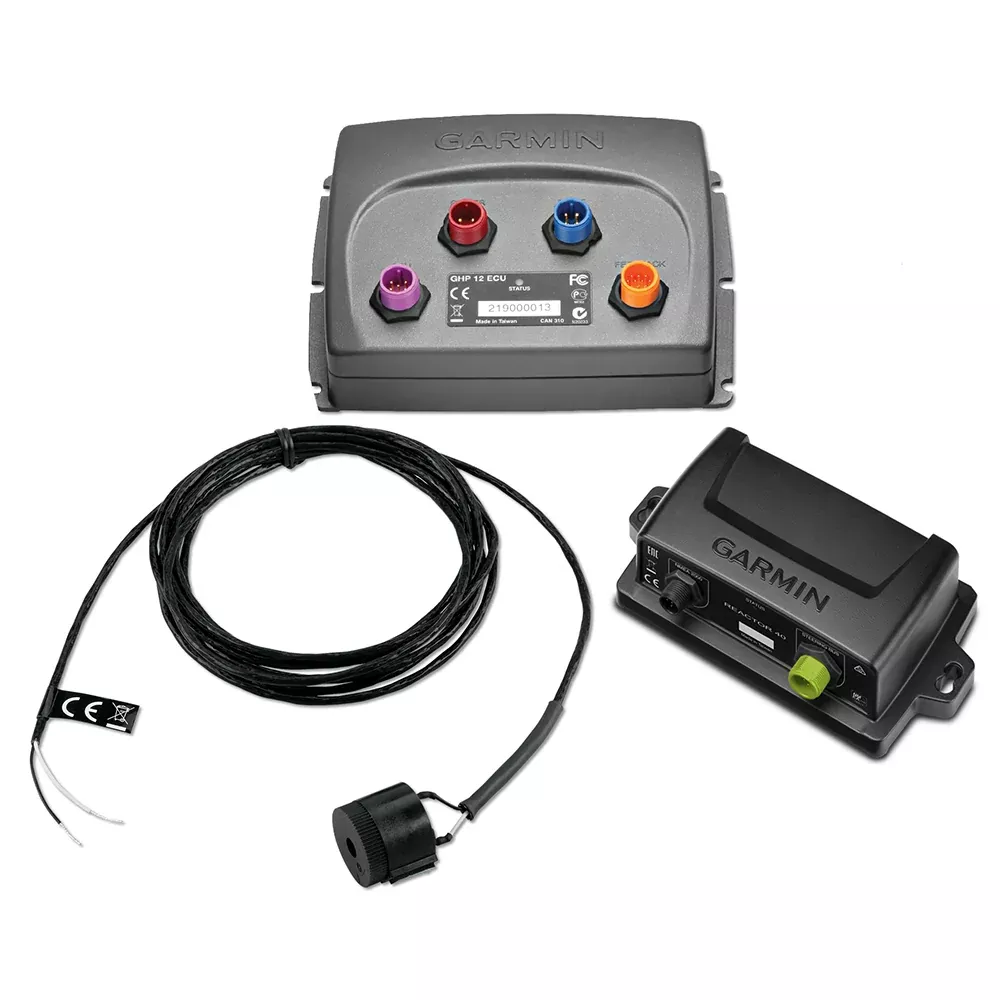
Reactor 40 CCU
ECU
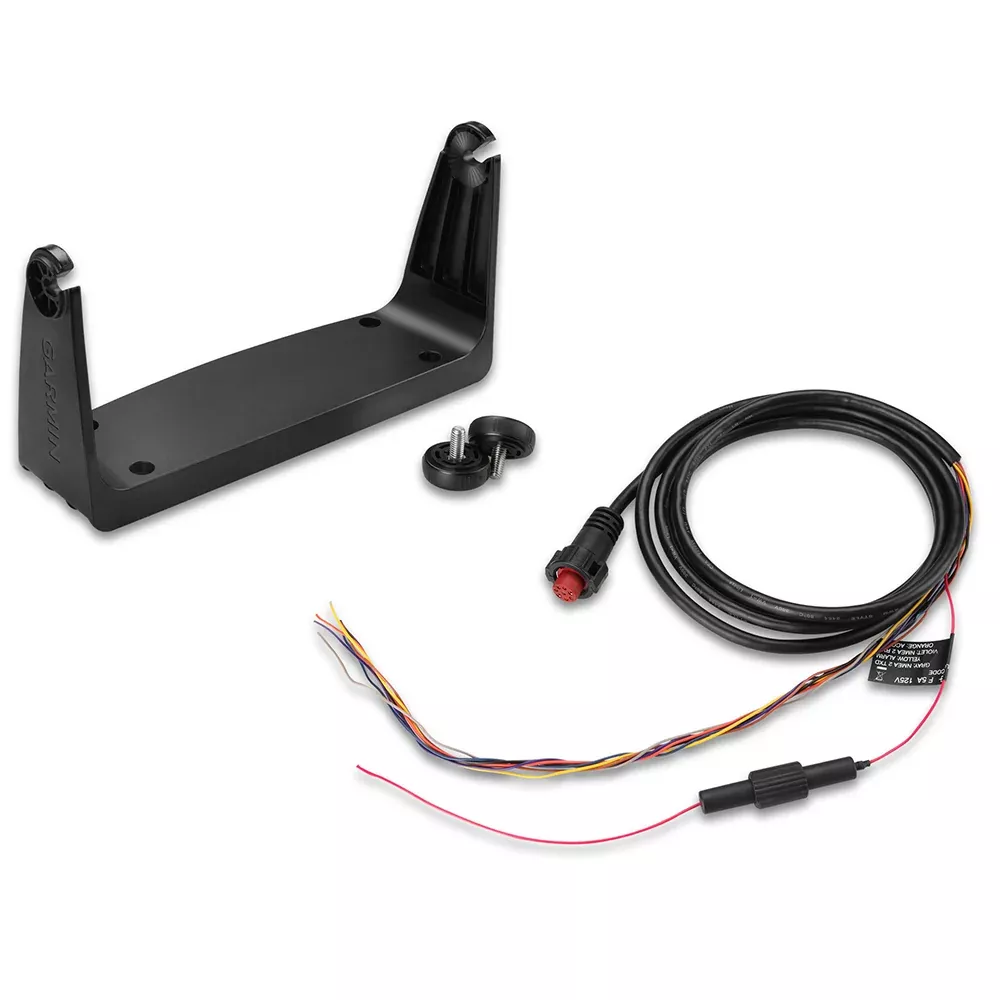
ECU power cable
Interconnect cable
Buzzer for alerts
NMEA 2000 drop cables (2m)
NMEA 2000 T-connectors
Male and female terminators
Full documentation
Note: Drive unit and GHC display sold separately to match your setup.
Pro Tips for Peak Performance
Position the CCU away from magnetic interference like speakers or engines for best AHRS accuracy. Regularly check NMEA connections for corrosion in saltwater environments, and use the built-in diagnostics via your chartplotter to stay ahead of issues. For sailboats, enable wind hold early to master those long upwind legs without fatigue.