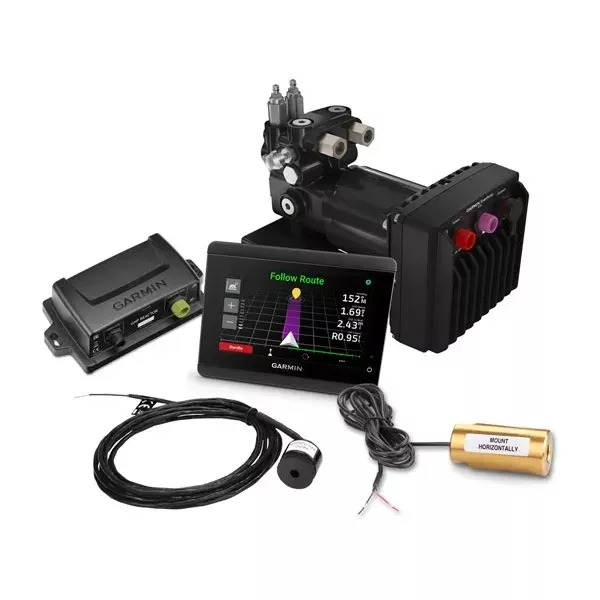
The Garmin Reactor 40 Hydraulic Corepack with SmartPump v2 and GHC 50 (MPN 010-02794-01) is Garmin’s complete hydraulic-steering autopilot package – the right system for boats with hydraulic steering that need fully integrated autopilot capability. Kit includes the Reactor 40 ECU (electronic control unit) with solid-state 9-axis AHRS sensor (mount in any orientation), the SmartPump v2 brushless hydraulic pump (one-size-fits-most for sailboats and powerboats with hydraulic steering), and the GHC 50 touchscreen autopilot instrument for dedicated helm control. Configurable flow rate 0-2.4 L/min for tuning to specific steering systems. Power 11.5-30 VDC with 40A blade fuse. Pairs with compatible Garmin chartplotters for full feature set including heading hold, step turns, wind hold, tack / jibe (with optional wind sensor), follow route, and Auto Guidance+ navigation. Optional Shadow Drive auto-disengages the autopilot when the wheel is turned manually. Reactor 40 ECU ships with 9-foot power cable, 16.5 lb weight, fully gasketed aluminum alloy housing rated for harsh marine conditions.
The Garmin Reactor 40 with SmartPump v2 and GHC 50 is Garmin’s flagship hydraulic-steering autopilot package – the complete corepack for boats running hydraulically steered systems that need fully integrated autopilot capability. This bundle (MPN 010-02794-01) combines three components into one kit: the Reactor 40 ECU (electronic control unit), the SmartPump v2 brushless hydraulic pump, and the GHC 50 touchscreen autopilot instrument. For owners installing autopilot from scratch, this is the right kit – it includes everything needed for the autopilot system except the Garmin chartplotter (sold separately) and any optional accessories like wind sensors or remote controls.
For hydraulically steered boats. The Reactor 40 hydraulic corepack is specifically designed for boats with hydraulic steering systems – the standard for most powerboats over 25 feet, most modern sailboats with wheel steering, and virtually all charter and commercial vessels. The SmartPump v2 ties into the existing hydraulic steering circuit and drives the steering ram in response to ECU commands. For boats with mechanical (cable / rod) steering, this kit is NOT the right choice – mechanical-steering autopilot uses different actuator hardware (Garmin’s GMS / GHP-12 mechanical drive systems handle mechanical steering boats).
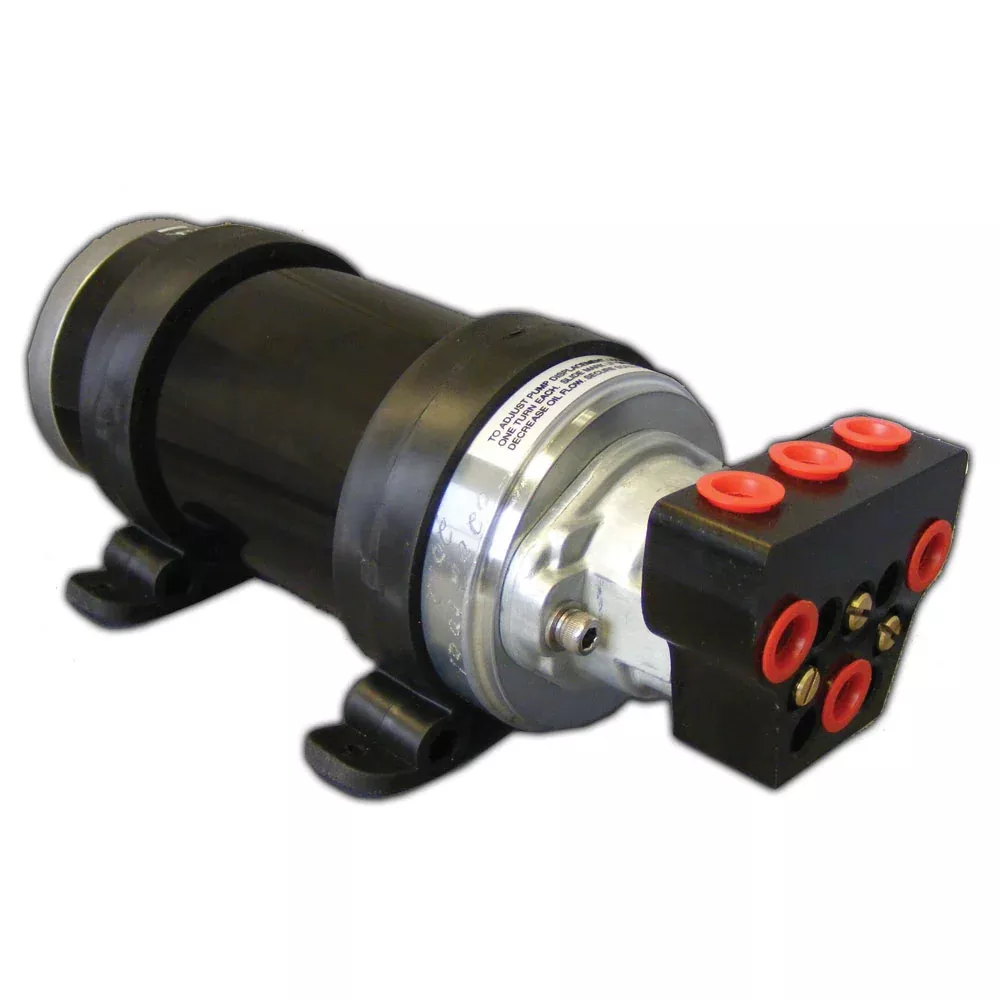
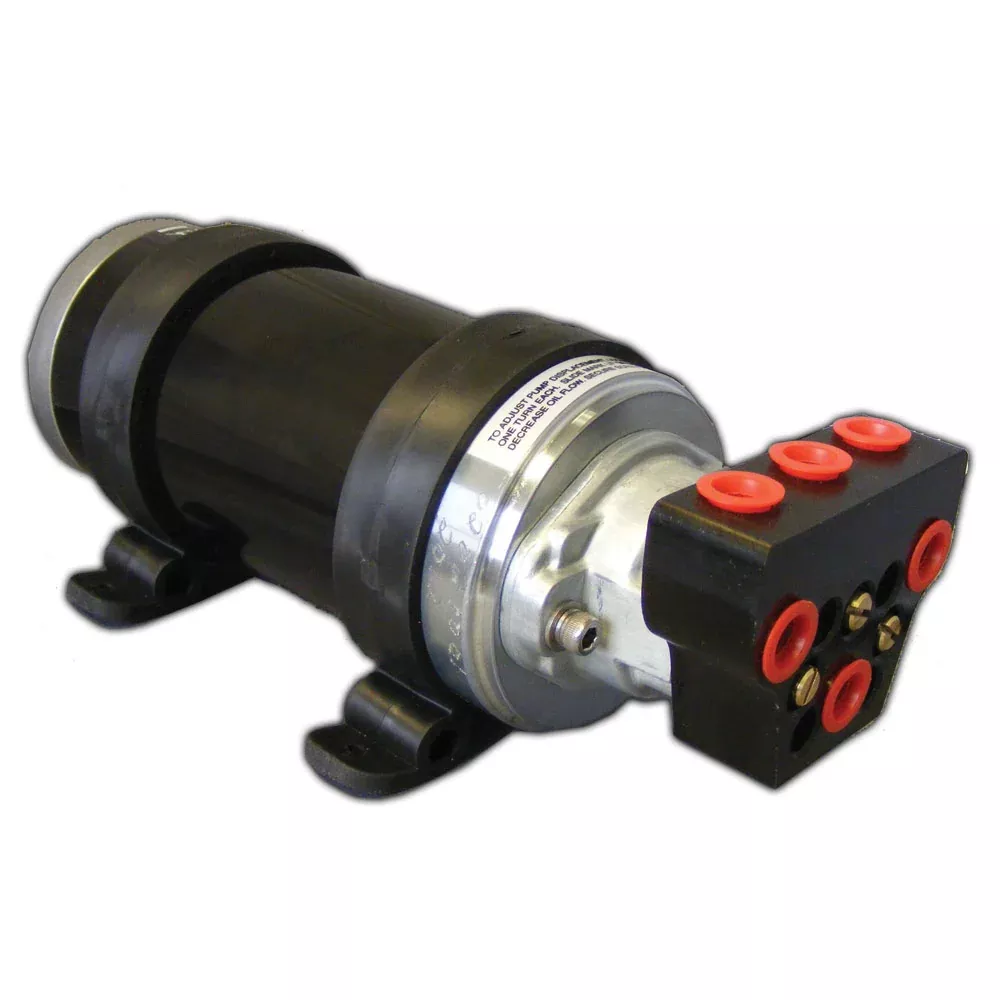
SmartPump v2 brushless pump. The SmartPump v2 is the second-generation brushless hydraulic pump from Garmin – one-size-fits-most for sailboats and powerboats with typical hydraulic steering displacement. The brushless motor design gives three real benefits over older brushed-motor pumps: longer life (no brushes to wear out, motor life is effectively unlimited under normal use), better thermal performance (the brushless motor runs cooler under sustained load, which lets the pump run continuously without thermal cutout), and lower power consumption (more efficient than brushed motors at the same flow rate). The V2 specifically updates the V1 SmartPump with improved reliability, better thermal performance, and lower idle power draw.
Configurable flow rate 0-2.4 L/min. The pump’s flow rate is configurable from zero to 2.4 liters per minute – tunable during install to match the specific hydraulic steering system’s volume and response characteristics. Bigger boats with bigger steering rams need higher flow rates for the right steering response speed. smaller boats with smaller rams need lower flow rates to avoid over-correcting. Garmin’s install documentation specifies appropriate flow rate settings based on boat displacement and steering geometry.
Solid-state 9-axis AHRS. The Reactor 40 ECU includes a solid-state 9-axis AHRS sensor (Attitude / Heading Reference System) – the brain that knows where the boat is pointed, how it’s pitching and rolling, and how fast it’s turning. The 9-axis design uses three accelerometers, three gyroscopes, and three magnetometers in solid-state silicon – no moving parts, no calibration drift, no warmup time, and effectively unlimited service life. The AHRS works in any mounting orientation – bolt the ECU to the cabin top, the engine room bulkhead, the lazarette wall, sideways, upside down, or any angle in between. The AHRS sensor automatically figures out which way is up and which way the boat is pointed during the calibration process.
Reacts to sea conditions. The 9-axis AHRS lets the Reactor 40 react to actual sea conditions in real time – when the boat starts to pitch in following seas, when it heels in a beam wind, when it yaws in a quartering sea, the autopilot detects the motion in milliseconds and applies steering correction to hold the heading. Older autopilots without 9-axis sensing relied on heading-only correction, which lagged behind sea-induced motion and caused the visible ‘autopilot wandering’ that’s the hallmark of older systems. The Reactor 40’s solid-state 9-axis sensing eliminates the wander – the boat tracks its course tightly even in heavy conditions.
Quick calibration. All autopilots require commissioning and calibration during install – this is where the autopilot learns the boat’s specific steering response characteristics. The Reactor 40 makes calibration quick and simple via the GHC 50’s touchscreen interface – typically 15-30 minutes of guided calibration in calm water before the autopilot is ready for operational use. Older autopilots from other manufacturers often required hours of calibration with multiple test runs in different conditions. the Reactor 40’s process is dramatically simplified.
GHC 50 touchscreen autopilot instrument. The GHC 50 is the dedicated autopilot display – a touchscreen instrument that mounts at the helm and gives you full autopilot control without going through the chartplotter. Features include: heading control with rotary knob and touchscreen input, course-tracking display, autopilot status (engaged / standby), step-turn controls, easy access to autopilot mode switching, and integration with the Garmin Marine Network (sees data from the chartplotter, wind instruments, depth sounders, etc on the same display). For helms where the chartplotter is mounted away from the helm wheel position, the GHC 50 gives you autopilot control right at the wheel – which is the right ergonomic setup for serious helm use.
Powerboat and sailing features (with chartplotter). When connected to a compatible Garmin chartplotter, the Reactor 40 unlocks the full autopilot feature set: heading hold (the basic ‘hold this course’ mode), step turns (turn in pre-set increments like 1, 10, or 90 degrees with one button press), wind hold (sailing – hold a constant angle to the wind, requires optional wind sensor), tack and jibe (sailing – automated tacking and jibing through pre-set angles, requires wind sensor), follow route (track a multi-waypoint route the chartplotter has calculated), and Auto Guidance+ (Garmin’s automated route-finding feature). For sailboats running an autopilot, the wind hold and tack / jibe features are essential – they let the autopilot work with the wind rather than against it.
Optional Shadow Drive technology. The Reactor 40 supports Garmin’s Shadow Drive feature – a sensor that detects when the helmsman manually turns the wheel and automatically disengages the autopilot, then re-engages on the new heading once the wheel is released. The result: you can manually correct course (e.g., to dodge debris in the water) without explicitly disengaging the autopilot, and the autopilot picks up the new heading automatically when you let go. Shadow Drive is one of those features that becomes essential once you’ve used it – the autopilot becomes a partner rather than a controller. Shadow Drive requires a compatible Shadow Drive valve in the steering system (sold separately or factory-installed in some boats).
Remote control compatibility. The Reactor 40 with chartplotter / GHC 50 supports the Garmin Reactor autopilot remote control (sold separately) and select Garmin quatix marine smartwatches – control the autopilot from anywhere on the boat. For sportfish boats where the captain might be in the cockpit fighting a fish, the watch / remote interaction matters – you can engage / disengage and adjust the autopilot from wherever you are without going back to the helm.
Power specs and install considerations. The Reactor 40 ECU runs on 11.5-30 VDC, which means the same unit works on both 12V and 24V boat electrical systems without configuration. Standby current draw is less than 1 amp, engaged operation pulls 5-10 amps depending on conditions, and peak draw during heavy steering correction can reach 34 amps. The 40A blade fuse handles the peak draw with margin. Mount the ECU within reach of the supplied 9-foot power cable. the SmartPump goes in the engine room or lazarette tied into the existing hydraulic steering plumbing.
Build quality. The ECU housing is fully gasketed aluminum alloy with a carbon steel mounting bracket – rated for the harsh marine environment where the unit lives in damp engine rooms, lazarettes, or cabin tops. Operating temperature range 5-131 degrees F (-15 to 55 degrees C) covers all reasonable marine conditions. The aluminum alloy manifold on the SmartPump and the aluminum alloy motor housing both resist corrosion in damp engine room conditions. Total ECU weight 16.5 lbs (7.5 kg).
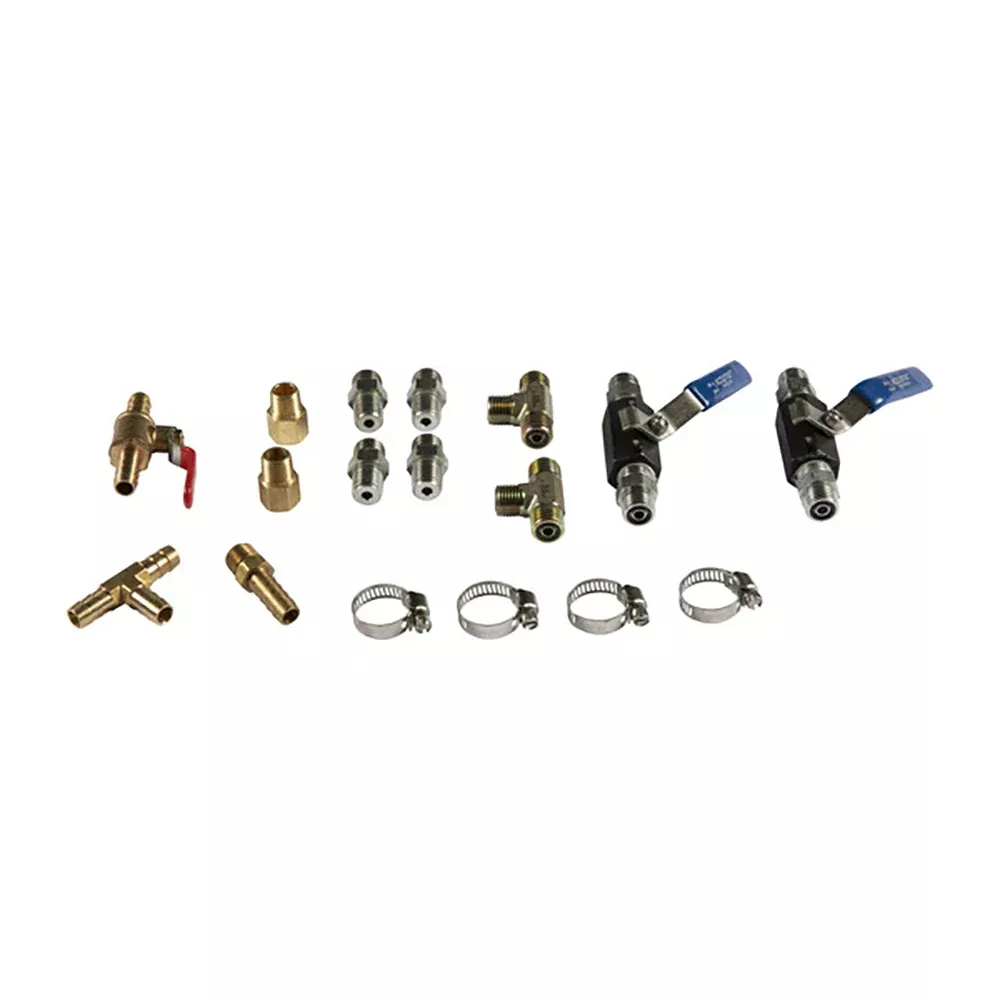
Install. Hydraulic autopilot install is involved – it’s not a do-it-yourself project for most owners unless you have substantial marine plumbing and electrical experience. Plan: mount the ECU somewhere in the boat structure (cabin top, bulkhead, lazarette wall – any orientation works thanks to the 9-axis AHRS), tie the SmartPump v2 into the existing hydraulic steering circuit (requires breaking the hydraulic plumbing, installing tee fittings, and bleeding the system), wire the ECU power and connect to the Garmin Marine Network, mount the GHC 50 at the helm, run network cabling between components, then complete the calibration / commissioning process. Most owners have this installed by a marine electronics shop or yard during a refit. Total professional install typically runs 8-16 hours of labor depending on boat complexity.
Compatible chartplotters. Most current Garmin Marine Network chartplotters support the Reactor 40 – GPSMAP series 8400, 8600, 9000, plus most recent ECHOMAP Plus and Ultra units. Check Garmin’s compatibility list for your specific chartplotter model before ordering. Older non-Marine-Network Garmin chartplotters do NOT support the Reactor 40, so the chartplotter side may need upgrading as part of the install.
Standard Garmin marine electronics warranty applies.