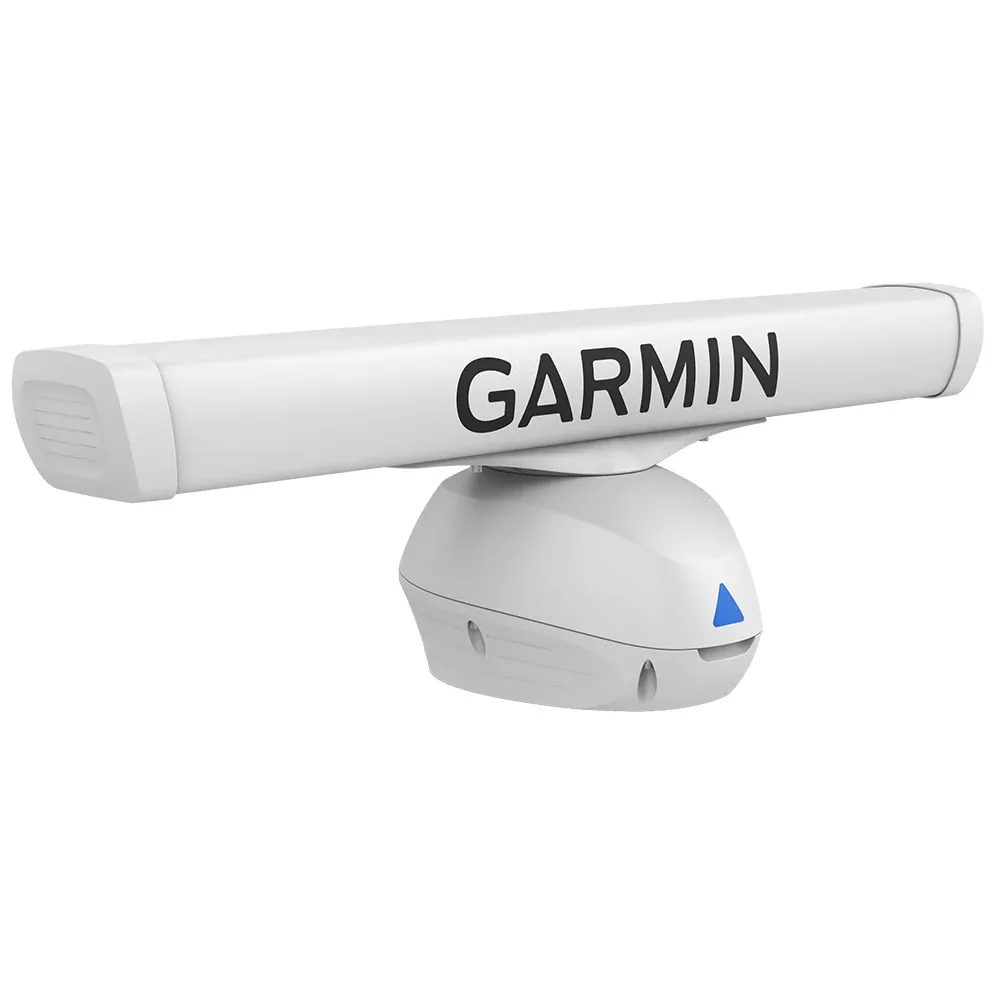
Garmin’s solid-state Doppler radar in the 50-watt, 4-foot open-array configuration. MotionScope colors moving targets so collisions and bird schools jump out of the picture, pulse compression replaces a magnetron with sharper close-in returns, and the narrow 1.25-degree horizontal beamwidth separates targets that a dome radar would smear together. The right open-array for a 30-to-45 ft cruiser stepping up from a dome.
The GMR Fantom 54 is Garmin’s entry into solid-state open-array radar. It replaces the magnetron that powered the previous generation with a 50-watt solid-state transmitter, then layers two technologies on top that fundamentally change what a recreational radar can do: MotionScope Doppler target highlighting and Pulse Compression range resolution. For a 30-to-45 ft cruiser stepping up from a Garmin Fantom 18 or 24 dome, the 54 is the entry point into open-array performance without the size, weight, or current draw of the larger Fantom 124 and 254 models.
MotionScope is the headline feature. Every Fantom radar uses Doppler analysis to sort returns by whether they’re moving toward you, away from you, or stationary, and the chartplotter renders each category in a different color on the radar overlay. In practice, that means a tug crossing your bow shows up in a saturated color against a background of stationary buoys and shoreline returns, weather cells move clearly across the picture, and tightly grouped flocks of seabirds (a reliable indicator of bait fish on the surface) are easy to distinguish from clutter. It’s the kind of feature that’s hard to appreciate until you’ve used it for a season, after which going back to a single-color radar feels like a downgrade.
The 50-watt solid-state transmitter is a real generational change from the magnetron radars it replaces. Solid-state radar doesn’t need a warm-up period, so the radar is fully operational seconds after you turn it on instead of three minutes later. There’s no magnetron tube to wear out, so the expected service life is several times what you’d expect from a comparable magnetron set. And because the transmitted pulse is much longer in duration than a magnetron’s, Pulse Compression lets the radar pack more energy into the picture for the same peak power, which means cleaner returns at longer ranges and the ability to resolve close-in targets down to 20 feet that a magnetron radar would lose in main-bang clutter.
The 4-foot open array is the sweet spot for cruiser-size boats. Garmin specifies a 1.25-degree horizontal beamwidth at the 4-foot length, which is roughly twice the angular resolution of a 24-inch dome radar. In practical terms, that means two boats anchored 100 feet apart at one nautical mile show up as two separate targets on the screen instead of a single smeared blob. The vertical beamwidth is 25 degrees, which keeps targets in the picture through normal cruiser roll and pitch. The pedestal spins at 24 rpm, which is the standard rate for most recreational chartplotter radars, and Garmin supports dual-range display where the chartplotter shows a short-range and a long-range picture from the same radar simultaneously, useful for situational awareness in busy waters near a long-range approach.
Maximum detection range is up to 72 nautical miles, with practical detection of typical recreational targets falling well within that envelope. The radar runs at 12V DC nominal (10.5 to 32V tolerance), pulls about 53 watts in transmit mode and 26 watts in standby, and connects to the chartplotter via Garmin Marine Network (Ethernet). Power comes through the 12-pin power/data connector. Total weight is around 35 pounds, and the pedestal mounts on the standard Garmin radar mast platform.
The Fantom 54 is also compatible with Garmin Auto Bird Gain, which optimizes the radar’s gain settings to highlight tightly grouped seabirds out to about 10 nautical miles, useful for fishermen who hunt birds to find bait schools. True Echo Trails draw a fading line behind each moving target so course and speed are immediately obvious. The radar is IPX6 / IPX7 rated for the harsh saltwater environment, with the antenna pedestal designed to handle long-term offshore exposure.
What you give up compared to the 4-foot Fantom 124 (the next step up): the 124’s higher peak power produces stronger long-range returns in heavy rain and clutter, and its slightly tighter beamwidth marginally improves resolution at the longest ranges. For owners running 30-to-40 nautical mile detection in coastal cruising, the 54 is plenty of radar. For owners running offshore in commercial-traffic lanes who need every dB of long-range margin they can get, the 124 is the smarter buy.
What’s in the box: the radar antenna pedestal with integrated 4-foot open array, a 15-meter power/data cable, mounting hardware, and the install/owner documentation. The chartplotter needs to be a Garmin GPSMAP 8400-series or newer, or a comparable Garmin-Network-equipped helm, to drive a Fantom radar. Older Garmin chartplotters that supported the legacy GMR HD radars need to be upgraded to a Fantom-capable model.