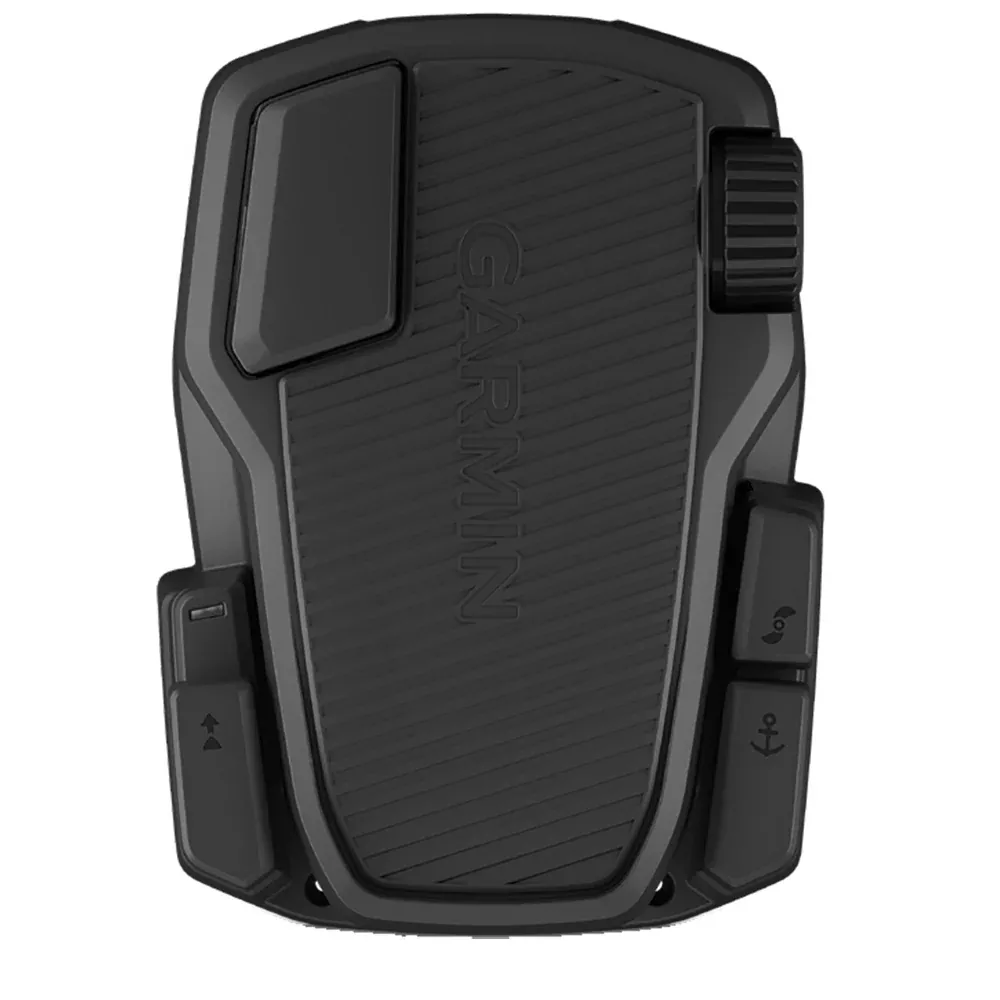
The Garmin Force Trolling Motor Foot Pedal (MPN 010-12834-00, UPC 753759217785) is the official Garmin foot pedal accessory for the Force electric trolling motor – the boat-bottom pedal that delivers cable-steer steering feel while controlling the Force’s electric steering electronically. Critical distinction: the Force trolling motor is an electric-steer motor (meaning the foot pedal commands an electric servo that pivots the motor, vs the mechanical cables of traditional cable-steer trolling motors). Most electric-steer trolling motors come with electric-feel foot pedals that respond with the small delay inherent to electric servo systems. Garmin’s design choice for the Force pedal was different: engineer the pedal to feel and steer exactly like a traditional cable-steer pedal (the tactile experience tournament bass anglers have used for decades and prefer for active pedal-driving), while still commanding the Force’s electric steering system. Result: cable-steer pedal feel with electric-steer GPS capabilities. The pedal communicates with the Force motor wirelessly via Garmin’s proprietary radio link – no cables to run between the pedal and the motor, no chafing concerns from cables crossing the deck, no install routing required for pedal-to-motor communication. Power source flexibility: operate wirelessly using AA batteries (the typical configuration – 4 AA batteries in the pedal, batteries last most of a fishing season), OR hardwire the pedal to the boat’s 12V electrical system for boats where battery changes are inconvenient. Pedal action delivers full Force trolling motor control: heel-toe steering input drives the motor’s electric steering left and right, the speed wheel adjusts thrust, and dedicated buttons activate Force GPS features (Anchor Lock, Anchor Adjust, Cruise Control, momentary / constant on). Compatible only with the Garmin Force electric trolling motor – won’t work with competing electric-steer motors that use different communication protocols. Sized for typical bow deck install with the standard bass / center console layout. 1-year Garmin limited warranty.
The Garmin Force Trolling Motor Foot Pedal is the official Garmin foot pedal accessory for the Force electric trolling motor – the boat-bottom pedal that delivers cable-steer steering feel while controlling the Force’s electric steering electronically. It’s the right pedal for anglers who want the tactile cable-steer driving experience with the GPS-capable electric-steer trolling motor.
The pedal-steer design problem. Modern GPS-capable trolling motors (the Garmin Force, plus competing electric-steer motors) use electric servo steering: when you tilt the foot pedal left or right, the pedal sends an electric signal to a servo motor at the top of the trolling motor shaft, and the servo pivots the motor in the commanded direction. Electric steering is what enables GPS features (Anchor Lock / Spot-Lock, AutoPilot, Heading Lock) because the GPS computer can directly command the same servo without needing the operator’s foot input. But electric steering has a small response delay vs traditional mechanical cable steering – the servo takes a fraction of a second to respond to pedal input, which feels slightly less crisp than the immediate response of mechanical cables. Tournament bass anglers used to cable-steer pedals notice the difference immediately and often prefer the tactile feel of mechanical cables. Garmin’s design choice for the Force pedal was to engineer the pedal mechanism to feel and respond like a cable-steer pedal, even though the underlying command signal is electric. Result: the pedal action feels tactile and immediate, the underlying motor responds via electric servo. Best of both architectures.
What makes the Force pedal feel different. Several engineering details combine to produce the cable-steer feel: (1) Pedal weight and resistance tuned to match the mechanical resistance of a cable-steer pedal at typical pedal angles. (2) Pedal travel range matching the typical cable-steer pedal sweep. (3) Internal damping that responds to pedal input speed similar to how cable friction responds during fast pedal movements. (4) Servo command timing tuned to minimize the perceived response delay vs cable steering. The combined effect: experienced cable-steer pedal users report the Force pedal feels like a cable pedal during normal use, not like the typical electric-feel pedals on competing GPS trolling motors.
Wireless or hardwired – your choice. The pedal communicates with the Force motor head via Garmin’s proprietary radio link. Power options: (1) Wireless via AA batteries – the standard configuration. 4 AA batteries (alkaline or lithium, your choice – lithium lasts substantially longer) inside the pedal power the radio transmitter and pedal electronics. Battery life typically lasts most of a fishing season for typical recreational use. Replace when the low-battery indicator activates. (2) Hardwired – the pedal accepts a 12V power connection from the boat’s electrical system, eliminating the AA batteries entirely. Hardwire is meaningful for tournament boats where battery failure during a critical fishing moment isn’t acceptable, or for owners who simply prefer not to deal with AA replacement. Even when hardwired, the pedal-to-motor communication remains wireless – the hardwire connection is power only.
What the pedal controls. The pedal handles all primary Force trolling motor functions from the bow position: (1) Heel-toe steering – tilt the pedal left to steer left, right to steer right. The Force motor responds via electric servo. (2) Speed wheel – thumb wheel on the pedal adjusts thrust from 0 to 100 percent. (3) Momentary / Constant On buttons – momentary mode runs the motor only while the button is pressed, constant on runs the motor continuously until you press again. (4) Anchor Lock button – activates the Force’s GPS anchoring (Spot-Lock equivalent). The motor automatically holds your current GPS position. (5) Anchor Adjust – moves the locked Anchor position 5 feet in the commanded direction (port / starboard / forward / reverse). (6) Cruise Control – maintains a constant boat speed regardless of conditions.
Compatibility – Force motor only. The pedal is specifically designed for the Garmin Force electric trolling motor. It won’t work with any competing electric-steer trolling motor (the radio communication protocol and pedal-motor pairing are Garmin Force-specific). It also won’t work with traditional cable-steer trolling motors (those use mechanical cable connections, not electric signals). If you have a Force motor and want a foot pedal (the Force can also be operated by the included wireless remote, but many tournament anglers prefer foot pedal operation for active fishing), this is the pedal you need. If you have any other trolling motor brand, this pedal isn’t compatible.
Pedal pairing. On first install, the pedal must be paired with your specific Force motor (so multiple Force-equipped boats in the same area don’t interfere with each other). Pairing is a straightforward setup procedure following the included instructions – press the pairing button on the motor and the pedal simultaneously, the two devices recognize each other, and the link is established. Pairing typically holds indefinitely – you only pair once at install unless you replace either the pedal or the motor.
Install. Plan for 30-60 minutes for the install. Tasks: (1) Position the pedal on the bow deck where it falls naturally under your standard fishing position. Most operators mount the pedal pointing roughly toward the bow center, with the heel position over the boat’s centerline. (2) Mark the mounting holes (4 holes for the pedal base) and drill pilot holes into the deck. (3) Mount the pedal using stainless mounting screws (typically 10 stainless, not included). Use proper backing under thin aluminum or fiberglass decks. (4) Install AA batteries in the pedal battery compartment (or run the hardwire connection if preferred). (5) Pair the pedal with the Force motor per the included instructions. (6) Test all pedal functions on the water before relying on it for fishing.
Battery selection. For typical recreational use, alkaline AA batteries (Duracell, Energizer) deliver multiple seasons of operation before replacement. For heavy tournament use or for owners who want maximum battery life between changes, lithium AA batteries (Energizer Lithium, Saft) deliver 3-4x the life of alkaline at higher cost per battery. Don’t use rechargeable nickel-metal-hydride AAs – their lower voltage (1.2V vs 1.5V) can cause the pedal to indicate low battery prematurely.
Hardwire install option. If you choose hardwire instead of AA batteries: run 18 AWG marine-grade tinned cable from the boat’s 12V electrical system to the pedal connection point. Use a fused connection (1A fuse is sufficient – the pedal draws very little current). Route the cable through standard wire channels to keep it secure and out of the way. The hardwire connection eliminates AA battery management entirely – useful for tournament boats or operators who want zero battery concerns.
Use case considerations. For Force trolling motor owners deciding whether to add the foot pedal: the pedal makes sense if you prefer foot pedal operation for active fishing (tournament-style bass fishing, active pedal-driving of the trolling motor through structure). The pedal is essentially mandatory for that style of fishing. If you prefer remote-only operation (the Force ships with a wireless remote that handles all motor functions from any position on the boat), the foot pedal is optional – some operators use only the remote and never install a pedal. Most serious tournament anglers use both: pedal for active pedal-driving, remote for repositioning while landing fish or for hands-off Anchor Lock activation.
Warranty. Garmin standard 1-year limited warranty. Save the receipt and the original packaging. Warranty service runs through Garmin’s authorized service network worldwide. Most field failures Garmin sees in the Force pedal line are install-related (loose mounting hardware causing pedal play, battery contact corrosion from water intrusion) rather than pedal defects – careful install delivers many years of reliable service. Garmin’s product support for the Force ecosystem is strong – software updates and motor / pedal firmware updates are available through the Garmin app.