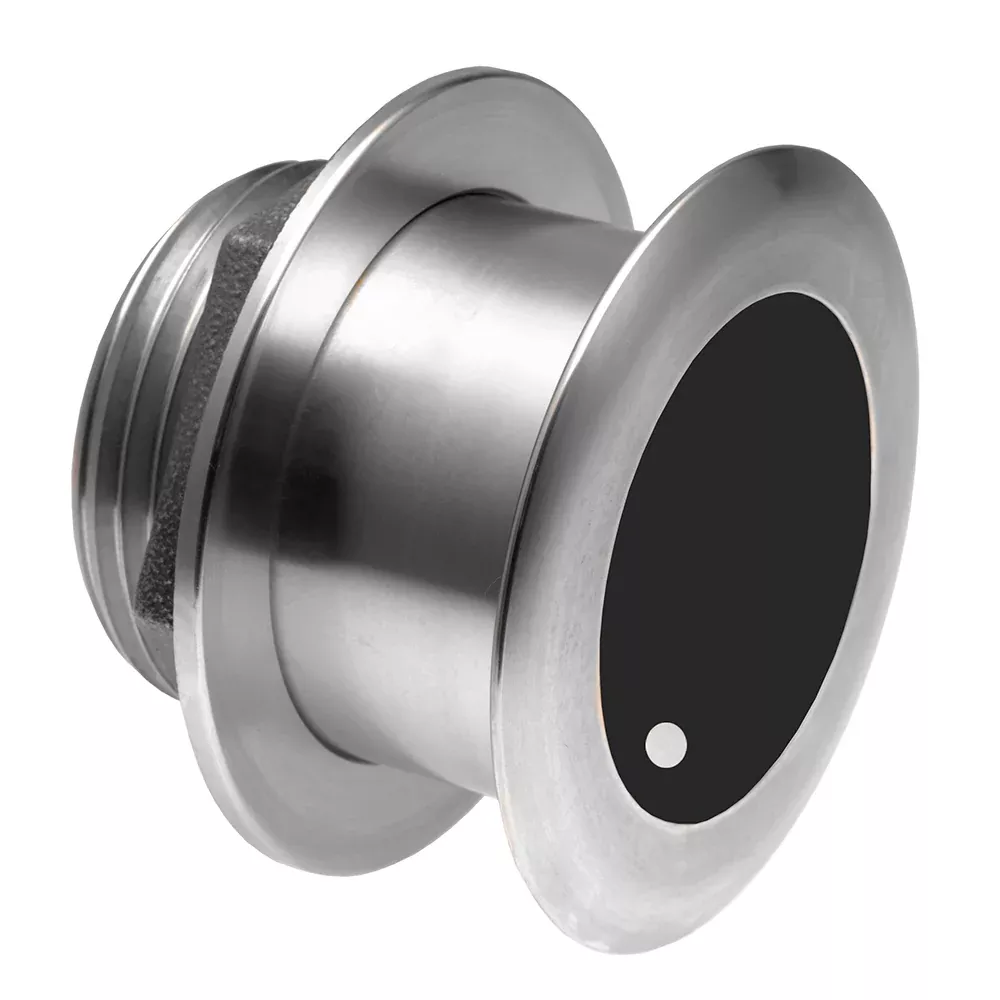
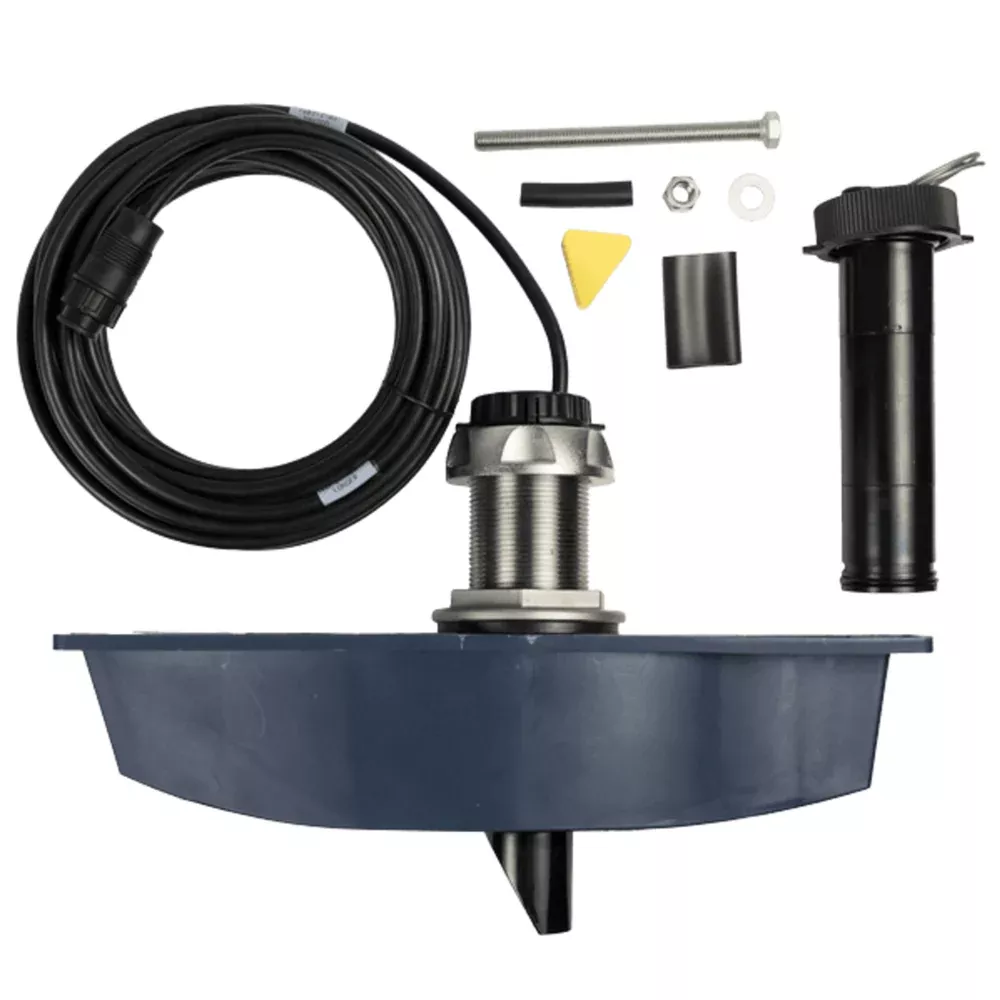
The Garmin Dual Beam-IF ice fishing transducer is the dual-frequency ice transducer for Garmin ice-fishing-capable fish finders. Switch between 77 kHz with a wide 45-degree beam (for surveying a broader area around the ice hole) and 200 kHz with a focused 15-degree beam (for sharp individual-fish target separation when you need to identify what you’re seeing). Silicone-coated cable that stays flexible in sub-zero temperatures (where standard PVC cables stiffen and crack). Includes the 4-pin transducer adapter cable, foam float for stable positioning at the chosen ice-hole depth, and grommet for clean hole sealing. Compact puck transducer drops through any standard 8-inch ice hole.
The Garmin Dual Beam-IF ice fishing transducer (part 010-13069-00) is the dual-frequency transducer specifically engineered for ice fishing use with Garmin ice-fishing-capable fish finders. Two operating frequencies (77 kHz and 200 kHz) selectable on the head unit give you two different beam patterns: 77 kHz with a wide 45-degree cone for area-coverage surveying around the ice hole, and 200 kHz with a focused 15-degree cone for sharp individual-fish target separation when you need to know exactly what fish is below you and at what depth.
What dual-beam ice fishing actually does. Ice fishing in the typical winter scenario: you’ve drilled an 8-inch hole through 12-24 inches of ice, dropped your line down the hole, and want to know what’s below. A dual-beam transducer gives you two views of the water column. Wide-beam mode (77 kHz, 45-degree cone) shows fish over a larger horizontal area beneath the ice – useful for spotting fish moving toward the hole, for tracking a school of suspended baitfish, and for getting the broad picture of what’s happening in your fishing zone. Narrow-beam mode (200 kHz, 15-degree cone) shows a tighter focused area directly below the hole with much sharper individual-fish target separation – useful for confirming exactly what fish is on your jig, for distinguishing two closely-spaced fish that look like one mark on the wide beam, and for precise vertical-jigging presentation.
Switch frequencies on the head unit. The transducer outputs both 77 kHz and 200 kHz signals. the head unit selects which one to display (or shows both simultaneously in a split-screen view depending on the head unit’s capabilities). Most Garmin ice-fishing-capable fish finders default to 200 kHz for the higher-detail view and let you switch to 77 kHz when you want the wider survey. Some units run both frequencies simultaneously in a side-by-side display.
Silicone-coated cable for cold-weather flexibility. The cable from the transducer to the head unit uses silicone insulation rather than the standard PVC of typical marine transducer cables. The reason: PVC stiffens significantly at sub-zero temperatures, and severely-stiffened PVC cables can crack from flexing as you move the transducer around the ice hole during a long fishing day. Silicone stays flexible down to far lower temperatures than PVC, so the cable continues to coil and uncoil cleanly even in genuinely cold ice fishing conditions where ambient is well below freezing.
4-pin transducer adapter cable. The transducer ships with a 4-pin adapter cable that plugs directly into compatible Garmin ice-fishing fish finders (the Striker series, ECHO series, ECHOMAP series with the appropriate transducer port). The 4-pin connector is the standard Garmin transducer interface for ice-fishing-class units. For Garmin units that use a different transducer connector (e.g., the 8-pin connector on larger ECHOMAP and GPSMAP units), check the unit’s transducer compatibility chart – you may need a different transducer or an adapter cable.
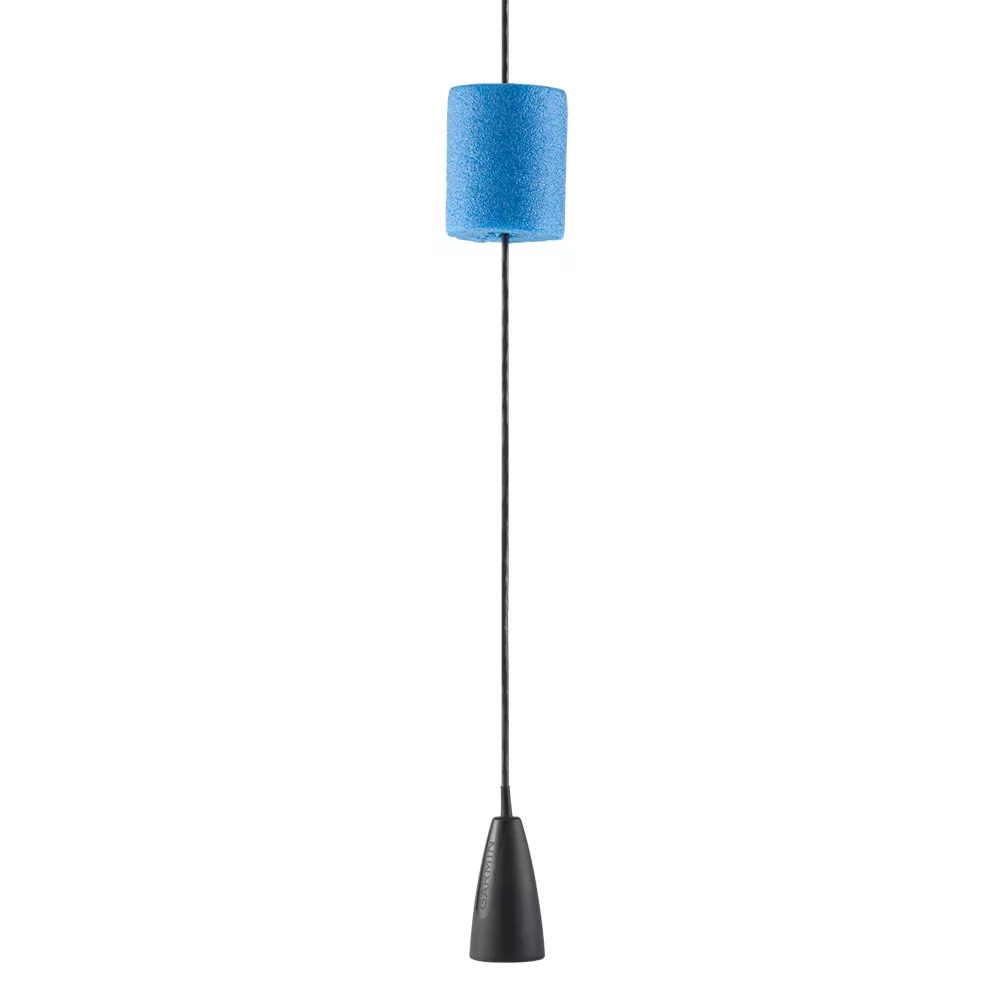
Foam float included. The supplied foam float fits over the transducer cable to position the transducer at a stable depth in the ice hole. Without the float, the transducer would either rest on the ice hole bottom (limiting view to just below the boat hull, useless for ice fishing) or float free in the water column (drifting around with the current). The foam float keeps the transducer at the right depth – typically just below the ice surface – so the transducer’s beam projects cleanly down through the water column to the bottom.
Grommet included. The supplied grommet seals the ice hole around the transducer cable to prevent water from splashing out of the hole onto your fishing gear and to insulate the hole somewhat against cold-air infiltration that can refreeze the hole during a long fishing session. Drop the grommet over the transducer cable, push it down into the ice hole opening, and the cable runs through the grommet’s center hole while the grommet body seals against the ice hole edges.
Compact puck transducer. The transducer body is a small puck-style unit that drops easily through any standard 6-inch or 8-inch ice auger hole. No bulky transducer arm to maneuver into the hole, no big sonar housing to worry about. Drop, position with the float, fish.
Compatible Garmin units. The Dual Beam-IF transducer works with Garmin ice-fishing-capable fish finders that accept the 4-pin transducer connector and that support the 77/200 kHz dual-frequency modes. That includes most Garmin Striker series ice fishing units, ECHO series, and ECHOMAP UHD2 in the appropriate transducer-port configuration. For your specific Garmin unit’s compatibility, check the Garmin transducer compatibility chart.
What it doesn’t do. It’s not a CHIRP transducer (the Dual Beam-IF outputs fixed frequencies, not CHIRP swept frequencies). For CHIRP ice fishing transducers, see the Garmin GT8HW-IF and similar CHIRP ice transducers. It’s not Panoptix LiveScope (live forward-looking sonar requires the dedicated LiveScope ice transducer). For typical ice fishing applications where dual-frequency target separation is what you need, the Dual Beam-IF is the cost-effective choice.
Mounting and use. Drop the transducer through the ice hole. Position the foam float at the desired depth (typically the foam should sit at the water surface so the transducer hangs about 6 inches below the ice). Drop the grommet around the cable to seal the hole. Connect the cable to the head unit’s transducer port. Power up the head unit, select the appropriate transducer source, and start fishing. Total deployment time at the hole is typically under a minute.
Cold weather care. After each ice fishing trip, rinse the transducer with fresh water to remove ice and any salt or contaminants that might be on the surface. Store the transducer dry between uses. The silicone cable doesn’t need any special care – just keep it from being kinked when coiling for storage.
What’s in the box. The Dual Beam-IF ice transducer with attached silicone-coated cable, the 4-pin transducer adapter cable, the foam float, the grommet, and the install / quick-start instruction sheet.
Garmin limited warranty applies. Same-day shipping before 3 PM ET on in-stock units.