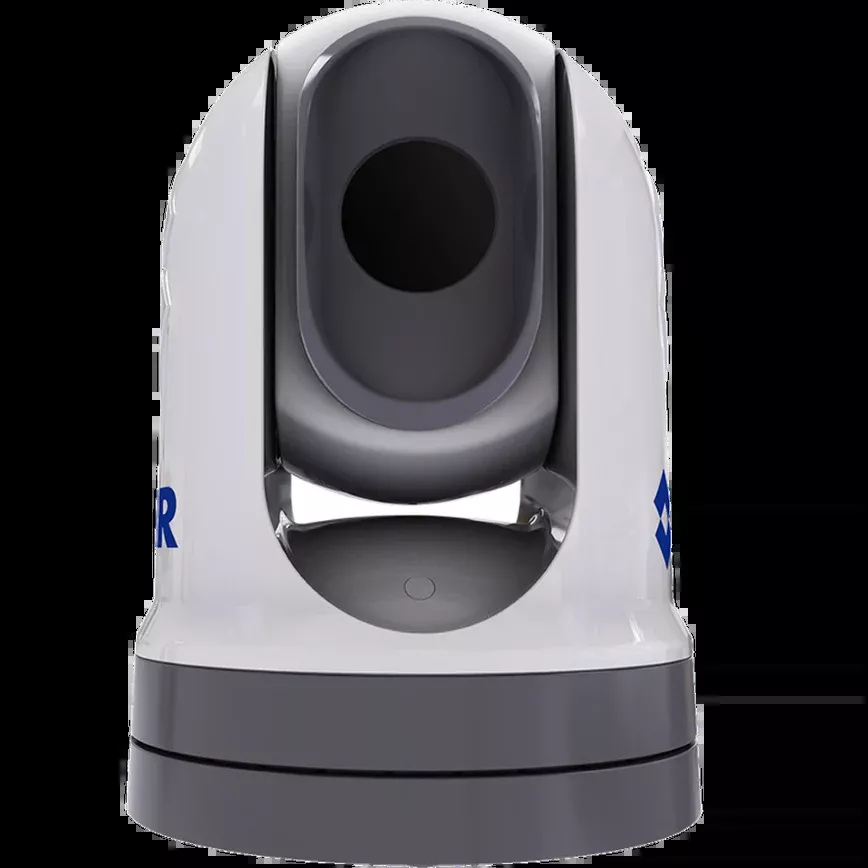
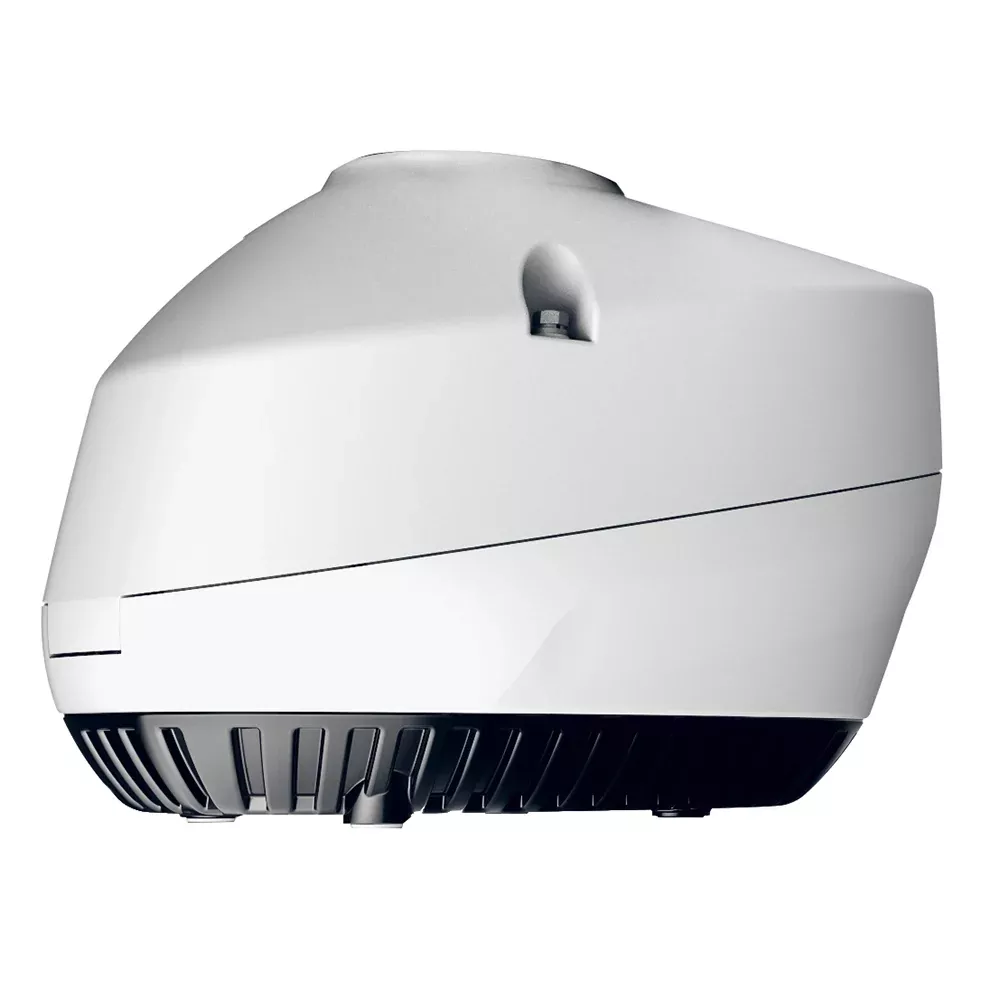
FLIR’s high-end stabilized visible-light marine camera. The M300C delivers 30x optical zoom, two-axis mechanical gyro-stabilization, and ultra-low-light HD imaging in a pan-tilt-zoom marine housing, built for law-enforcement, commercial, and recreational long-range target identification.
The FLIR M300C Stabilized Visible IP Camera (MPN E70605) is FLIR’s high-performance stabilized visible-light marine PTZ camera, built for long-range target identification, security monitoring, and operational awareness in the harshest marine environments. Unlike thermal imaging cameras (which see heat signatures), the M300C is a visible-light camera with 30x optical zoom and ultra-low-light sensor technology, so it gives you photographic-quality target identification rather than thermal silhouettes. For applications where you need to positively identify what you’re looking at (vessel name, person, hazard type, license plate at the dock), visible-light is the right technology.
30x optical zoom for long-range identification. The M300C with 30x optical zoom delivers superior long-range imaging that out-performs binoculars across the same scene. Where binoculars give you a limited field-of-view that’s hard to keep on target in a moving boat, the M300C’s stabilized mount keeps the target in frame while the optical zoom delivers the magnification needed for positive identification at ranges that matter for law-enforcement intercept, commercial monitoring, and recreational situational awareness.
Ultra-low-light camera technology. The M300C’s visible-imaging sensor is tuned for marine low-light conditions, so you get usable imagery in lighting conditions that defeat consumer cameras. Twilight, moonlight, harbor lighting, and other low-light scenarios where ordinary cameras produce noisy or unusable footage are exactly where the M300C performs. For night-time security monitoring and dawn/dusk operational awareness, ultra-low-light is the difference between an instrument you can use and one that’s only useful in daylight.
Two-axis mechanical gyro-stabilization. The M300C is mechanically stabilized in two axes (pitch and roll), with electronic stabilization adding low-frequency rumble and vibration filtering. The result is steady imagery in heavy seas where unstabilized cameras would deliver unwatchable shaking footage. For boats operating offshore or in commercial-traffic waters where the camera needs to track targets across rough conditions, mechanical stabilization is what makes the camera operationally usable, not just a checkbox specification.
Integrated AHRS for scene stabilization. Built-in Attitude Heading Reference Sensor measures boat motion in real-time, feeding the stabilization system so the camera compensates for vessel pitch, heave, and yaw automatically. Horizontal stabilization keeps the camera on the scene as you maneuver, so the target doesn’t slide out of frame when the boat turns. For ongoing target tracking through evasive maneuvers, course changes, or natural vessel motion, the AHRS integration eliminates the constant manual recentering that unstabilized PTZ cameras require.
compatible MFDs integration. The M300C connects natively to compatible multifunction displays, with overlay of AIS targets, chart objects, and waypoints on the camera image in real time using ClearCruise augmented reality technology. For helms running a full sibling-brand ecosystem, the camera feed integrates with the rest of the navigation data, so you see what’s in the camera view annotated with what the chart and AIS data say about it. This is genuinely operational for commercial monitoring and serious navigation use, not just a flashy demo feature.
Optional joystick control unit. The optional JCU2 joystick control unit gives dedicated pan-tilt-zoom control at the helm, which is significantly more operationally efficient than touch-screen control during fast target tracking or rapid scene scanning. For commercial and law-enforcement applications where the camera operator needs to make quick precise PTZ movements while watching the screen, the dedicated joystick is the right input device. Touch-screen control through the compatible MFD interface also works for recreational use where occasional camera adjustments are the workflow.
IP video stream and digital video interfaces. H.264 IP video stream for network recording, remote viewing, and integration with security systems. HD-SDI lossless digital video interface for direct connection to broadcast-quality recorders and monitors. Composite analog video (SD) for integration into legacy displays. The multiple output formats mean the M300C fits any installation, from modern IP-based security systems to legacy analog video setups.
ONVIF compliance for security camera integration. The M300C is ONVIF-compliant for PTZ security camera functionality, which means it integrates with standard security camera management systems and video recorders. For commercial vessels with broader security camera networks (engine room, cargo deck, passenger areas), the M300C is a compatible component of the larger security system, not a standalone camera with proprietary interfaces.
Build and environmental. The M300C is built in a marine-grade housing rated for continuous exposure to salt spray, UV, temperature swings, and the rest of the marine environment. The pan-tilt-zoom mechanism is sealed against water intrusion. For installs where the camera needs to live exposed on a mast, hardtop, or radar arch for years, the marine build is what keeps it functional across that service life.
What’s in the box. The M300 camera unit, the camera base seal and gasket, RayNet-to-RJ45 adaptor cable (120mm), right-angled RayNet adaptor cable, and the standard mounting and installation hardware. For compatible MFD integration, additional cabling specific to the install length and topology is sourced separately.
Install considerations. The M300C mounts on a mast, hardtop, radar arch, or dedicated camera mount with structural support for the camera weight and the cable routing for IP, HD-SDI, or composite video plus power. Power is 12V or 24V DC. Total install is a marine electronics installer day for a clean job, including mounting, cable routing, electrical integration, network integration, and compatible MFD or security-system commissioning. Not casual DIY because the mounting structural requirements, cable runs, and ONVIF/compatible MFD commissioning all benefit from professional setup.
Why pay this much. Three reasons. First, the combination of 30x optical zoom and ultra-low-light visible imaging delivers positive target identification capability that thermal cameras and shorter-zoom visible cameras can’t match. Second, two-axis mechanical stabilization plus AHRS integration makes the camera operationally usable in conditions where lesser PTZ cameras produce unusable footage. Third, the compatible MFD integration with AR overlay and the ONVIF security system compatibility mean the M300C is a serious tool for law-enforcement, commercial, and security applications, not just a recreational accessory. For owners and operators who need this capability, the M300C earns its position.