Unlock Advanced Sensor Integration for Your Sailing Setup
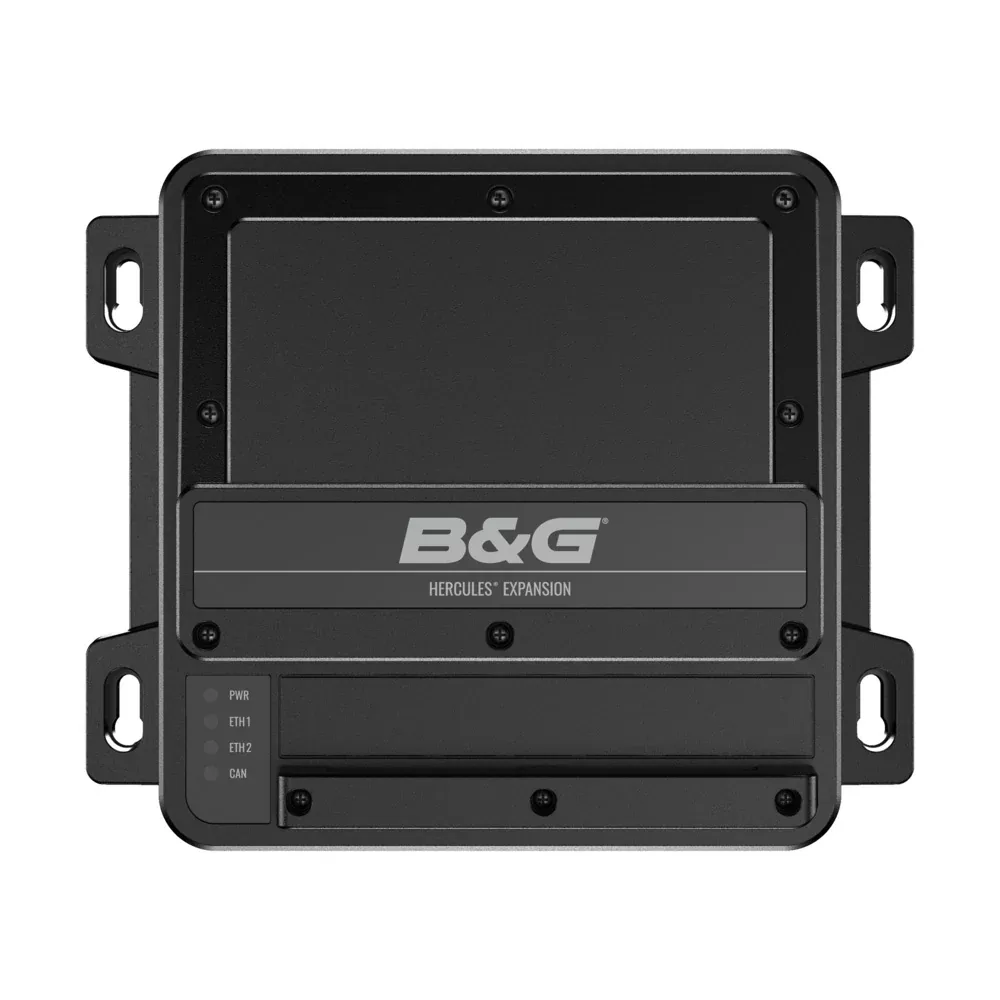
Imagine pushing your yacht’s performance to the limit during a tight race or fine-tuning your cruising systems for seamless operation across long passages. The Hercules Expansion Module steps in as the powerhouse connector, bridging the gap between your core sailing processor and a world of additional sensors. Designed specifically for serious sailors, this module transforms complex data streams into actionable insights, whether you’re optimizing sail trim or monitoring environmental shifts in real-time.
Unlike basic expanders, it handles high-volume inputs without lag, ensuring your Triton Edge or Hercules processor stays ahead of the fleet. Racers love how it pulls in extra analog data for precise polars and layline calculations, while cruisers appreciate the reliability for autopilot feeds and weather routing.
Core Features That Elevate Your On-Water Decisions
At its heart, this expansion unit packs versatile interfaces that grow with your needs:
Dual Ethernet Ports at 100 Mbps: Lightning-fast data sharing across your network, perfect for multi-device dashboards showing live wind shifts and boat speed.
9 High-Resolution 12-Bit Analog Channels: Capture nuanced readings from custom transducers, like tank levels or strain gauges, for data no standard setup can touch.
2 Serial I/O Channels: Seamlessly integrate legacy NMEA gear or third-party sensors, keeping your entire system unified.
Configurable Alarm Outputs and Crew Overboard Input: Instant alerts for critical moments—think man-overboard recovery or threshold breaches—keeping safety first.
Robust 12/24V Power Supply: Stable operation from battery banks, with wide voltage tolerance for offshore reliability.
These aren’t just ports; they’re gateways to customizing your boat’s “nervous system,” turning raw sensor feeds into tactical edges.
Seamless Connectivity for Modern Sailing Networks
Networking is where this module shines, supporting a broad range of NMEA 0183 sentences for inputs like heading (HDG, HDT), position (GGA, GLL), and environmental data (MTW, MWV). Outputs mirror this richness, feeding processed data back to displays or processors for heading stability (THS), cross-track error (XTE), and more.
Access setup via the built-in webserver over Ethernet—no proprietary cables needed. This means quick configuration from any laptop on the boat, tweaking alarms or calibrating channels mid-voyage.
Built to Withstand the Harsh Marine Environment
Sailors demand gear that laughs at salt spray and pounding waves. With IPX6 and IPX7 waterproofing, it shrugs off heavy rain and immersion. Operating from -15°C to +55°C, it thrives in tropical squalls or polar blasts, while storage down to -40°C handles off-season neglect.
Compliance with IEC/EN 60945 ensures it meets global marine standards, and at just 0.7kg with surface-mount design (230 x 192 x 63mm), installation is straightforward—keep the compass at least 500mm away for accurate headings.
Real-World Applications for Racers and Cruisers
For Racing Teams: Expand to include multiple anemometers for true wind across the boat, or integrate foil sensors for hydrofoiling classes. Feed data into start timers and velocity prediction for unbeatable upwind legs.
For Cruisers: Add tank monitors, battery voltage sensors, or even solar inputs for self-sufficient passagemaking. The alarm outputs can trigger bilge pumps or notify via linked displays.
Pro tip: Pair with high-res analog channels for custom setups like rider weight distribution on sportboats—data that wins regattas.
Technical Specifications at a Glance
Category
Details
Electrical
12/24V DC (9-31V), 3A fuse recommended
Environment
-15 to +55°C operating, IPX6/IPX7 waterproof
Physical
230x192x63mm, 0.7kg, surface mount
Approvals
IEC/EN 60945
Frequently Asked Questions
What sailing processors is the Hercules Expansion Module compatible with?
It works seamlessly with Triton Edge and Hercules sailing processors, enhancing their capabilities for both racing and cruising setups.
How many analog inputs does it support?
Nine 12-bit analog channels allow for detailed sensor data, ideal for custom marine instrumentation.
Is it suitable for harsh offshore conditions?
Yes, with IPX6 and IPX7 ratings, plus a wide operating temperature range, it’s built for demanding marine environments.
Can I access configuration remotely?
Configuration is available via the integrated webserver over Ethernet, making onboard adjustments straightforward.
What NMEA sentences are supported?
It handles key inputs like HDG, GGA, RMC for position and heading, with outputs including THS, XTE for navigation data.
What’s the power requirement?
Operates on 12/24V DC systems (9-31V range) with a recommended 3A fuse for reliable performance.
How do I mount it on my boat?
Surface mounting is simple with its compact 230x192x63mm footprint; maintain 500mm compass safe distance.