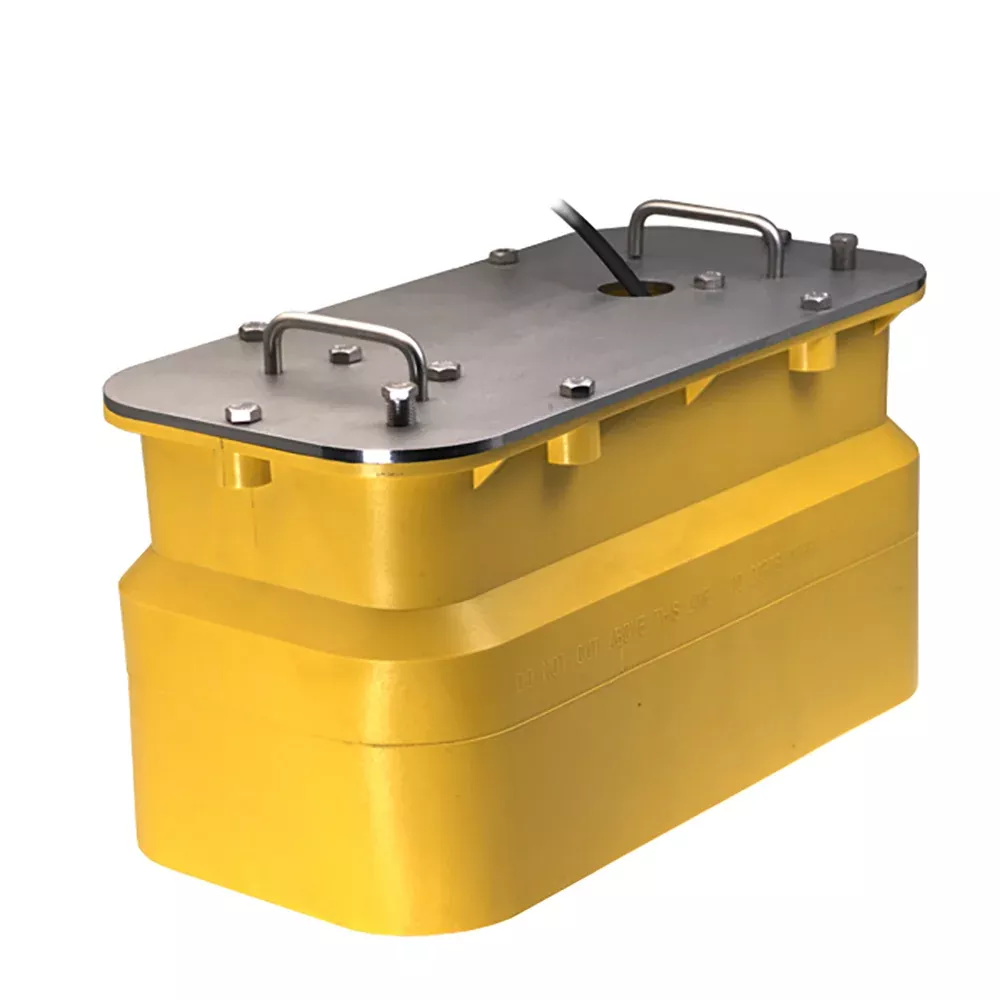
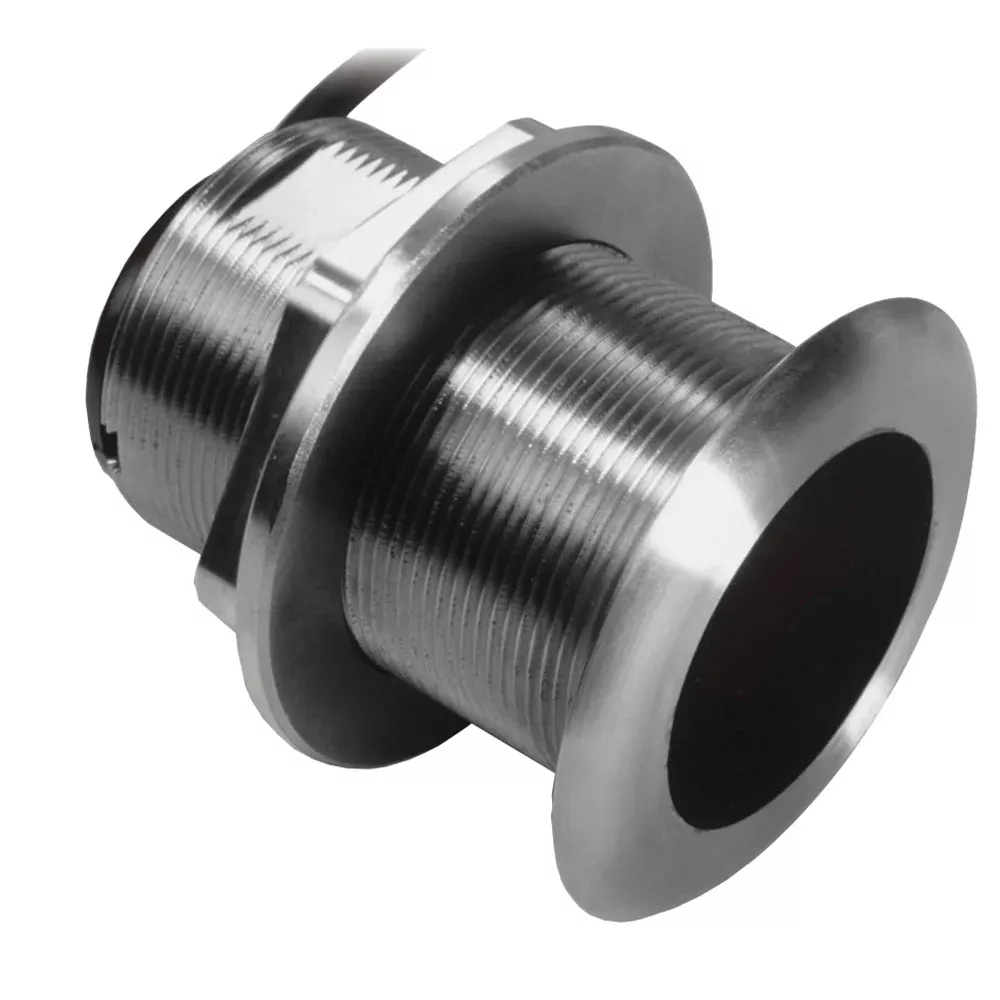
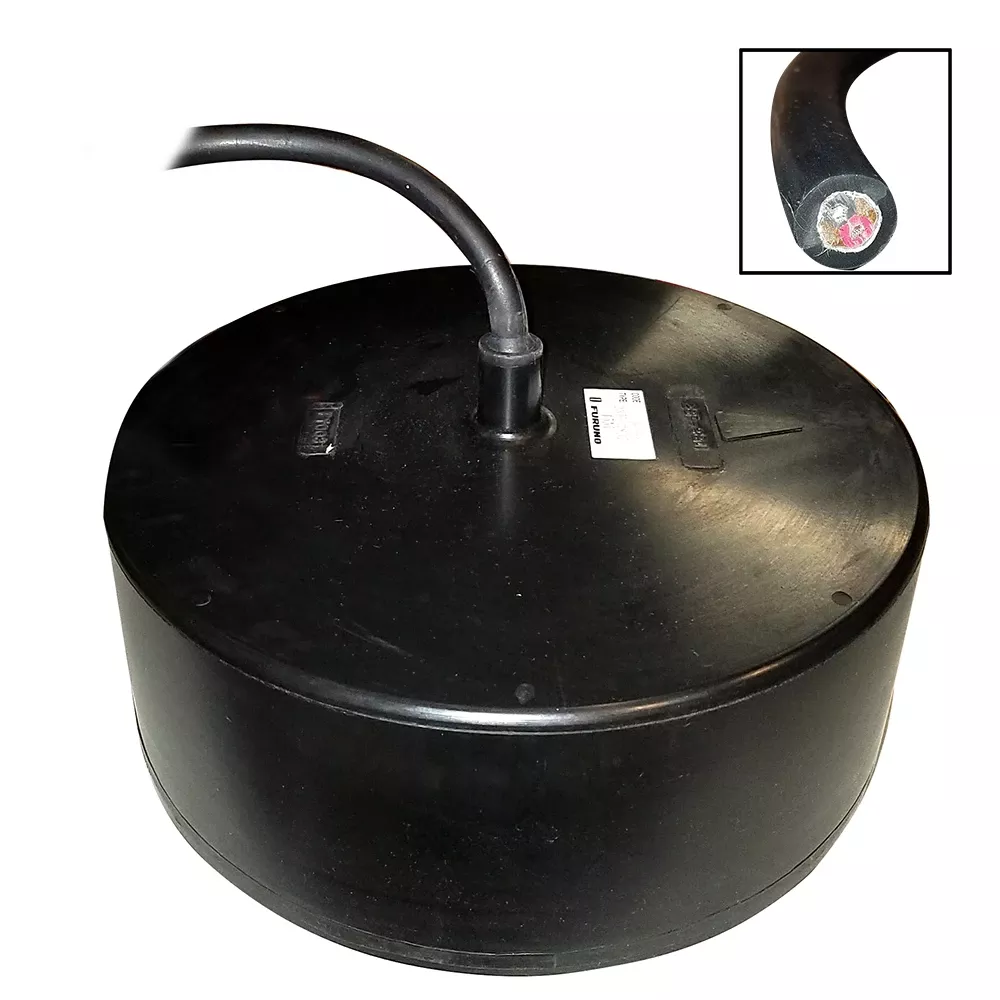
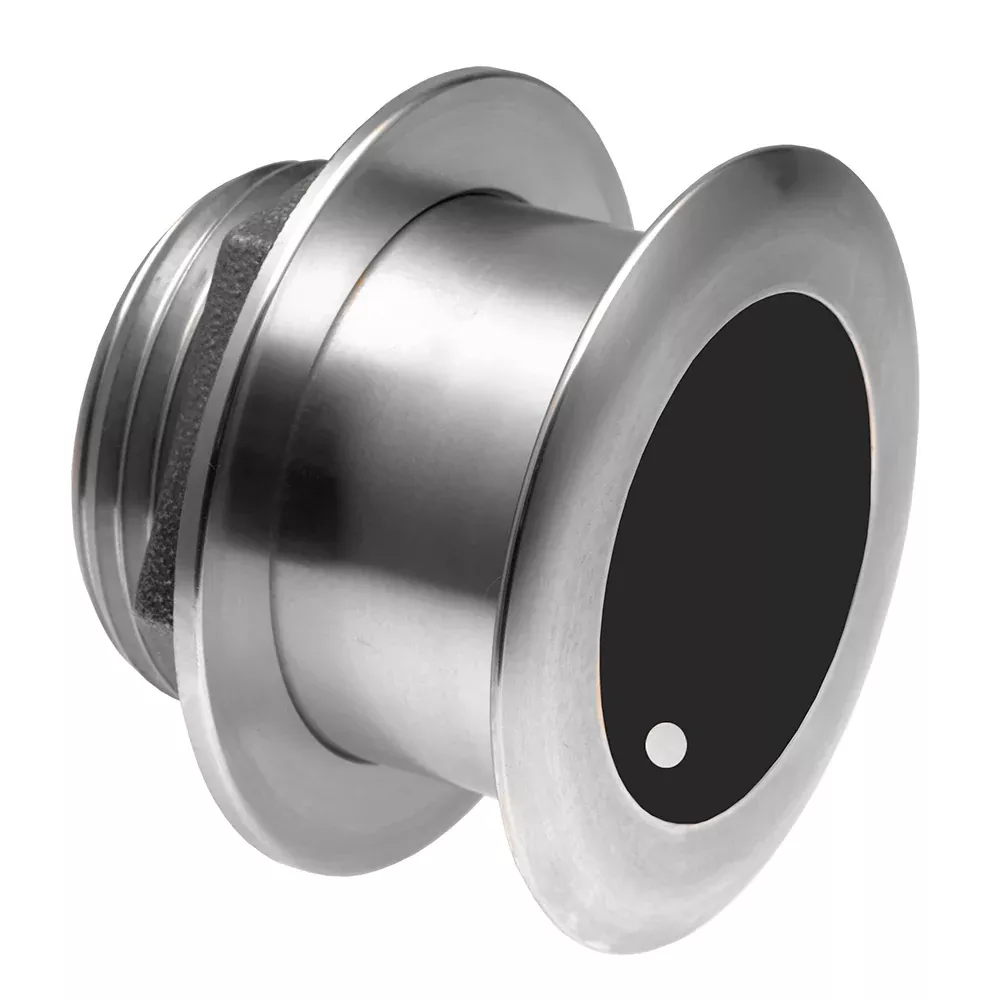
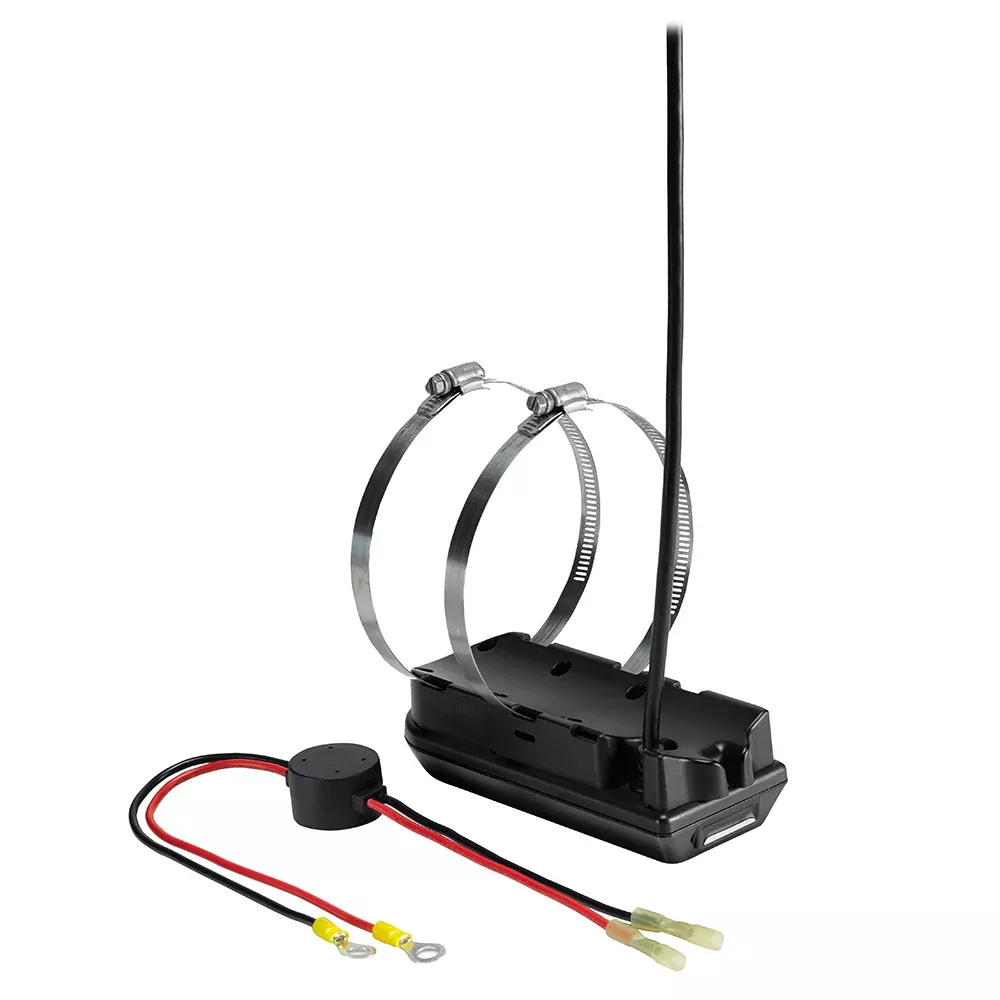
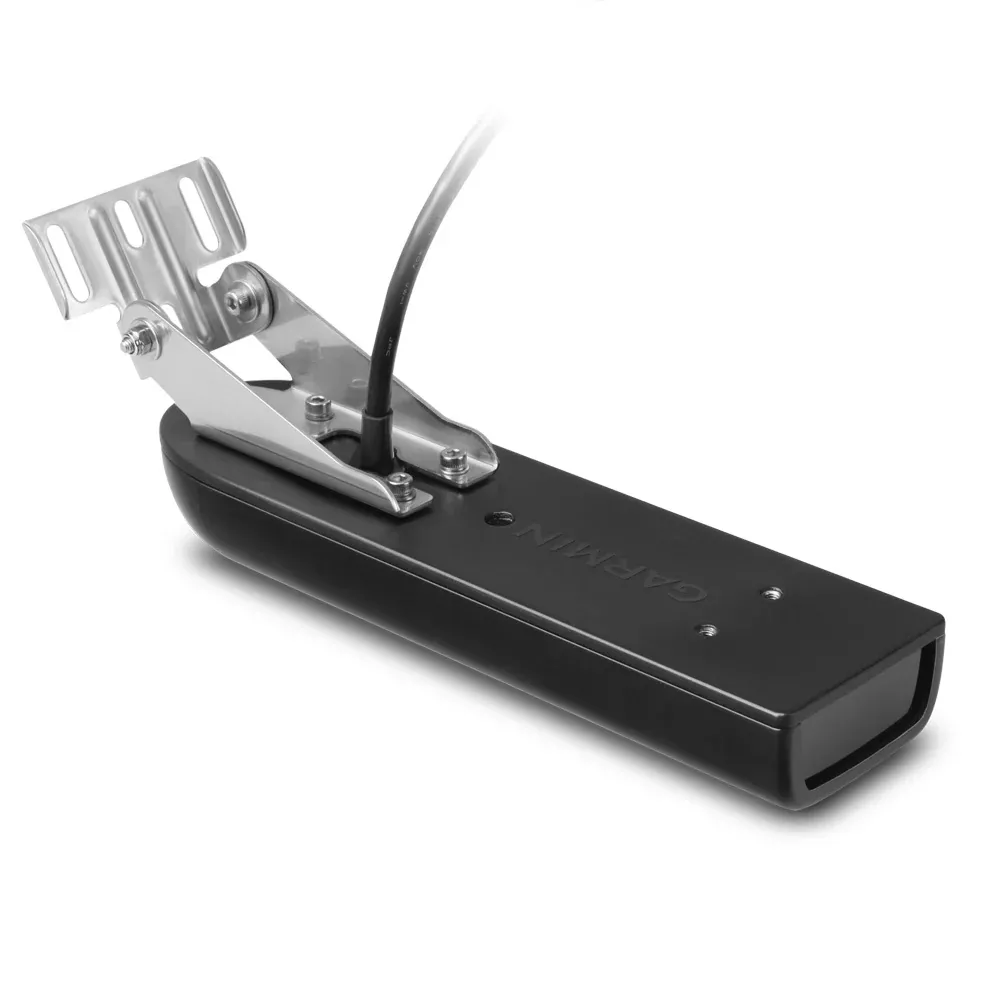
Airmar’s elite in-hull CHIRP transducer in the Low/High frequency configuration. The R599C-LH delivers 2-3 kilowatts of CHIRP sonar across 28-60 kHz and 130-210 kHz bands through a 24-element low array and a tight-beam high ceramic, with tank-mount installation that doesn’t require a hull penetration.
The Airmar R599C-LH Ultra Wide In-Hull 2-3 kW Transducer (MPN R599C-LH) is a tournament-series CHIRP transducer designed for deep-water billfish and tuna hunting. Today’s top billfish-tournament captains call the R599LH their go-to transducer for seeking out targets and pinpointing them in deep water. The R599C-LH is the depth and temperature sensing variant with no connector (transducer is sold ready for installation matched to your specific CHIRP module connector). For sport-fishing operators running serious offshore tournaments, this transducer is sized for the operational use case.
Why matched Chirp beam matters. Most marine CHIRP transducers run beamwidths of 5 to 25 degrees. The R599C-LH’s Chirp beamwidth on the low band delivers an ultra-wide cone of coverage under the boat, which means dramatically more water volume insonified per ping. For billfish-tournament fishing, this matters operationally because the target species often suspends deep and travels at varying depths, so a wider beam catches fish that a narrower beam would miss. The wider beam is also more forgiving of boat-motion and tracking errors during high-speed pursuit and trolling.
Dual-band CHIRP architecture. The R599C-LH operates in two simultaneous CHIRP frequency bands. The low band (28-60 kHz) penetrates deep with maximum range to 1219 meters (4000 feet), which is the depth class needed for billfish, swordfish, and bluefin tuna hunting in offshore waters. The medium band (130-210 kHz) operates at 13-degree to 8-degree beamwidth with maximum range to 914 meters (3000 feet), delivering higher-resolution target separation at shallower-to-mid depths. The combination delivers Up to 112 kHz of total bandwidth from one transducer, covering the popular 50 and 200 kHz fishing frequencies plus everything in between.
2-3 kilowatts of CHIRP power. Output power at 2-3 kW is the class needed to drive the wide-beamwidth ultra-deep CHIRP signal. Lower-power transducers can’t deliver the same depth range and target detection through deep water column attenuation. For tournament-class offshore fishing where deep-water target detection at maximum range is the operational requirement, 2-3 kW is the power class that delivers.
Wide bandwidth advantage. The Up to 112 kHz of total bandwidth (combining low and medium bands) covers a much wider portion of the marine CHIRP spectrum than narrow-band transducers. The wide bandwidth means the transducer reveals more fish in the water column than narrow-band alternatives, because different fish species and sizes have different optimal detection frequencies, and the wide bandwidth catches the range. This is particularly meaningful for offshore mixed-species fishing where you might target marlin, tuna, swordfish, and dolphin in the same trip.
In-hull install architecture. The transducer is designed for in-hull installation through the hull rather than in-hull or transom installation. Pocket mount delivers the cleanest hydrodynamic flow over the transducer face, which means less turbulence noise and better signal quality at high boat speeds. For high-end sport-fishing boats with custom builds where the hull is designed around the transducer install, in-hull is the right architecture. The curved-edge design optimizes hydrodynamic flow for wet-box installations.
epoxy/urethane acoustic window. Airmar’s epoxy/urethane construction uses a seamless urethane housing that’s engineered for long life underwater. The seamless design eliminates the joint failure modes that plague conventional transducer housings over years of saltwater service. For tournament-class transducers where service interruption is operationally and competitively costly, epoxy/urethane construction is the longevity feature.
Patented Xducer ID technology. Xducer ID is Airmar’s patented technology that automatically identifies the transducer to compatible CHIRP modules during commissioning. The module automatically configures itself for the transducer’s specific frequency bands, beamwidths, and electrical characteristics without manual configuration. For installs where the transducer is paired with current-generation CHIRP modules from major manufacturers, the auto-identification eliminates a step in commissioning and reduces configuration errors.
Depth and temperature sensing. The R599C-LH includes integrated depth and fast-response water-temperature sensing. The depth sensor delivers basic depth data even when the main CHIRP sonar is inactive (useful for navigation and shallow-water alerting), and the fast-response temperature sensor delivers water temperature data for fishing pattern analysis and current-edge detection. For sport-fishing operations that use temperature breaks as fishing indicators, the integrated fast-response temperature is operationally useful.
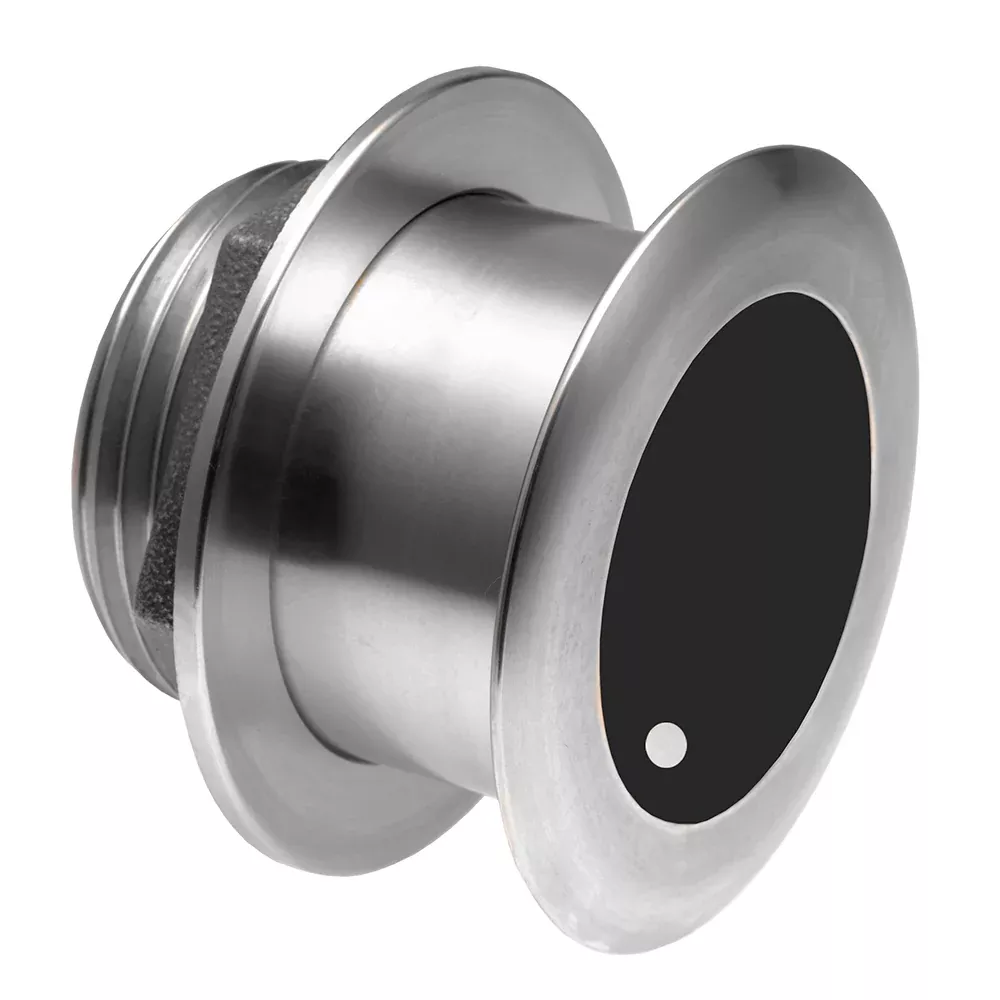
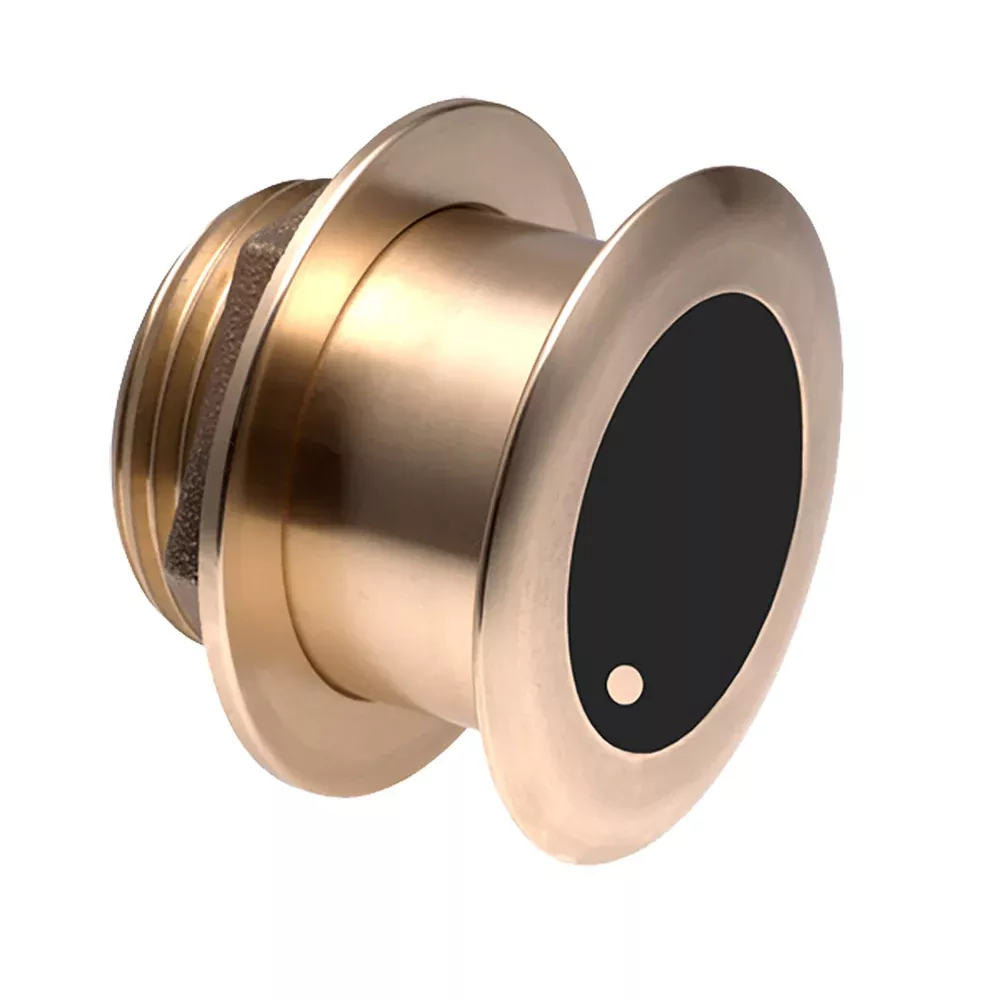
Thru-hull external alternative. The same architecture is also available as a in-hull mount (R599LH) for installs where in-hull isn’t feasible. For boats where the hull design or yard preferences favor in-hull installation, the R599LH is the equivalent product. The R599C-LH is specifically the in-hull variant for custom-build sport-fishing boats.
What “no connector” means. This variant of the transducer ships without a connector terminated to the cable, which allows the installer to terminate the appropriate connector for the specific CHIRP module the boat is running. This is the standard configuration for tournament-grade installs where the transducer goes through specialized cabling and connector requirements specific to the rest of the helm electronics. For installs that need a specific pre-terminated connector, contact NVN Marine for the connector variant that matches your sonar module.
Install considerations. In-hull installation is a yard-grade job that must be planned during boat build or major refit. The pocket cutout in the hull, the structural support for the transducer assembly, and the cable routing all need to be integrated into the boat’s hull design rather than retrofitted to an existing build. For boats that already have the in-hull engineered in (typical of high-end custom sport-fishing builds), the transducer install is straightforward. For boats without an existing pocket, plan a major yard project to add one. Total install is a marine yard multi-day job including pocket cutout, transducer install, cable routing, and CHIRP module commissioning.
Why pay this much. Three reasons. First, the 2-3 kW power plus 40-degree ultra-wide beam plus dual-band CHIRP architecture is the combination that tournament-class billfish captains actually use, and at maximum operational range. Lower-spec transducers simply don’t deliver the depth and beam coverage. Second, the epoxy/urethane acoustic window plus Xducer ID auto-configuration deliver the long-term reliability and commissioning simplicity that serious fishing operations need. Third, the in-hull architecture is the right install for high-end custom sport-fishing boats where hydrodynamic performance and clean install are operationally important. For tournament-class deep-water sport fishing, the R599C-LH earns its position.